Why is My Solar Panel Over Voltage? A Practical Troubleshooting Guide
Learn how to diagnose and fix solar panel over voltage safely. This home-focused guide covers common causes, diagnostic steps, safety protocols, and when to call a professional. Get practical fixes to protect your inverter and panels.


Over voltage occurs when the PV array voltage exceeds the inverter or charge controller’s safe input range. The most common causes are wiring mistakes or incompatible components, damaged panels that raise string voltage, or a failed DC disconnect. If you see a voltage alarm, shut down safely, then start a guided diagnostic flow to verify ratings and connections.
Symptoms and Risks of Solar Panel Over Voltage
If you’re wondering why is my solar panel over voltage, you’re not alone. Over voltage occurs when the PV string voltage exceeds the inverter’s safe input range. You may notice voltage alarms, reduced power, or tripped breakers. In severe cases, electronics can overheat, fuses may blow, and insulation damage is possible. Understanding these signs helps you act quickly to reduce fire risk and equipment damage. Common symptoms include sudden inverter fault codes, unusual buzzing from the DC disconnect, and a noticeable voltage reading that sits above the manufacturer’s maximum input. The risk to people is low when the system is de-energized, but live testing must be avoided without proper PPE and isolation.
Quick tip: Keep a log of voltage alarms and corresponding weather and shading conditions to help narrow down root causes during troubleshooting.
Core Causes Behind Over Voltage
The root causes of over voltage vary, but most fall into three buckets: wiring or configuration errors, component incompatibility, and degraded or damaged panels. A string voltage that is too high for a given inverter can trigger protection and shutdowns. Mismatched strings, such as a higher open-circuit voltage from one panel in a string, can push the total voltage beyond safe limits. Damaged bypass diodes or aging panels may also show elevated voltages under sun exposure. Regular inspection helps catch loose connections, corroded lugs, and unsafe wiring before they contribute to an over voltage condition.
How Inverter and MPPT Ratings Work
Inverters and MPPT controllers are designed to operate within a voltage window. When PV string voltage exceeds that window, the system may trip or enter a fault state. Understanding voltage ratings helps homeowners avoid misconfiguration: always verify that the panel string voltage under full sun stays within the inverter’s DC input range. Keep in mind that temperatures can affect voltage—hot days often reduce voltage while cold days increase it, sometimes pushing readings toward the upper limit. This section explains how impedance, cable losses, and temperature coefficients interact to produce an over voltage scenario.
Quick Safety Checklist Before You Begin
Safety first: always de-energize the system before any inspection. Wear insulated gloves and eye protection, and use a properly rated voltage tester. Confirm the main DC disconnect and AC breaker are off, then verify there is no residual voltage on the DC bus. Never work on live wiring. Keep children and pets away, and set up a clear work area with adequate lighting.
Fixes: Step-by-Step Troubleshooting Path
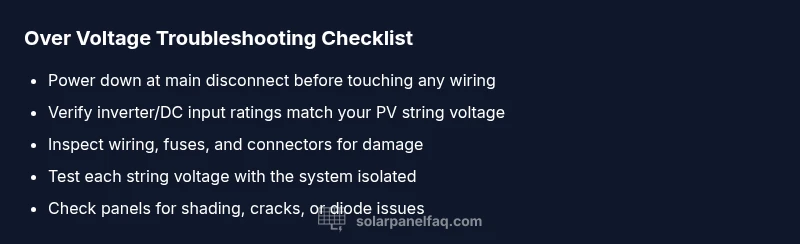
When troubleshooting over voltage, start with the simplest checks and progress to more involved tests. Confirm that all components match the manufacturer’s specifications and that there are no wiring errors. If the issue persists, inspect the panels for damage, and test string voltage with the system isolated. At no point should you bypass safety devices. If you’re unsure, contact a licensed electrician or solar technician.
Prevention and Maintenance to Avoid Recurrence
To prevent future over voltage events, schedule periodic inspections of wiring, fuses, and disconnects. Ensure panel strings are correctly configured for the inverter rating, and retire aging panels that show signs of degradation. Maintain a clean, shaded-free roof area to minimize abnormal voltage swings. Document changes and keep an up-to-date schematic of the array for quick reference during maintenance. A proactive maintenance routine reduces the likelihood of voltage excursions and extends system life.
Steps
Estimated time: 45-90 minutes
- 1
Safety first and isolate power
Shut down the DC disconnect and AC breaker, then verify there is no voltage on accessible conductors. Use a qualified meter and PPE. Confirm the area is secure before touching any wiring.
Tip: Always test the absence of voltage on all exposed conductors before handling panels or wiring. - 2
Check system ratings and wiring configuration
Compare the inverter’s DC input rating with the PV array’s maximum voltage. Ensure strings are configured exactly as specified by the manufacturer, with correct series/parallel connections and proper fusing.
Tip: Incorrect string configuration is a common cause of over voltage issues. - 3
Inspect components for damage and wear
Visually inspect wiring, connectors, and fuses for signs of corrosion, looseness, or scorching. Look for damaged bypass diodes or cracked junction boxes that could alter voltage readings.
Tip: Replace damaged parts with manufacturer-approved components. - 4
Measure the PV string voltage in isolation
With the system isolated, measure the open-circuit voltage of each string. Compare the readings to the expected range from datasheets. Document any strings that run high.
Tip: Record voltage readings to track trends over time. - 5
Evaluate panel health and bypass paths
Examine each panel for shading, soiling, or microcracks that can affect voltage. Check bypass diodes for proper operation and ensure no bypass path is stuck open or shorted.
Tip: Shaded or damaged panels can spike voltage in certain conditions. - 6
Decide on repair or professional service
If voltages remain high after checks, or if you’re uncomfortable working with DC circuits, call a licensed electrician or solar technician for a formal inspection and safe repair.
Tip: Professional help is advised when dealing with high-voltage DC systems.
Diagnosis: Voltage alarm or fault on inverter indicating over voltage
Possible Causes
- highPV string voltage exceeds inverter/MPPT input rating
- mediumWiring error causing incorrect series/parallel configuration
- lowDamaged or degraded panels increasing open-circuit voltage
Fixes
- easyPower down at the main disconnect and isolate the array
- easyVerify string configuration and inverter ratings against the array
- mediumInspect for damaged panels, corroded connections, or loose lugs
Frequently Asked Questions
What is over voltage in a solar PV system?
Over voltage means the PV string voltage exceeds the inverter/MPPT input rating. It can trigger alarms, cause shutdowns, or risk equipment damage. Understanding the rating and staying within it helps prevent failures.
Over voltage happens when the PV voltage goes beyond what the inverter can handle safely, causing alarms or shutdowns.
Can over voltage damage my inverter?
Yes, sustained over voltage can stress the inverter’s input stage, reducing efficiency and potentially shortening its life. Protective circuitry may trip to prevent damage.
Yes, it can, so it’s important to diagnose and fix the cause promptly.
How do I safely test voltage in my PV system?
Power down the system at the main disconnect, use an insulated meter, and measure between the DC terminals with no load connected. Do not touch exposed conductors.
Power down, measure with the right meter, and avoid touching live parts.
Should I replace panels or adjust wiring to fix over voltage?
Start with wiring and rating checks. If readings remain high, inspect panels for damage. Replacement or professional reconfiguration may be necessary.
Begin with wiring checks; if the problem persists, consider panel health and professional help.
When should I call a professional?
If voltage readings stay high after basic checks or if you’re unsure about safely testing, contact a licensed solar technician or electrician.
Call a pro if you’re unsure or the issue persists.
Is over voltage the same as a short circuit?
No. Over voltage is too high voltage in the circuit, while a short is a low-resistance path that causes a surge. They require different diagnostic approaches.
They’re different issues; over voltage isn’t a short, but both require caution.
Watch Video
Top Takeaways
- Verify safety shutoffs before any check
- Match inverter ratings to PV string voltage
- Inspect for damaged components regularly
- Call a pro if voltage readings stay high