Solar Panel Size for Home: A Step-by-Step Guide
Learn how to size solar panels for your home by calculating energy needs, evaluating roof space, and selecting panel counts and inverter capacity for optimal performance and future expansion.


By the end, you’ll know how to size a solar panel system for your home. Start with your annual energy use, roof space, and shading; then estimate the required panel count and inverter capacity. The quick answer also highlights common trade‑offs between cost, space, and future expansion so you can plan confidently.
Understanding Your Energy Needs
According to Solar Panel FAQ, sizing a home solar system begins with how much electricity you actually use. If you want the right solar panel size for home, gather your recent energy bills to estimate annual kilowatt-hours (kWh) and identify seasonal peaks. This data helps you set a realistic target for system output and avoids oversizing or undersizing. Determining the solar panel size for home depends on energy use, available space, and budget. By starting with energy data, homeowners can set a baseline for a system that meets daytime demand and supports growth over time. Expect losses from shading, temperature, and wiring; plan to mitigate these with design choices and DAC (daytime achievable) estimates. Solar Panel FAQ recommends validating your assumptions against a local installer or trusted calculator for accuracy.
Assessing Roof Space and Orientation
Roof space and orientation are the next big factors in sizing a home solar system. A south-facing roof in the Northern Hemisphere typically yields the best daily production, while east/west orientations can still work with adjustments. Shading from trees, chimneys, or nearby structures reduces output and alters the ideal panel count. Roof type and tilt angle influence both the physical fit and performance; a flatter roof may require mounting hardware with a slightly different spacing. When planning, map the usable roof area, measure available square footage for modules, and note any constraints such as vents or skylights that could block sections of the array. Accurate shading analysis, preferably with a digital sun-path tool, helps you avoid overestimation of capacity.
Calculating Panel Count and System Size
Estimating the number of panels and overall system size starts with your annual energy use and target monthly production. A simplified method is to translate annual kWh into a target daily production, then divide by the typical output of a modern panel after losses. Because per-panel output varies by model and efficiency, rely on your installer’s guidance or a reputable online calculator to convert your data into a plausible panel count. Remember to factor in future changes, such as appliance upgrades or additional EV charging capacity, so you don’t outgrow your system quickly.
Inverter Sizing and String Configurations
Inverter sizing is crucial for converting DC power from panels to usable AC power. Central inverters are common for simple layouts, while microinverters or optimizers improve performance when shading or partial array issues exist. The number of strings, their lengths, and the total wattage will influence the inverter’s AC rating. Design considerations include how you plan to add panels later, whether you want shading resilience, and how much you value early cost savings versus long-term efficiency. Work with a pro to choose a configuration that minimizes voltage drops and performance losses while staying within your roof’s footprint.
System Efficiency and Shading Impacts
System efficiency is affected by more than just panel wattage. Temperature, angle of incidence, and inverter quality all contribute to real-world output. Even small shading changes can dramatically reduce a subset of panels’ production, so layout and orientation matter. Choose high-efficiency modules if you have limited space, and consider microinverters or power optimizers to mitigate shading losses. The overall design should aim for a balance between cost and achievable daily production, ensuring your home gets the energy it needs when it’s most valuable.
Cost, Financing, and Payback Considerations
Cost is a major driver, but true value comes from long-term savings and reliability. When sizing for home use, compare upfront hardware costs with estimated lifetime energy savings, factoring in maintenance and potential inverter replacements. Financing options, tax incentives, and utility programs can alter the economics significantly. A correctly sized system that matches your energy profile reduces oversizing waste and improves payback potential. In some markets, rebates or incentives may further improve the financial case, though incentives vary by location and program year.
Planning for Future Expansion and Maintenance
A well-planned system considers future expansion, such as adding more panels or upgrading inverters to handle higher loads. Ensure your roof structure can support additional modules and that mounting hardware allows for future growth. Regular maintenance—cleaning panels, checking wiring, and monitoring performance—extends life and keeps output optimal. Build a documentation trail for warranties, component ages, and inspection dates to simplify future upgrades and maintenance.
Common Pitfalls and Quick Wins
Avoid common pitfalls like underestimating shading, ignoring electrical code limits, or prematurely choosing a suboptimal inverter. Quick wins include performing a thorough shading analysis, choosing a modular inverter strategy for growth, and getting multiple quotes from installers to compare warranties and service. A well-documented plan helps prevent rework and keeps your project on track, saving time and money in the long run.
Quick Validation Steps Before Purchase
Before committing, validate your sizing with a trusted calculator, verify roof measurements in person, and confirm that the planned system aligns with your electrical panel capacity. Ask installers to provide a performance simulation for typical days, not just peak sun. This ensures you have a realistic expectation of daily production and helps you avoid surprises after installation.
Tools & Materials
- Annual energy consumption data (electricity bills or usage report)(Export or print the last 12 months; include seasonal variations if possible)
- Measuring tape or laser distance meter(Use it to estimate usable roof area and module footprint)
- Notebook or digital planning tool(Record measurements, shading observations, and panel counts)
- Safety equipment (gloves, harness if needed)(Follow local fall protection guidelines when working on a roof)
- Pencil and calculator or solar sizing app(For quick calculations and scenario planning)
- Online solar calculator or installer consultation(Helpful for cross-checking results; not strictly necessary)
Steps
Estimated time: 3-5 hours
- 1
Gather energy data
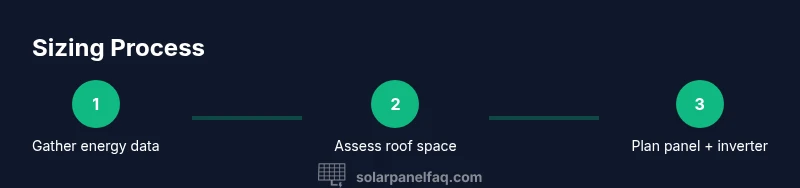
Collect the last 12 months of electricity bills and note any seasonal spikes. Calculate annual kWh and identify peak usage periods. This establishes the baseline for your system size.
Tip: Use a digital template to keep the data organized and shareable with installers. - 2
Assess roof space
Map usable roof area and measure dimensions for module placement. Note obstructions like vents, skylights, or existing equipment. Record orientation and tilt if known.
Tip: Take photos from multiple angles to verify space when you later review quotes. - 3
Estimate panel count
Based on energy data and space, estimate how many modules could fit in the available area. Remember that spacing, mounting, and shading reduce usable output.
Tip: Plan for a little extra space to accommodate future expansion. - 4
Select inverter strategy
Decide between a central inverter, microinverters, or optimizers. Each option affects performance under shade and modular growth. Ensure your choice matches space and future plans.
Tip: Microinverters can improve shade resilience on irregular rooftops. - 5
Model efficiency and losses
Account for temperature, wiring, and mismatch losses. Use a sizing calculator to translate gross panel output into real-world daily production.
Tip: Choose higher-efficiency panels if space is constrained. - 6
Run scenarios for expansion
Simulate a few growth scenarios (e.g., more days with EV charging). Check that the system can handle increased demand without overloading the electrical panel.
Tip: Document potential expansion points with your installer. - 7
Review costs and incentives
Estimate upfront costs, potential incentives, and financing options. Compare simple payback vs. longer-term ROI across different system sizes.
Tip: Ask for a one-page ROI summary from each installer. - 8
Get quotes and validate
Request performance simulations from multiple installers and compare warranties. Verify that quoted outputs reflect real-world conditions.
Tip: Check for local permitting requirements early in the process. - 9
Finalize design and schedule
Choose the best proposal, confirm installation timelines, and review maintenance plans. Ensure you have documentation for warranties and system monitoring.
Tip: Schedule post-installation performance checks for 6–12 months.
Frequently Asked Questions
What is the difference between panel count and inverter size?
Panel count determines potential output, while inverter size sets the maximum AC power the system can deliver. Both must align with your energy goals and roof space, and they should account for losses and future expansion.
Panel count determines how much potential output you can have, while inverter size caps the actual usable output. Make sure both match your goals and roof space.
Can I size panels myself, or do I need an installer?
You can perform a preliminary sizing using your energy data and roof measurements, but a licensed installer should validate design, electrical safety, and local permitting requirements before purchase.
You can do an initial sizing yourself, but a licensed installer should verify the design and handle permits.
How does shading affect system size?
Shade reduces output from affected panels and changes the effective size of the system. Using microinverters or optimizers can help mitigate shading losses and improve overall performance.
Shade lowers output from shaded panels, but microinverters or optimizers can reduce the impact.
Is future expansion worth planning for?
Yes. Designing for expansion prevents costly retrofits and lets you grow with higher energy demands, such as EV charging, without starting from scratch.
Planning for future expansion can save time and money if you anticipate higher energy needs.
What sources should I trust for sizing data?
Rely on calculations from reputable calculators, and confirm with multiple installers. Cross-check results with authoritative sources to ensure realism.
Use trustworthy calculators and confirm with installers to ensure your sizing is realistic.
How long does it typically take to install?
Installation duration varies by system size and roof type but typically takes from a few days to a couple of weeks, including permitting and inspection.
Installation usually spans a few days to a couple of weeks, depending on permits and roof work.
Watch Video
Top Takeaways
- Size your system from actual energy usage, not guesswork
- Maximize usable roof space and minimize shading
- Inverter choice influences performance under partial shade
- Plan for future growth to protect your investment
- Verify quotes with performance simulations and warranties