Solar Panel Loss of Efficiency: Troubleshooting Guide
A practical, urgent step-by-step guide to diagnose and fix solar panel loss of efficiency. Learn common causes, quick fixes, safety tips, and when to call a pro to maximize energy harvest.


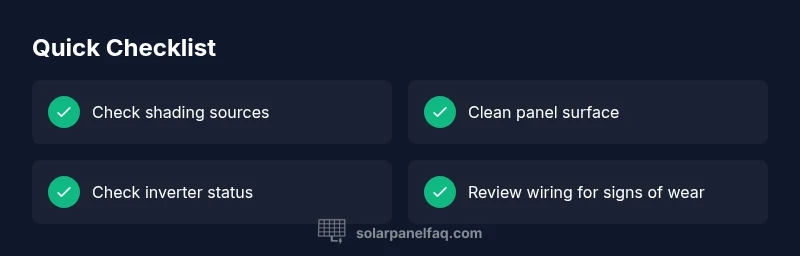
According to Solar Panel FAQ, dirt, shade, and aging components are the most common culprits for solar panel loss of efficiency. A quick triage: (1) check for new shade from trees or structures, (2) wipe or rinse panels to remove dust, and (3) confirm the inverter output matches expected DC/AC. If performance stays low, call a qualified technician.
Understanding the Impact of Solar Panel Loss of Efficiency
According to Solar Panel FAQ, when your solar system produces less electricity than it did when it was new, it's described as a loss of efficiency. This drop affects your overall energy yield and the financial return of your system. For homeowners, even small declines can accumulate, extending payback periods and reducing self-sufficiency. The good news is that many losses are fixable with systematic checks and timely maintenance. This guide explains how to recognize the signs, quantify the decline, and start with the simplest fixes that address the most common culprits first. By acting quickly, you can reclaim more of your solar energy on a sunny day and protect your investment in clean power.
Key starting point: determine whether the issue is isolated to a single string or affects the entire array. Environmental factors like fresh shade after pruning or a storm, plus dirt accumulation, are the most frequent culprits in the early stages of a loss of efficiency.
Common Causes of Loss of Efficiency
There are several frequent reasons your solar panel loss of efficiency might be more than expected. Soiling and dirt buildup on the glass can dramatically reduce light reaching the cells, especially in dusty, windy, or coastal environments. Shading from new tree growth, nearby buildings, or equipment like antennas can create invisible losses that cut energy output. Module aging or degradation reduces the cells' ability to convert sunlight over time. Inverter underperformance or misconfiguration affects the conversion from DC to usable AC. Wiring issues or loose connections can cause intermittent drops in voltage and current. Finally, thermal derating in high-temperature conditions lowers efficiency; this is common in hot climates. The combination of these factors often explains the majority of losses in residential systems.
How to Measure Panel Performance at Home
Begin with your system’s monitoring interface to compare current production with expected output given today’s weather. If you don’t have a portal, check the inverter display for status indicators and recent error codes. On the DC side, note the string voltage and current and compare them against the manufacturer’s nominal values. If you notice a significant discrepancy, log the reading, weather data, and time of day to spot patterns. A simple, non-technical approach is to estimate a rough performance ratio by comparing actual kilowatt-hours produced today with the ideal irradiance and system size. While this won’t replace professional testing, it helps you decide whether you’re dealing with a mild dip or a major issue.
Quick Home Checks You Can Do (No Tools)
- Look for new shade from growing trees, neighboring structures, or temporary objects. Even a small change in shading can drastically reduce output.
- Inspect the panels for dirt, pollen, bird droppings, or leaves. A gentle rinse with water and soft brush can improve light absorption.
- Check for obvious physical damage like cracks or delamination, which can impair performance.
- Observe the inverter and electrical components for warning lights, error codes, or unusual smells. A healthy system should display steady operation without frequent fault messages.
Step-by-Step Diagnosis and Fix Plan
- Check shading and debris: Inspect the entire array for new shadows and clean off dirt. 2) Clean the panels: Use low-pressure water and a soft brush; avoid harsh cleaners or high-pressure spray. 3) Inspect the inverter: Power down safely and review status lights; note any error codes and verify that the output aligns with expectations. 4) Inspect wiring and connections: Look for loose connectors, corrosion, or damaged cables; tighten/replace as needed with the system powered down. 5) Confirm orientation and tilt: Ensure mounting angle is appropriate for your latitude and any seasonal adjustments. 6) Compare to baseline: Review recent performance data against historical baselines to confirm a trend. 7) Plan professional testing if unresolved: If output remains low, schedule a professional IV curve test and warranty check.
When to Call a Professional
If routine checks do not restore expected performance or you notice signs of electrical fault, call a licensed solar technician. Electrical work, roof access, and high-voltage components require professional training and proper safety procedures. Professional assessment helps protect warranties and ensures codes are followed. Always consult your system’s warranty documentation before attempting non-standard repairs. A pro can perform IV curve tests, insulation resistance checks, and a comprehensive system health assessment.
Prevention: Keeping Efficiency High Over Time
Develop a simple maintenance routine to sustain solar panel efficiency. Schedule a seasonal cleaning, inspect for shading at different times of day, and review performance data monthly to catch gradual declines early. Keep trees pruned, ensure proper panel orientation, and protect wiring from weather-related wear. Documenting readings creates a baseline you can compare against after each fix. Proactive care reduces the risk of long-term efficiency losses and helps you maximize annual energy production.
Steps
Estimated time: 2-5 hours
- 1
Check for shading and debris
Walk the roof line and ground area to identify new shade sources and inspect panels from a safe distance. Remove leaves, dust, and debris using a soft brush or gentle rinse.
Tip: Avoid leaning on panels; use a stable ladder and fall protection. - 2
Clean panels and clear surface
Rinse panels with low-pressure water and use a non-abrasive brush for stubborn grime. Do not use strong chemicals or high-pressure washers that can damage seals.
Tip: Clean during cooler parts of the day to prevent thermal shock. - 3
Inspect the inverter and status indicators
Power down safely and review the inverter’s display and error codes. Note readings and compare to expected DC/AC production.
Tip: Record readings for trend analysis and warranty records. - 4
Check wiring and connections
Look for loose, corroded, or damaged cables and connectors on the DC side and at the combiner box. Replace or tighten as needed with proper safety measures.
Tip: Always shut off the system before handling electrical components. - 5
Verify orientation and tilt
Ensure mounting angle is appropriate for your latitude and seasonal sun path. Small adjustments can improve winter or summer performance.
Tip: Even small tilt changes can yield measurable gains. - 6
Compare performance to baseline
Review recent production data against historical baselines to identify trends. Use a monitoring app or monthly logs for accuracy.
Tip: Maintain a simple spreadsheet to track changes over time. - 7
Plan professional testing if unresolved
If the issue persists after do-it-yourself fixes, schedule a professional IV curve test and warranty check to avoid further losses.
Tip: Warranties may cover specific diagnostics and repairs.
Diagnosis: Persistent drop in energy output despite clear sunny days.
Possible Causes
- highSoiling and dust buildup on panels
- highNew shading from trees or nearby structures
- mediumModule aging or degradation
- mediumInverter underperformance or misconfiguration
- lowWiring faults or loose connections
- lowThermal derating due to high ambient temperature
Fixes
- easyClean panels and remove shading sources
- mediumTrim or relocate shade sources; ensure unobstructed sun path
- easyInspect inverter display and configuration; reset if advised by manual
- mediumCheck DC wiring for corrosion or loose connections; tighten as needed
- hardConsult a professional for IV curve testing and warranty checks
Frequently Asked Questions
What causes solar panel loss of efficiency?
Common factors include soil buildup, shading, aging panels, inverter issues, wiring faults, and thermal derating. Each can reduce energy output in different ways, so a systematic check helps identify the primary culprit.
Common causes are dirt, shade, aging, and inverter issues. A quick check and cleaning often restore performance.
Can cleaning panels restore lost performance?
Yes, cleaning can recover output when soiling is the primary cause. Use gentle cleaning methods and avoid harsh cleaners or pressure washing.
Yes, cleaning can help when dirt is the issue. Use a soft brush and gentle rinse.
Does high temperature affect efficiency?
Temperature can reduce panel efficiency due to thermal derating. The impact varies by panel type and system design, but it is a known contributor in hot climates.
Yes, heat can lower efficiency. It’s normal for hot days to reduce output a bit.
How do I test my system’s performance at home?
Compare real-world production to expected output using weather data and monitoring data. Look for trends over days or weeks, not just a single peak day.
You can compare your daily output with weather and baseline data to spot trends.
When should I replace solar panels?
Replacement depends on age, warranty coverage, and sustained output loss. Panels typically degrade gradually; consider a professional evaluation if output remains well below expectations.
Replacement depends on how old they are and how much performance you’ve lost.
Is it worth hiring a professional for small losses?
If the cause isn’t obvious or involves electrical components, a professional assessment is advised to protect safety and warranties.
If you’re unsure or dealing with electrical parts, a pro is the safer choice.
Watch Video
Top Takeaways
- Identify the most likely causes first: dirt and shade
- Use monitoring data to guide fixes
- Inverters and wiring health are critical to performance
- Regular cleaning and shade management pay off over time
- Call a professional for complex issues or warranty checks