How Much Is Solar Panel With Inverter? Costs, Inverters, and Budgeting
Explore realistic cost ranges for solar panel with inverter, incentives, financing options, and a practical method to estimate your home installation.


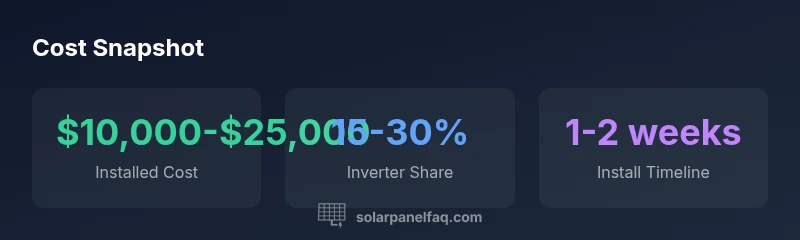
Prices for a residential solar setup vary, but a typical installed system (including inverter) often falls within a broad range before incentives. For many homes, you can expect installed costs roughly between $10,000 and $25,000, depending on system size and site-specific factors. This quick answer highlights the main price drivers and what to budget for, without promising specific quotes.
Understanding the cost components and the inverter's share
According to Solar Panel FAQ, homeowners should view the installed price as a bundle of hardware, labor, and soft costs rather than a single sticker price. When budgeting for a system, the largest line item is usually the hardware: solar panels and inverters together determine most of the upfront cost, while mounting hardware, wiring, and electrical work add a substantial but smaller share. Permitting, inspection fees, and site-specific factors such as roof complexity or shading can shift totals by a wide margin. For many homes, the total price is driven by system size and the efficiency of the components chosen, not merely by a single component. The phrase how much is solar panel with inverter often surfaces in consumer conversations, but the answer depends on size, geography, and the permitting landscape. In practice, you’ll see ranges that reflect different quality tiers, warranty lengths, and installation challenges. Understanding these pieces helps you compare quotes fairly and avoid overpaying for features you don’t need.
Inverter options and how they influence price
Inverters are the brains of a solar system, converting DC electricity to AC power and coordinating micro-level power flow. The choice between a string inverter, microinverters, or a hybrid unit can noticeably shift the installed cost, especially in roofs with shade or complex layouts. String inverters are typically less expensive upfront but may require optimizations elsewhere. Microinverters add cost per panel but can improve energy yield on shaded roofs and during orientation differences. Hybrid inverters combine energy storage with generation, which increases price but adds flexibility. When you ask how much is solar panel with inverter, your quote will reflect the inverter technology along with panel efficiency, mounting hardware, and wiring. Battery-ready configurations require larger inverters and control electronics, further affecting cost. In practice, expect roughly proportional price signals: more sophisticated inverters raise upfront costs but can save money over time through better performance and warranty coverage.
Cost ranges by system size and configuration
Costs scale with the size of the system and the type of components. A typical residential 5-kW installation might fall into a broad range before incentives, while larger homes push costs higher. The inverter choice also matters: a 5-6 kW system might be priced around the mid-range, with larger systems moving toward the upper end. General estimates combine hardware, installation labor, roof penetrations, electrical work, and permitting. The numbers vary by geography, labor market, and the project’s specifics. Solar Panel FAQ analysis indicates that the installed price can span a broad band, reflecting local market conditions and component tier. For homeowners, view these ranges as planning targets rather than fixed quotes, and use them to benchmark multiple proposals from local installers. A slightly higher upfront investment could yield better efficiency or warranty terms, improving long-term value.
Incentives, warranties, and financing options that affect out-of-pocket costs
Federal, state and utility incentives can dramatically alter the sticker price you see. In 2026, incentives often reduce the upfront cost, potentially making a higher-efficiency system more affordable. Always verify eligibility and timing, as incentives can change year to year. Warranties on panels (typically 25 years) and inverters (often 10-12 years) affect lifetime value and resale considerations. Financing options, including solar loans and leases, can spread payments and change the effective price after interest. When you calculate how much you pay, include these options to understand true cost over time. The Solar Panel FAQ Team notes that a well-structured plan with incentives can shorten payback periods and improve return on investment compared with a paid-up upfront purchase.
Step-by-step approach to obtaining an accurate estimate
Follow a practical, repeatable process to capture the true cost of a solar panel with inverter. Step 1: gather your energy usage and current electricity rate data. Step 2: assess your roof orientation, shading, and available space for panels. Step 3: request multiple quotes from local installers with the same system size and inverter type for apples-to-apples comparisons. Step 4: compare warranties, maintenance requirements, and monitoring options. Step 5: factor in permits, interconnection fees, and potential tax credits. Step 6: model scenarios with incentives to estimate net price and payback period. A robust estimate reduces buyer’s remorse and helps you choose a system that matches your goals.
Common myths and budgeting pitfalls
One common myth is that the lowest sticker price is the best choice; in reality, system quality and warranty matter more for long-term value. Pitfalls include ignoring soft costs like permits, electrical upgrades, or roof repairs; failing to check local incentives; and not comparing identical quotes. Another error is assuming all inverters are equal—microinverters may offer advantages on shaded rooftops but come at a higher upfront cost. Finally, some homeowners underestimate maintenance and monitoring costs, which can erode savings over time if left unaddressed.
How to compare quotes and avoid surprise costs
To compare quotes effectively, ensure each proposal covers the same system size, panel type, and inverter configuration. Request a line-by-line breakdown of hardware costs, labor, permitting, and interconnection fees. Look for identical warranties and included monitoring services. Ask installers to show how shading analysis, production estimates, and potential derates impact the expected annual output. Finally, confirm the expected payback period given your local utility rates and incentives. A reference list of what to compare helps prevent drift between bids and clarifies true total cost.
Authority sources
- U.S. Department of Energy (Energy.gov) – Incentives and interconnection basics
- National Renewable Energy Laboratory (NREL) – System costs and performance data
- Lawrence Berkeley National Laboratory – Solar economics and payback considerations
Typical installed cost ranges by system size (pre-incentives)
| System Size (kW) | Estimated Cost Range (pre-incentives) | Typical Inverter Type |
|---|---|---|
| 3-4 | 10,000-14,000 | String Inverter |
| 5-6 | 12,000-18,000 | String or Microinverter |
| 7-10 | 18,000-25,000 | Microinverter/Hybrid |
Frequently Asked Questions
What factors influence the total cost of solar panels with an inverter?
A combination of system size, inverter type, mounting hardware, wiring, permits, and labor determines the installed price. Roof shape and shading also affect efficiency and thus cost. Compare quotes that reflect the same components to ensure a fair evaluation.
Costs depend on size, inverter type, and labor; compare apples-to-apples quotes.
Do inverters add a lot to the price?
Inverters are a meaningful portion of hardware costs, especially for microinverters or hybrid systems. The choice between string and microinverters affects both price and performance, particularly on roofs with shading or partial sun.
Yes, inverter type can noticeably affect upfront cost.
How can incentives affect the final price?
Federal, state, and local incentives reduce upfront costs. Eligibility and timing vary by region, and some programs apply to the entire system cost including inverter and installation.
Incentives can substantially cut upfront costs.
What is the typical payback period?
Payback depends on energy use, local utility rates, and available incentives. Typical estimates require a detailed bill analysis and production estimates to determine years to break even.
Payback varies by usage and incentives.
Is it cheaper to DIY or hire a contractor?
Installing solar requires electrical permits and safety standards. A licensed installer reduces risk and typically preserves warranty coverage, which can be crucial for long-term value.
DIY is not generally recommended for safety and warranty reasons.
How should I compare inverter options across quotes?
Ask for identical system specs, then compare warranties, efficiency, and monitoring options. Ensure quotes reflect the same inverter type and panel quality for a fair comparison.
Compare the same components across bids to avoid drift.
“Pricing transparency helps homeowners understand how inverter choices, installation labor, and permitting shape the final price.”
Top Takeaways
- Start with a reliable quote that itemizes hardware, labor, and soft costs
- Inverter choice can substantially affect price and performance
- Incentives and financing dramatically alter out-of-pocket costs
- Obtain multiple apples-to-apples quotes for accurate budgeting
- Include permits, interconnection fees, and maintenance in total cost