How Much is Solar Panel Installation? A Practical Guide to Costs
Explore the true cost of solar panel installation, including price per watt, typical system sizes, regional differences, and how incentives affect your bottom line.


Residential installation costs typically range from about $2.50 to $4.00 per watt installed, with a typical 6–8 kW system totaling roughly $15,000 to $32,000 before incentives. Costs vary by system size, roof type, permitting, and installer credentials. This range reflects Solar Panel FAQ Analysis, 2026. Actual quotes should be obtained from multiple installers.
How the price breaks down
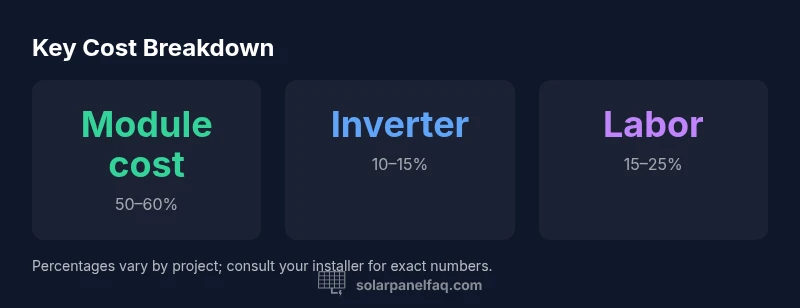
When you ask how much is solar panel installation, the answer hinges on several cost components. The biggest share goes to the solar modules themselves, followed by inverters, racking hardware, wiring, and balance-of-system components. Labor, permitting, grid interconnection, and warranties also add to the bottom line. Understanding these pieces helps you compare bids on a like-for-like basis and avoid sticker shock. Solar Panel FAQ Analysis, 2026 notes that the price per watt is a helpful comparator, since different installers may present totals that look different but boil down to similar per-watt costs. The goal is to translate a headline price into meaningful, apples-to-apples comparisons across bids and regions.
What influences price per watt and total cost
Price per watt is a practical yardstick because it normalizes the cost across system sizes. Major levers include module type (monocrystalline vs polycrystalline), inverter choice (string vs microinverters), mounting hardware (flush mounts vs rail systems), and balance-of-system components. Labor intensity varies with roof geometry, attic access, and electrical upgrades needed for interconnection. Permitting and inspection fees differ by municipality. In short, a bigger system isn’t always more expensive per watt, but it will raise total cost, and certain roof types can add hidden labor costs. Compare bids by wattage, but also inspect the scope of work and warranties offered.
Incentives, permits, and regional variation
Regional price differences reflect labor markets, permitting processes, and local building codes. Incentives and rebates can lower net cost, but availability depends on your location and eligibility. It’s essential to map out what incentives exist in your area and how they apply to your installation. When you see a bid, ask installers to show net cost after applying incentives and to itemize any permit or interconnection charges. This transparency helps you compare true costs rather than sticker prices.
How to get accurate quotes and compare bids
To obtain trustworthy quotes, start with a site assessment and shade analysis. Request bids from at least three installers and ask for a per-watt price, system size, expected production, warranty terms, and a breakdown of non-solar costs (permits, wiring, and interconnection). Compare apples to apples by confirming module type, inverter type, mounting hardware, and expected maintenance. A clear, written proposal minimizes surprises during installation and helps you gauge long-term value.
Practical cost-saving strategies
You can reduce upfront costs by choosing a slightly smaller system if your energy needs are modest, using high-efficiency modules to achieve desired production with fewer panels, and timing installations to avoid peak season pricing. Leasing or power purchase agreements (PPAs) can lower upfront costs but may reduce long-term savings. Investigate financing options that fit your budget and consider total cost of ownership, not just the sticker price. Finally, ensure the installer has a strong track record and solid warranties.
Long-term value and planning your project
Beyond the initial price, consider long-term performance and reliability. A well-installed system with quality components tends to deliver strong year-over-year savings and stable performance. Plan for potential roof replacements or expansions in the future and ensure the system layout allows for easy upgrades. Longevity, efficiency, and service quality are as important as the upfront price when evaluating solar investments.
Cost factors by roof type
| Roof Type | Avg Price Range per Watt | Common Install Time | Notes |
|---|---|---|---|
| Flat roof | $2.80–$3.50 | 1–2 days | Simple layout, easy access |
| Pitched roof (shingles) | $2.60–$3.80 | 1–3 days | Most common, versatile |
| Tile roof | $3.20–$4.00 | 2–4 days | Requires specialized mounts |
Frequently Asked Questions
What is the average cost to install solar panels?
Costs vary by system size and components, but a typical 6–8 kW residential install lands in the $15,000–$32,000 range before incentives. Always compare per-watt price and the full scope of work when assessing bids.
Most homes pay within a mid-range, around fifteen to thirty-two thousand dollars before any incentives.
What factors determine installation cost?
System size, roof type and orientation, inverter choice, mounting hardware, electrical upgrades, labor, and permitting all influence cost. Bids should clearly separate material costs from labor and non-solar charges.
Labor, roof specifics, and component choices drive most of the price.
How long does installation take?
Most residential installs take 1–3 days on-site, depending on system size, roof type, and any required electrical work. Pre-install planning can shorten the on-site window.
Often a few days, with some work done before on-site.
Do incentives affect the total cost?
Yes. Incentives reduce net cost, but availability varies by location and eligibility. Installers can help you model expected savings after incentives.
Incentives can substantially lower what you pay out of pocket.
Is financing available?
Many installers offer financing, leases, PPAs, or loans. Compare terms, total costs, and long-term savings to choose the best fit.
There are several financing paths to fit different budgets.
“Cost is a starting point; the real value comes from system performance, durability, and available incentives.”
Top Takeaways
- Get multiple quotes to benchmark per-watt price
- Compare total cost, not just sticker price
- Account for incentives to estimate net cost
- Roof type and location affect final pricing