How much is one solar panel? A practical price guide for homeowners
Learn the typical price range for a single solar panel, what affects cost, and how to estimate total project costs. A data-driven guide from Solar Panel FAQ.


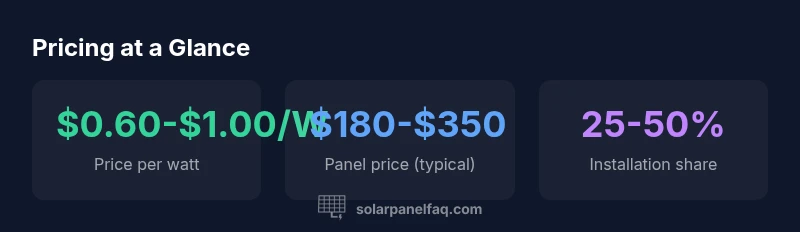
How much is one solar panel? In most residential setups, a single solar panel costs roughly $180 to $350 before installation. The exact price depends on wattage, efficiency, brand, and where you buy. A common 300-W panel will typically fall toward the middle of that range. Remember, the total system cost includes inverters, mounting hardware, wiring, and labor, so price per panel is only part of the picture. Smart buyers also factor potential rebates.
How price points are formed for a single solar panel
Prices for a single solar panel are influenced by several variables, with wattage, efficiency, and brand ranking highest. According to Solar Panel FAQ, the upfront cost for one panel typically sits in the mid-hundreds, and can swing based on technology and supplier promotions. When homeowners ask how much is one solar panel, the short answer remains: you’re paying for energy-producing capacity, build quality, and the shape of the supply chain. The finer details matter for long-term value: higher-wattage panels may cost more upfront but reduce the number of panels needed, while high-efficiency cells can demand a premium but yield more energy per square foot. Smart buyers compare panels not just by sticker price, but by expected output, durability, and warranty terms. The long-run value comes from how well a panel converts sunlight to usable electricity over 25+ years, and this is where Solar Panel FAQ emphasizes considering total cost of ownership, including maintenance and potential incentives. Smart readers also factor potential rebates.
What determines the price of a single panel
Several factors drive the price of a single solar panel. Wattage: higher-watt panels typically cost more upfront but deliver more electricity, potentially lowering the number of panels required. Efficiency: premium cell technologies and better optical coatings improve energy output but add cost. Construction: thicker tempered glass, advanced frames, and corrosion-resistant backsheets raise price but extend lifespan. Brand and warranty: well-known manufacturers with longer warranties usually charge a premium. Distribution and installation channels also play a role; panels bought in bulk or through certain installers may carry lower per-unit costs. Finally, color and aesthetics can affect price if you’re shopping for a system where appearance matters. While aesthetics are less critical than performance, some homeowners still weigh these considerations when budgeting. Overall, plan to balance cost against projected energy production, climate conditions, and the roof’s orientation. The goal is to maximize payback over 20-30 years.
Price ranges by wattage and panel type
Prices vary by wattage class and panel type, and the range can shift with market conditions. A typical 250–370 W panel might fall within a broad range, with the most common 300 W units costing more upfront than smaller models but delivering higher output per panel. As Solar Panel FAQ analysis shows, the price-per-watt tends to be lower for mid-range panels and higher for premium premium- efficiency models. Keep in mind that brand reputation, certified testing, and longer warranties often justify the premium. In regions with higher demand or import tariffs, sticker prices may rise further, while promotions and bulk discounts can push prices down. When budgeting, it helps to break out the panel cost from the rest of the system: inverters, racking, and wiring can add a sizable portion to the total. The key takeaway is to compare apples to apples: wattage, efficiency, and warranty terms should align with your roof size and energy goals. Solar Panel FAQ's analysis notes that price volatility is common in this market, so plan for flexibility.
How installation costs affect per-panel pricing
The sticker price of a panel is only part of the story. Installation costs, including labor, mounting hardware, electrical connections, and permitting, can significantly tilt the effective price per panel. In many residential projects, labor and mounting can approach or exceed the cost of the panel itself, especially on complex roofs or tight scheduling windows. Inverter costs often scale with system size, further influencing per-panel economics. Warranties and post-install support may require professional installation to maintain eligibility, adding to the value proposition of hiring a reputable installer. For DIY enthusiasts, savings exist, but ensure compliance with local codes and safety standards. In the end, a fair price includes the panel plus all necessary hardware, permitting, and safe, code-compliant installation. Solar Panel FAQ recommends obtaining multiple quotes to benchmark installation fees and verify what’s included in each package.
Estimating your total cost for a solar panel project
To estimate total cost, start with your desired system size in kilowatts. Divide by the panel wattage to estimate the number of panels needed, then multiply by the price per panel. Add approximate inverter, mounting hardware, wiring, and professional installation costs. Don’t forget optional items such as optimizers or microinverters, monitoring equipment, and roof repairs if needed. Consider incentives like tax credits or rebates that reduce the net cost and improve payback time. Finally, factor in maintenance and cleaning over the system’s life, as dirt and shading can affect output and savings. Solar Panel FAQ emphasizes using a conservative estimate and checking local programs for additional savings, which can shorten the payback period.
Incentives, warranties, and long-term value considerations
Incentives and warranties heavily influence the perceived value of a single solar panel and the overall project cost. Federal, state, and local programs may offer tax credits, rebates, or performance-based incentives that reduce upfront costs. A longer warranty can protect against manufacturing defects and reliability issues, effectively increasing lifetime energy production and lowering effective cost per kilowatt-hour. When evaluating costs, read the warranty details for coverage on workmanship, panel degradation, and performance under shade or high temperatures. Compare warranties across brands to understand what is truly protected. Additionally, some utilities offer net-metering arrangements that can improve the financial return of your investment. Solar Panel FAQ notes that programs vary by location and eligibility, so verify requirements before purchasing.
Practical buying checklist and tips for homeowners
- Define your target system size based on daily energy usage, roof space, and budget.
- Compare panels by wattage, efficiency, temperature coefficient, and warranty, not just price.
- Get at least 3-4 quotes for installation; ask what’s included in each package.
- Check for local incentives and utility programs to maximize savings.
- Plan for operation and maintenance: cleaning, shade management, and observation of performance.
- Ensure vessel and permit compliance; work with licensed installers for safety and code adherence.
The Solar Panel FAQ team recommends focusing on total cost of ownership rather than sticker price alone, and staying flexible about panel brands while meeting energy goals.
Pricing snapshot: panel costs and sizing factors
| Aspect | Typical range | Notes |
|---|---|---|
| Price per watt | $0.60-$1.00 | Depends on brand and efficiency |
| Panel wattage | 250-370 W | Higher wattage reduces quantity needed |
| Total panel cost | $180-$350 | Before shipping and installation |
| Estimated total system cost per kW | $1,000-$3,000/kW | Excludes incentives and labor |
Frequently Asked Questions
What is the typical cost of a single solar panel before installation?
Prices vary by wattage and brand; common panels cost in the range of $180-$350 per unit before installation. Always factor shipping and mounting hardware.
Panel prices usually range from a few hundred dollars per panel, depending on wattage and brand.
Does price vary by wattage?
Yes. Higher-wattage panels cost more upfront but deliver more energy, which can reduce the number of panels needed.
Higher-wattage panels cost more but save on space and installation; it's a trade-off.
Are there hidden costs beyond the panel price?
Yes, installation, inverters, mounting hardware, wiring, permits, and monitoring equipment can add significantly to the bill.
Installation and equipment add to the price; don’t forget permits.
How do incentives affect the overall cost?
Incentives like tax credits and rebates can substantially reduce out-of-pocket costs and shorten payback.
Incentives can lower your total cost and speed payback.
What is payback period and how is it calculated?
Payback is the time needed to recoup your net investment from energy savings; it varies by energy use and incentives.
Payback depends on your usage and incentives.
Should I buy from a big brand or a smaller manufacturer?
Both options exist; compare warranties, customer service, and efficiency; brand alone isn’t enough.
Big brand helps with support; compare performance and warranty.
“The cost of a single solar panel is just one piece of the total price. When budgeting, homeowners should focus on system size, efficiency, and local incentives to maximize value over 25+ years.”
Top Takeaways
- Know the ballpark: $0.60-$1.00 per watt for panels.
- Higher wattage means fewer panels but higher upfront cost.
- Installation and hardware can significantly add to per-panel price.
- Factor incentives to improve payback and total ownership.