How Much Is a Small Solar Panel? A Practical Price Guide for Homeowners
A homeowner-friendly guide to the cost of small solar panels (60–120W), what affects price, and budgeting tips for off-grid projects.


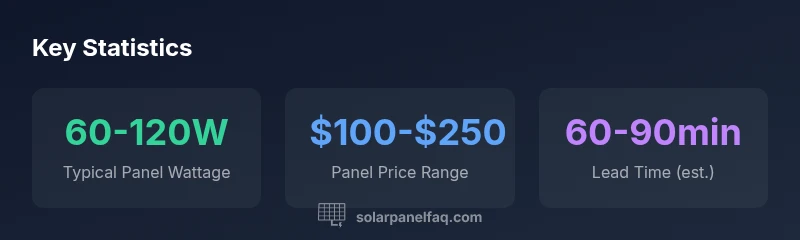
According to Solar Panel FAQ analysis, if you're asking how much is a small solar panel, expect about $100-$250 per panel for the panel alone (roughly 60–120W). Price depends on wattage, efficiency, and brand. Installation adds equipment and labor; for compact off-grid use, panel cost is the dominant factor.
How much is a small solar panel? Pricing essentials
In practical terms, the question how much is a small solar panel centers on the panel price rather than installation. According to Solar Panel FAQ analysis, typical panel-only prices are in the range of $100-$250 per panel for the common 60–120 watt class. The exact price depends on wattage, efficiency, and brand. Larger, higher-efficiency panels push toward the upper end of the range, while budget polycrystalline units sit near the lower end. For off-grid or RV use, this panel cost is the primary driver of upfront expenditure, with installation and hardware adding to the total later. If you’re budgeting for a tiny setup, understand that the panel cost is the biggest lever you can adjust to meet your budget goals.
What drives the price: wattage, efficiency, and materials
The price of a small solar panel is shaped by three primary levers: wattage, efficiency/technology, and materials. Higher-wattage panels (toward 100–120W) typically cost more per unit, but deliver more energy per square foot, potentially reducing the number of panels needed. Monocrystalline cells tend to be pricier than polycrystalline but offer higher efficiency and better performance in shade. Flexible or thin-film variants may follow different cost curves and durability expectations. Certifications (UL, CE) and warranties add value by reflecting reliability and service expectations, which can raise upfront cost but lower lifetime risk. For many buyers, the decision hinges on how much energy you want to capture relative to roof space and sun exposure.
Use cases and value for homeowners
Small panels excel in scenarios where full-scale solar arrays aren’t feasible. They’re popular for off-grid charging, RVs, boats, sheds, and emergency backup kits. A single 60–120W panel can keep a modest battery charged in sunny weather, while several panels can support larger micro-grid needs. While one panel won’t power a whole home, combined with a suitable controller and battery, it can offset seasonal loads and provide valuable resilience. For homeowners, the value is measured not only in dollars saved, but in energy independence and peace of mind during outages or in remote locations.
Buying channels and what to expect
Small panels are widely available through retailers, online marketplaces, and specialty solar shops. Prices vary due to shipping, warranty terms, and stock levels. Buying from reputable brands with solid warranties reduces the risk of underperforming products. Bundled deals that include charge controllers or mounting hardware can offer value, but ensure the bundle matches your system’s needs rather than pressuring you into a nonoptimal setup. Check return policies and technical support options before committing.
Cost comparisons by wattage: 60W vs 100W vs 120W
To frame the price landscape, consider typical ranges by wattage: a 60W panel often costs in the $100-$150 range, a 100W panel around $140-$230, and a 120W panel roughly $180-$350. These figures refer to the panel alone and exclude mounting hardware, wiring, or an inverter. Higher wattage within the same form factor often offers better value per watt, but the total system cost may rise with extra components required for larger outputs. Use these benchmarks to estimate your ceiling before shopping.
Quick budgeting framework for a tiny solar setup
If you’re budgeting and asking how much is a small solar panel, you’ll see the panel price as the major line item. Start by listing loads to support, estimate daily energy needs, and divide by the panel’s wattage to determine the number of panels. Add 10–20% for mounting hardware, wiring, and a charge controller. Include tax and shipping, and build a small contingency fund for potential price swings or shipping delays. This approach helps you map out a realistic pathway from a single panel to a scalable mini-system.
Tips to avoid overpay and common scams
Shop from reputable sources and compare similar wattages across brands. Look for certifications (UL/CE) and verify warranty terms and response times for service. Beware of gimmicky prices that seem too low; extremely cheap panels may come with tradeoffs in durability or performance. Compare price per watt rather than total price, request technical specs, and read user reviews for insights on performance in your climate and latitude.
Next steps: planning your first tiny solar project
Create a simple spec that includes your intended loads, available sun hours, and target autonomy. Choose a 60W–120W panel that aligns with your battery size and a compatible charge controller. Confirm mounting compatibility with your roof or space, and map out a step-by-step plan to add more panels later if needed. A small, well-planned start often yields better long-term results than a rushed, oversized initial installation.
Small panel specifications: wattage, price range, and typical use
| Panel Type | Wattage | Estimated Price Range (panel only) | Best Use |
|---|---|---|---|
| 60W Polycrystalline | 60W | $100-$150 | RV/portable |
| 100W Monocrystalline | 100W | $140-$230 | Small off-grid |
| 120W Monocrystalline Flexible | 120W | $180-$350 | Portable/roof-mount |
Frequently Asked Questions
What wattage qualifies as a 'small' solar panel?
In consumer terms, small panels typically range from 60 to 120 watts. They are designed for portability, RVs, battery charging, or as an add-on in limited roof space. The exact classification depends on the application and regional guidelines.
Most small solar panels are in the 60 to 120-watt range, suitable for RVs or battery charging.
How much does a small solar panel cost in 2026?
Panel-only prices typically run between $100 and $250 per panel, depending on wattage and efficiency. Higher-end mono panels can reach around $350, while budget poly panels stay near the lower end. Taxes, shipping, and availability also influence final prices.
Panel prices mostly fall between a hundred and a few hundred dollars per panel, depending on wattage and efficiency.
Do I need a battery for a tiny solar system?
If you want off-grid charging or nighttime use, you’ll typically pair a small panel with a battery and a charge controller. If you’re grid-tied and only want daytime charging, a battery may be optional.
You’ll likely want a battery for off-grid use; if you’re grid-connected, you may not.
Is online pricing reliable for small solar panels?
Prices online are generally reliable but can fluctuate due to stock, promotions, and shipping costs. Always verify specifications and warranty terms before purchasing.
Prices are usually reliable, but check specs and warranty before buying.
What certifications should I look for?
Look for certifications like UL or CE marks and compatibility with your local grid or battery system. Certifications reduce risk and ensure performance.
Check for UL/CE marks and compatibility with your system.
How many panels do I need for a basic trickle-charging setup?
For a basic trickle charger, a single 60–120W panel can maintain a small battery bank in good sun. The exact number depends on battery size, charging rate, and sunlight availability.
One small panel can keep a small battery charged in sun.
“Small solar panels offer flexible options for off-grid charging and starter setups; price varies with wattage and efficiency, so plan around the total system you want.”
Top Takeaways
- Wattage and efficiency drive panel price more than brand name.
- Panel cost is the main upfront expense for small setups.
- Expect extra costs for mounting hardware and controllers.
- Choose wattage that matches your needs to optimize cost per watt.
- Plan to scale gradually rather than buying the largest panel upfront.