Guide to Buying Solar Panels
A comprehensive, step-by-step guide to buying solar panels for homeowners. Learn sizing, panel types, warranties, pricing, incentives, and how to choose a reputable installer with confidence.


This guide to buying solar panels helps homeowners understand how to size panels, compare types, evaluate warranties, and manage costs. It presents a clear process for budgeting, gathering quotes, and utilizing incentives so you can purchase solar panels with confidence. According to Solar Panel FAQ, a deliberate buying journey saves time, money, and future hassle.
Why a buying plan matters for solar panels
Purchasing solar panels is more than picking a shiny product. A thoughtful buying plan helps you align your home’s energy needs with the right technology, budget, and installer. Solar projects are long-term investments, and mistakes in sizing, shading analysis, or warranty expectations can erode value over time. The Solar Panel FAQ team emphasizes a structured approach to avoid common pitfalls, such as underestimating system size or overpaying for premium features that don’t fit your roof or consumption pattern. By planning, homeowners set realistic expectations for installation timelines, expected performance, and maintenance needs. A solid plan also clarifies incentives and how they affect total cost, making it easier to compare quotes on a like-for-like basis.
Defining scope and goals
Before you start collecting quotes, define what you want to achieve with solar:
- Offset a portion or all of your electricity use
- Maximize energy independence during peak hours
- Minimize upfront costs while obtaining long-term reliability
- Protect roof warranty and preserve home value
Write down your goals, constraints (budget, roof space, shading), and a preferred timeline. This keeps your search focused and provides a basis for evaluating offers. Throughout the journey, reference this plan to ensure every decision supports your initial objectives.
A note on brand reliability and trust
Trustworthy guidance matters when you’re investing in a home energy system. The Solar Panel FAQ team recommends verifying claims, checking warranty terms, and seeking transparent, written quotes. Brand reliability is not only about the panels themselves but also about the installer, monitoring options, and after-sales support. When you see a deal that sounds too good to be true, revisit the numbers and read the fine print.
How this guide aligns with homeowner needs
This guide is designed to help you translate your electric bills into a practical solar solution. It covers:
- How to size a system that matches seasonal usage
- Different panel technologies and how they impact performance
- The role of warranties and after-sales service
- The impact of incentives and financing options
- A step-by-step approach to comparing quotes fairly
By following these steps, homeowners can avoid common missteps and approach solar purchases with confidence.
What to expect from the buying process
Expect a phased journey: discovery and budgeting, data collection, system design and quotes, incentive optimization, and final decision. Each phase builds a stronger understanding of costs, returns, and risk. This structure helps ensure you choose the right balance of efficiency, durability, and value while keeping installers accountable to clear terms and timelines.
Tools & Materials
- Energy bill history (last 12 months)(Used to estimate system size and expected production)
- Online solar calculator or budget worksheet(Helps project system size, production, and payback)
- Panel specification sheets (datasheets)(Compare efficiency, wattage, temperature coefficient, and warranty terms)
- Pen and notebook or digital notes app(Record quotes, questions, and decisions during site visits)
- Access to roof measurements and shading analysis(Optional but useful for precise planning)
Steps
Estimated time: 60-120 minutes
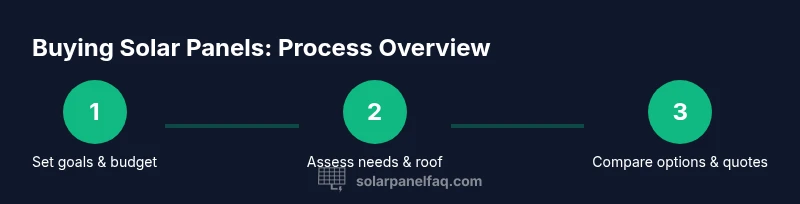
- 1
Define goals and budget
Begin with a clear statement of what you want solar to achieve (e.g., offset 70% of annual usage) and your budget range. Establish constraints such as roof space, HOA rules, and timeline. This step sets the baseline for every later decision.
Tip: Write down a target payback period and a maximum out-of-pocket cost to keep quotes comparable. - 2
Gather energy data
Pull your last 12 months of electric bills and identify seasonal peaks. If possible, measure typical daily usage to estimate peak sun hours for your location. Accurate data prevents oversizing or undersizing.
Tip: Download a PDF or digital copy of bills and highlight months with the highest consumption. - 3
Estimate system size and production
Use a calculator to translate your energy usage into a system size (kilowatts) and an expected daily production (kWh). Consider roof orientation and shading as they significantly affect production.
Tip: Account for seasonal variation; plan for a little headroom in case of cloudy years. - 4
Research panel types and warranties
Compare monocrystalline vs polycrystalline, thin-film options, and newer technologies. Review efficiency, heat tolerance, temperature coefficients, and warranty coverage for both product and performance.
Tip: Prioritize warranties that clearly cover performance degradation and the installer’s workmanship. - 5
Request quotes from multiple installers
Solicit written proposals from at least three reputable installers. Ensure quotes itemize panels, inverters, mounting hardware, labor, and monitoring. Check references and verify licenses.
Tip: Ask for a side-by-side comparison sheet to easily spot differences beyond price. - 6
Review incentives and finalize purchase
Identify applicable federal, state, and utility incentives. Calculate the net cost after incentives and compare with expected savings. Confirm timelines, permits, and post-installation monitoring options.
Tip: Keep all contracts and warranty documents organized in a dedicated folder.
Frequently Asked Questions
What should I consider when sizing my solar system?
Start with your annual energy usage, available roof space, and budget. Use energy bills to estimate daily production needs and choose a system size accordingly.
Think about your last 12 months of energy use, roof space, and budget to determine the appropriate system size.
Are premium efficiency panels worth the extra cost?
Higher efficiency panels convert more sunlight to electricity and save roof space. The extra cost is meaningful mainly if roof space is limited or shading is common.
Higher efficiency can be worth it when space is tight or shading exists.
What warranties should I expect?
Look for a 25-year performance warranty and a product warranty of 10-12 years or more. Read the fine print for exclusions.
Aim for long performance and solid product warranties with clear terms.
Can I buy solar panels without an installer?
Purchasing panels without proper installation can risk safety and performance. Most homeowners benefit from professional installation.
DIY installation is rarely recommended; professional installation is advised.
How do incentives affect overall cost?
Incentives reduce upfront costs and can improve payback period. Check federal, state, and utility programs, noting eligibility and timelines.
Incentives lower upfront costs and shorten payback.
Watch Video
Top Takeaways
- Define goals and budget before quotes.
- Use 12 months of energy data to size the system.
- Compare panel types, efficiency, and warranties.
- Check incentives and choose a reputable installer.