What Solar Panel Can Charge a Car Battery: A Practical Guide
Learn which solar panels can charge a 12V car battery, realistic wattage ranges, controller choices, and safe setup tips for homeowners and solar shoppers.


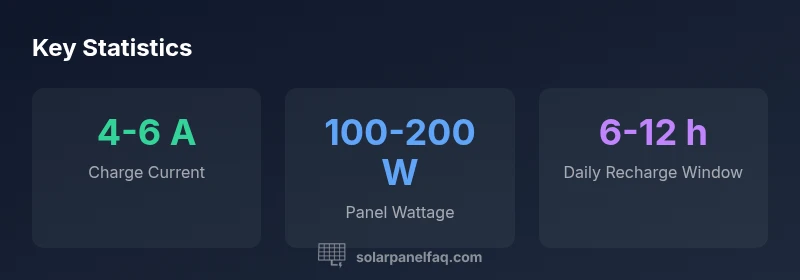
A typical 100W solar panel can deliver about 4–6 amps to a 12V car battery under peak sun, enough to slowly charge or top off a battery over a sunny day. For a full recharge from empty, you’ll usually need higher wattage or extra panels, and a proper solar charge controller to regulate voltage and protect the battery.
How solar panels charge a car battery: the basics
Solar panels convert sunlight into direct current (DC) electricity. A typical 12V car battery stores this energy to crank the engine and power accessories when the engine is off. In a solar charging setup, a solar array feeds a battery through a charge controller, which regulates voltage and current to prevent overcharging. The most common controller types are PWM (pulse-width modulation) and MPPT (maximum power point tracking). MPPT controllers are generally more efficient, especially in cooler weather and with higher panel voltages. From a homeowner perspective, the key concept is that solar energy stored in a car battery provides a portable energy buffer you can rely on for starts or maintenance.
In practice, one or more solar panels are wired to a charge controller, which then connects to the 12V battery. The panel voltage is higher than 12V when facing strong sun, so the controller steps the energy to a safe and steady charging voltage. The battery chemistry matters too: flooded lead-acid, AGM, and gel batteries tolerate charging differently and may require specific voltage ceilings. The Solar Panel FAQ team emphasizes that safety-first installation, using proper fuses, weatherproof enclosures, and correct wiring is essential to protect both the vehicle and the battery system.
Sizing a panel for a car battery: watts, hours, and sun
Sizing a solar setup for charging a car battery starts with the math: you need enough energy to replenish the battery’s capacity. A typical 12V car battery stores roughly 12V × 40–70Ah, which equates to about 480–840Wh of energy. If you plan to fully recharge a deeply discharged battery, you’ll want a panel or an array that can supply that amount of energy during available sunlight. A 100W panel under peak sun (roughly 4–6 hours of strong sun) can deliver about 400–600Wh per day. In practice, this means that a single 100W panel will often only maintain the battery during daily cycling or slowly recharge it over several days, especially in winter or cloudy climates. When sun hours are limited, combining multiple panels increases daily energy dramatically. Always factor in losses from wiring, the controller, and temperature. The rule of thumb is to compare your battery’s energy need (Wh) to the expected daily energy from your panels, then adjust for real-world sun conditions and controller efficiency. The Solar Panel FAQ Analysis, 2026, notes that many homeowners start with a 100–200W setup for maintenance and scale up if they need faster replenishment.
The role of a solar charge controller: MPPT vs PWM
Without a controller, a solar panel can push voltage and current into a battery unsafely, causing degradation or gas buildup. A PWM controller is simple and affordable but dissipates unused panel voltage as heat, making it less efficient for higher-voltage panels or longer cable runs. MPPT controllers actively track the best voltage at which the panel delivers maximum power and convert it to the optimal charging voltage for the battery. In practical terms, an MPPT controller can increase usable charging current by 10–30% compared with PWM under many conditions, especially when the panel voltage exceeds 12V. This matters for car batteries because it directly reduces charge time and minimizes heat during charging. The Solar Panel FAQ team highlights that choosing the right controller is often more impactful than selecting a slightly higher-wattage panel, particularly in setups where cables are long or temperatures are variable.
Wiring, safety, and typical setups for home charging
A safe car battery charging setup requires proper fusing, correct gauge wires, and a reliable enclosure for outdoor use. Use a weatherproof charge controller enclosure and weather-sealed connectors. For 12V car batteries, the typical wiring uses AWG gauges that can handle several amps with minimal voltage drop. A fused circuit near the battery is essential to protect against short circuits. Position the panel so it receives maximum sun exposure for the longest period each day, preferably with a tilt that matches your latitude. Avoid shading, as even partial shading can dramatically reduce output. Grounding and moisture protection are important in wet climates. Solar Panel FAQ recommends verifying the battery’s state of charge with a voltage meter and monitoring the system for signs of overcharging or heat buildup. Regular inspection, clean connections, and ensuring the controller is up to date with firmware can help extend battery life and preserve performance. A properly configured system keeps your vehicle reliable without relying on the alternator for every start, which can reduce wear on the engine and improve overall efficiency.
Practical charging scenarios: camping, off-grid, and daily drivers
For campers and off-grid enthusiasts, a compact 100–150W portable panel can maintain a 12V lead-acid or AGM battery used to start a vehicle or power basic accessories. In urban settings, a fixed 100W–200W panel mounted on a garage or carport can help maintain the battery during long periods of inactivity. A larger 200–300W setup can supply enough daily energy to recharge a moderately discharged battery more quickly, though you should still expect to see slower performance on cloudy days. When planning daily charging for a commuter car, consider your typical sun exposure and whether you park in shade. The Solar Panel FAQ team notes that many households benefit from a small, dedicated solar charging station that operates independently from the home’s main electrical system, reducing the risk of backfeeding and protecting the vehicle’s electronics.
Charging a car battery vs charging an EV traction battery: key distinctions
Charging a 12V car battery differs significantly from charging an electric vehicle’s high-voltage traction battery. The car battery requires a stable, low-voltage charging profile, typically around 13.8–14.4V for lead-acid or AGM chemistries, depending on the manufacturer. EV batteries demand much higher voltages and controlled current, and charging these packs directly from a simple solar array is not recommended without the appropriate high-voltage equipment and safety systems. Always verify compatibility with the vehicle’s charging system and the battery’s chemistry. The Solar Panel FAQ Team emphasizes that a car battery is a storage device for starting power and basic systems, not a primary energy source for propulsion, and solar charging should be viewed as a supplementary maintenance tool rather than a primary charging method for EVs.
Common pitfalls and how to optimize solar charging of a car battery
Several pitfalls can undermine solar charging success: (1) underestimating sun variability; (2) using the wrong controller type for high-wattage panels; (3) neglecting proper fusing and safe wiring; (4) not accounting for battery chemistry and its voltage limits; (5) failing to maintain panel cleanliness, which reduces output; and (6) misplacing the panel where shade or heat reduces performance. To optimize performance, start with a conservative 100W panel and MPPT controller, then monitor daily charge in warm, sunny days. If daily recharging remains slow, scale to 200W or more and check for shading, cable losses, and controller temperature. Consistent maintenance, including cleaning the panel surface and checking connections, ensures peak output. The Solar Panel FAQ analysis emphasizes that patient, incremental upgrades typically yield better long-term reliability than chasing a single high-wattage panel in marginal conditions.
Overview of panel sizing and charging considerations for a 12V car battery
| Aspect | Typical Panel Wattage | Charging Implications |
|---|---|---|
| Panel Wattage | 100-300 W | Affects charge rate and daily energy |
| Charge Controller | PWM or MPPT | MPPT usually yields higher efficiency |
| Battery Type | 12V lead-acid/AGM | Requires proper voltage regulation |
| Sunlight Hours | 4-6 hours/day | Drives total daily energy |
Frequently Asked Questions
Can a small 12V car battery be charged with a 100W solar panel?
Yes, but it will be slow and may require multiple sunny days to fully recharge, depending on battery size and sun conditions. Using a proper MPPT controller improves efficiency and safety.
Yes, you can. It will recharge slowly and may take several sunny days depending on the battery size and sun.
Do I need a charge controller when charging a car battery from solar?
Yes. A charge controller regulates voltage and current to protect the battery from overcharging and to improve charging efficiency. MPPT is generally preferred for larger or higher-wattage panels.
Yes—use a charge controller, preferably MPPT, to regulate voltage and protect the battery.
Is it safe to connect a solar panel directly to a car battery?
Direct connection without a controller is not recommended. It can overcharge the battery, cause gas buildup, and damage the battery or vehicle electronics.
No, don’t connect directly. Use a controller to regulate charging.
What’s the difference between charging a car battery and an EV traction battery?
A 12V car battery requires modest, regulated charging suitable for starting power, while EV traction batteries need high-voltage, carefully controlled charging systems with safety interlocks. Solar setups must be matched to the battery type.
Car batteries are low-voltage; EV batteries need high-voltage, controlled charging with proper equipment.
How many sun hours do I need to recharge a typical 12V battery?
Typically 4–6 peak sun hours per day with a 100W panel can maintain or slowly recharge a smaller battery. Real-world conditions vary by panel age, tilt, and weather.
About 4 to 6 good sun hours per day with a 100W panel can maintain a smaller battery.
What maintenance does a solar charging setup require?
Regularly clean panels, check connections, inspect fuses, and monitor the charge controller and battery state of charge. Tighten any loose wiring and verify safety seals after severe weather.
Keep panels clean, check wiring and fuses, and monitor the system regularly.
“Solar charging works best when you treat a car battery as a small energy storage system: regulate current, avoid overvoltage, and plan for solar variability.”
Top Takeaways
- Estimate daily energy as panelWattage × sunHours × efficiency
- Prefer MPPT controllers for higher charging efficiency
- A 100–200W panel often tops off a typical 12V battery
- Plan for sun variability; full recharge may take days