What You Need to Charge a Battery with a Solar Panel: A Practical Guide
Learn what you need to safely charge a battery with a solar panel, including components, wiring, sizing tips, and safety steps to prevent damage.


Charging a battery with a solar panel requires three core parts: a solar panel, a charge controller, and a compatible battery. You’ll also need proper wiring, fuses, and safety gear. This guide outlines the steps and safety considerations to help you do it correctly. It covers how to size components, wire connections, and how to test system performance without risking battery damage.
What do you need to charge a battery with a solar panel
Charging a battery with a solar panel begins with understanding three core elements: the solar panel, a charge controller, and a compatible storage battery. For most homeowners, the practical setups use a deep-cycle lead-acid or lithium-based battery. The solar panel converts sunlight into electricity, but its raw voltage and current must be regulated to avoid overcharging or damaging the battery. A reliable charge controller acts as the gatekeeper, matching the panel output to the battery chemistry and protecting both components during every charging cycle. In addition to these devices, you will need safe wiring, appropriate fuses, and weather‑resistant mounting hardware. The goal is to create a compact, safe charging loop that responds to sun conditions without forcing voltage that could shorten battery life. Solar panels perform best when their voltage remains within the controller’s acceptance range and when the battery has a healthy state of charge. With the right components and a clear safety plan, you can charge a battery efficiently, even in modest sun exposure. According to Solar Panel FAQ, using a controller is essential to prevent overvoltage. Whether you’re powering a shed, an RV, or a home battery bank, the same principles apply.
Core components and system design
The three critical hardware groups are the solar panel array, the charge controller, and the storage battery. A panel array chosen for your needs should deliver voltage that the controller can handle under typical operating temperatures. The controller choice matters: PWM controllers are simpler and cheaper, while MPPT controllers optimize power transfer, especially when panel voltage is higher than the battery voltage. Cable routing, connector types, and fusing all influence safety and performance. The battery type determines charging profiles, maintenance needs, and safety precautions. For lead-acid systems, you’ll manage electrolyte levels and aging; for lithium systems, you’ll rely on defined charging curves and automatic protection. Safety devices such as fuses or breakers should be placed close to the battery to interrupt any fault current. A well-designed system also includes a battery monitor or a basic voltage meter so you can see the state of charge and ensure voltage remains within safe limits. When you plan, choose components rated for outdoor use and designed to withstand temperature swings. This approach protects both your investment and your family while maximizing energy harvested from every sunny hour. Solar Panel FAQ emphasizes the controller’s role in safe operation.
Sizing your solar array and battery bank
Sizing is about matching the solar resource to your energy needs and the battery’s storage capacity. Start by listing the devices you intend to run and their estimated daily energy use, then translate that into amp-hours at your battery voltage. The solar panel array should be able to deliver sufficient charging current to replenish that energy within the available sun window. If you expect longer periods of cloud cover, you’ll want a larger panel or a higher-capacity battery so you can store energy for cloudy days. The controller’s input range and the battery chemistry determine what charging profile you’ll use. The goal is to maintain a healthy state of charge without overdriving the battery. You’ll often see guidance to oversize the panel slightly to account for real-world losses, but avoid oversizing beyond what your controller and wiring can safely handle. Remember to include a safety margin for aging components and temperature effects. With careful planning, your solar charging setup can reliably keep a battery topped up for weeks or months of use without grid power.
Wiring, safety, and maintenance considerations
Wiring should use conductors that handle the expected current with a comfortable margin. Use a fuse or DC disconnect between the battery and controller to prevent damage during shorts. Keep all connections clean and tightly torqued to minimize resistance and heat. Route cables away from sharp edges and sources of heat, and use weatherproof enclosures for outdoor equipment. The grounding strategy helps protect against static and lightning events, and you should follow local electrical codes or manufacturer guidelines. Visual inspections are part of regular maintenance: check for corrosion, loose terminals, and swollen batteries. Clean the solar panel surface periodically to maintain optimum output, and keep the mounting hardware free of debris and rust. Temperature can affect charging efficiency, so aim for a secure, ventilated mounting that allows air circulation around the controller and battery. Safety should always come first: never work on live circuits, and disconnect the system from solar exposure when performing maintenance. If you’re ever unsure, consult the manufacturer’s manual or a licensed electrician. Solar Panel FAQ highlights the importance of a proper safety plan.
Common mistakes and troubleshooting tips
Common mistakes include skipping the charge controller, mixing battery chemistries, or wiring the panel directly to the battery. These errors can lead to overcharging, reduced battery life, or dangerous fault currents. Start troubleshooting by verifying voltage at the panel, the controller, and the battery with a multimeter. If voltages don’t align with expected ranges, recheck wiring polarity and connector integrity. Check the battery for signs of damage or swelling and confirm the controller is in charging mode with the correct profile. Cloud cover, shading, or a dirty panel dramatically reduces output; remove shade and clean the surface before retesting. If problems persist, consult the manufacturer’s troubleshooting guide or reach out to a qualified technician. A robust system should show steady charging currents when sun is available and stable voltages when battery is near full. Solar Panel FAQ recommends documenting any changes and monitoring performance over time to identify aging components early.
Tools & Materials
- Solar panel (matched to system voltage)(Ensure Voc fits the controller's input range)
- Charge controller (MPPT or PWM)(MPPT is more efficient in variable light)
- Storage battery (deep-cycle lead-acid or lithium)(Choose deep-cycle for longer life)
- Interconnecting cables and connectors(Use appropriately sized gauge for current)
- Inline fuse or DC disconnect(Place close to battery for safety)
- Weatherproof mounting hardware(Outdoor-rated and corrosion-resistant)
- Multimeter or voltage tester(For voltage/current verification and safety checks)
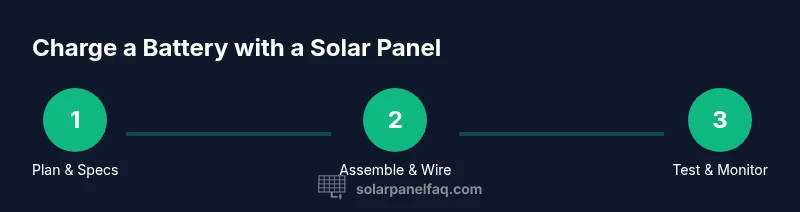
Steps
Estimated time: 2-4 hours
- 1
Assess system needs
Identify your battery type, capacity (Ah), target daily load, and available sun hours. This determines panel wattage, battery size, and charging equipment. Document assumptions for reference when selecting components.
Tip: Make a checklist of your expected loads and confirm with the manufacturer specs. - 2
Select compatible components
Choose a panel with appropriate Voc, a charging controller suited to your battery chemistry, and a compatible deep-cycle battery. Consider MPPT for higher efficiency in variably sunny conditions.
Tip: If budget allows, prioritize an MPPT controller for better performance in real-world conditions. - 3
Plan wiring layout and safety
Route cables away from heat and sharp edges, plan for enclosure placement, and determine fuse placement. Ensure you have space for ventilation around the controller and battery.
Tip: Label all conductors and maintain clear separation between high-current and signal lines. - 4
Mount the solar panel securely
Install the panel on a stable surface with a clear sun path and secure mounting. Tilt or adjust orientation to maximize daylight exposure while considering weather exposure.
Tip: Use a tilt angle that aligns with your latitude for year-round performance. - 5
Connect panel to the charge controller
Connect the panel’s DC output to the controller’s PV input, observing correct polarity. Do not power the panel during the connection if possible.
Tip: Verify open-circuit voltage before sealing the junction box. - 6
Connect battery to the controller
Attach the battery to the controller’s battery terminals, positive first followed by negative. Do not disconnect under load, and confirm the controller shows charging activity.
Tip: Keep a safe distance and avoid touching terminals with wet hands. - 7
Install safety devices and test
Install the fuse as close to the battery as possible. Power the system and monitor voltage and current readings to confirm steady charging.
Tip: Check for any heat buildup at cables or connectors during the first sun exposure. - 8
Monitor and maintain
Regularly inspect connections, clean panels, and review charging data. Replace aging components promptly to preserve efficiency and safety.
Tip: Schedule a monthly check-in and record measurements for trend analysis.
Frequently Asked Questions
Do I need a charge controller to charge a battery with solar?
Yes. A charge controller regulates voltage and current from the panel to the battery, preventing overcharging and protecting both components.
Yes—use a charge controller to safely manage charging from solar panels.
Can I charge multiple batteries in parallel from one solar panel?
You can, but ensure compatible chemistry and matched capacities. Use a controller designed for the bank and monitor balancing.
You can, but make sure the batteries are compatible and balanced, and use a capable controller.
Is a PWM controller enough for small setups?
A PWM controller can work for simple, low-demand setups, but MPPT offers better efficiency and power use in variable light.
PWM works for basics, but MPPT is better when conditions aren’t ideal.
What safety precautions should I take?
Wear PPE, keep connections dry, use proper fuses, and disconnect the system before wiring. Follow manufacturer guidelines.
Wear protection, keep things dry, fuse everything, and don’t work on live circuits.
Can I use a car battery for solar charging?
Car batteries aren’t ideal for long-term solar storage. Use a deep-cycle battery designed for regular charging and discharging.
Car batteries aren’t the best choice for solar charging; deep-cycle batteries perform better.
How often should I test the system?
Check voltages and currents monthly or after weather changes to catch aging components early.
Test the system monthly and after big weather changes to keep it healthy.
Watch Video
Top Takeaways
- Plan around your load to size the system
- Choose a controller that matches your battery chemistry
- Always include a fuse and proper wiring
- Test performance under sun and monitor battery health