Which Solar Panel Can Best Meet Your Home Energy Needs?
Discover which solar panel can best power your home by comparing panel types, efficiency, warranties, and installation factors. A clear, step-by-step guide from Solar Panel FAQ to help homeowners choose confidently.


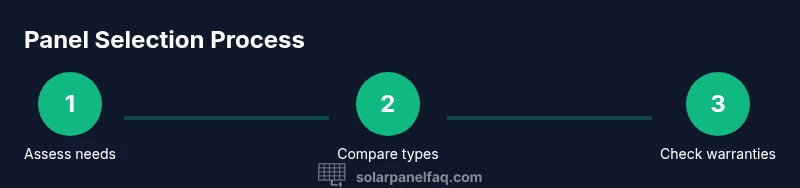
Which solar panel can best meet your home energy goals? Start by defining daily usage, roof space, and budget. Then compare panel types—monocrystalline, polycrystalline, and thin-film—against efficiency, temperature performance, and warranties. Finally, verify inverter compatibility, incentives, and installation requirements to choose the best option for your home.
Which solar panel can meet your home energy goals?
Choosing a solar panel for a home isn’t a one-size-fits-all decision. The question, which solar panel can best power your household, depends on several factors: how much electricity you use daily, how much roof area you have for panels, your climate and sun exposure, and your budget. In practical terms, you’ll weigh how much space a panel needs to produce your target kilowatt-hours, how efficiently the panel converts sunlight into usable electricity, and how its performance holds up in heat or shade. Throughout this guide, we’ll translate those indicators into a clear decision framework and a practical checklist you can apply before talking to installers or manufacturers. This approach helps you avoid oversizing or undersizing a system and aligns your choice with long-term reliability and value.
Understand your energy footprint before choosing a panel
Before comparing panel types, you need a solid picture of your energy footprint. Pull your last 12 months of electricity usage and look for seasonal peaks. Note daytime usage patterns, electric vehicle charging plans, and any upcoming home upgrades. Map your roof or yard space to determine how many panels you realistically can fit. Use a shading map to identify potential hot spots or obstructed areas. This data becomes the baseline for evaluating which solar panel can reliably meet your needs without wasting capacity or money.
Panel types at a glance: Monocrystalline, Polycrystalline, and Thin-Film
There are three primary categories: monocrystalline, polycrystalline, and thin-film. Monocrystalline panels typically offer the highest efficiency and a sleek appearance, making them a common choice where space is limited. Polycrystalline panels are often slightly less efficient but can be more affordable per watt, which can be advantageous for larger installations with abundant space. Thin-film panels are lightweight and flexible, useful for unusual roof shapes or renovations, but they usually require more space for the same output and can degrade faster in high temperatures. When considering which solar panel can balance space, cost, and performance, you’ll weigh efficiency against roof area, aesthetic preferences, and long-term durability.
Key performance metrics: efficiency, wattage, and temperature effects
Performance is not only about peak efficiency. Real-world output depends on panel efficiency, the panel’s power rating (in watts), and how the panel handles heat. Higher efficiency panels often perform better on small rooftops or in constrained spaces, while lower-efficiency panels may be perfectly adequate on larger, sun-rich roofs. Temperature coefficients describe how a panel’s output drops as temperatures rise—crucial in hot climates. Also consider spectral response and shading tolerance, since a panel’s performance under partial shade can differ dramatically from its nameplate rating. Finally, compare warranties and expected degradation over 25+ years to gauge long-term value.
Real-world performance: shading, orientation, climate, and aging
Shade from trees, chimneys, or neighboring structures can dramatically impact output. A system planned for a sunny southern exposure behaves differently in a shoulder-season or winter climate. Panels also age; most manufacturers guarantee a minimum output level after 25 years, but actual degradation rates vary by technology and conditions. Evaluate those warranties and the service commitments of installers. In practice, the right panel for your climate maximizes performance under local sun patterns, minimises shading losses, and maintains reliability through seasonal changes.
Roof, space, and mounting considerations
Roof type, pitch, and orientation influence which solar panel can fit best. Flat or sloped roofs require different racking solutions that affect installation cost and energy yield. If roof space is scarce, high-efficiency monocrystalline panels may provide more output per square foot. If you have ample space, polycrystalline panels can be a cost-effective alternative. For non-traditional installations (carports, ground mounts, or building-integrated photovoltaics), thin-film or flexible panels can offer design flexibility, but appraise durability and warranty terms before committing.
Durability, warranties, and service expectations
Durability is a cornerstone of long-term value. Look for robust frames, corrosion resistance, and reliable junction boxes. Distinguish between product warranties (covering the panel itself) and performance warranties (guaranteeing a minimum energy output over time). Ask about service terms, what happens if a module is faulty, and how quick replacements can be arranged. A strong warranty, paired with a certified installer and readily available spare parts, increases the likelihood that which solar panel can reliably serve your home for decades.
Cost considerations, incentives, and payback mindset
Cost considerations include the panel price, installation labor, inverters, and balance-of-system components. Incentives, tax credits, and utility programs can substantially change the total cost of ownership but vary by location. Rather than focusing on sticker price alone, build a payback model that accounts for expected energy production, expected electricity rate escalation, and the system’s lifespan. Keep in mind that higher upfront costs aren’t always a poor choice if they deliver superior efficiency, better shading tolerance, or longer warranties.
How to compare and decide: a practical framework
To answer which solar panel can best meet your home, use a simple framework: (1) Confirm energy goals and roof constraints, (2) Compare panel types by efficiency, temperature performance, and space requirements, (3) Verify inverter compatibility and mounting options, (4) Assess warranties, service terms, and manufacturer reputation, (5) Review installed costs and incentives, and (6) Build a 25-year outlook based on expected degradation and maintenance needs. This framework helps you apply the data you collected directly to your home and avoids rushing to a solution that feels fast but isn’t suited long-term.
Authority sources and next steps
For further reading and verification, consult authoritative sources: the U.S. Department of Energy’s Solar Energy Basics page (https://www.energy.gov/eere/solar/solar-energy-basics), the National Renewable Energy Laboratory (https://www.nrel.gov/), and DOE consumer-facing guidance on solar panel warranties and lifecycle considerations. These sources provide foundational context on efficiency, durability, and installation best practices that complement the decision framework outlined here.
Tools & Materials
- Tape measure (25–30 ft)(To measure roof area and placement distances)
- Energy usage data (last 12 months)(Source from electricity bills or smart meter data)
- Roof layout plan / shading map(Document roof orientation, tilt, and shading patterns)
- Manufacturer spec sheets(Compare panel types, efficiency, and electrical ratings)
- Safety gear (gloves, non-slip shoes, harness, if needed)(Protective gear for rooftop assessments)
- Inverter compatibility checklist(Ensure compatibility with microinverters or string inverters)
Steps
Estimated time: 1-2 hours for data gathering and comparison review; 2-4 weeks total including quotes and scheduling
- 1
Define goals and constraints
Clarify your daily energy use, target year-round production, roof space, and budget. This clarity prevents over- or under-sizing and guides every subsequent comparison.
Tip: Write down your top three priorities (space, efficiency, budget) before evaluating options. - 2
Collect house data
Gather 12 months of electricity data, record peak usage times, and note any future plans (EVs, hot water heat pumps). Map roof area, orientation, and shading.
Tip: Take photos of the roof and shading sources to avoid misinterpretation later. - 3
Review panel types and performance
Compare monocrystalline, polycrystalline, and thin-film options in terms of space needs, efficiency, and expected output under your climate. Consider temperature sensitivity for hot regions.
Tip: Prioritize panels with better shade tolerance if your site has partial shading. - 4
Check warranties and certifications
Look for product warranties, performance warranties, and certifications from recognized bodies. Confirm that the panel and mounting system are compatible with your inverter choice.
Tip: Ask for references or case studies from installers for similar roof types. - 5
Estimate costs and incentives
Request multiple quotes and compare total installed costs. Inquire about local incentives, rebates, and any utility programs that reduce net cost or increase return.
Tip: Ask for a breakdown of costs and a projected payback that accounts for energy rate escalation. - 6
Make a decision and plan installation
Choose the panel type that best fits your space and goals, select an installer, and schedule installation with consideration for weather and permit timelines.
Tip: Verify permits and post-install inspection requirements in your area.
Frequently Asked Questions
What does 'which solar panel can' mean in practice for my home?
It signals the need to assess your roof, energy use, and site conditions to select a panel type that maximizes output while fitting your budget. A structured comparison helps avoid overpaying for unused capacity.
It means you should assess your roof, energy needs, and climate to pick the best panel for your home.
Can I install solar panels myself?
DIY installation is possible for small, simple systems, but most homes require a licensed professional for safe electrical work, permitting, and warranty validity. Always check local rules before proceeding.
DIY can be risky and may void warranties; check local rules and consider a professional installation.
Which panel type is best for small roof spaces?
High-efficiency monocrystalline panels maximize output per square foot, which helps on tight roof spaces. For larger roofs, Polycrystalline panels can be a cost-effective alternative with adequate space.
Monocrystalline panels fit small spaces best due to higher efficiency per area.
How important is panel efficiency vs. cost?
Efficiency matters when space is limited or shading is a factor. If you have ample roof area, cost per watt and long-term durability can take precedence over absolute efficiency.
If space is tight, prioritize efficiency; otherwise, consider overall value and durability.
What warranties should I look for?
Look for a product warranty and a separate performance warranty that guarantees minimum output over time. Ensure the installer offers service support and replacement parts if needed.
Check both product and performance warranties and installer support.
Do all panels perform the same in shade or heat?
No. Shade tolerance and heat sensitivity vary by technology. Panels with better shade performance and lower temperature coefficients typically perform more consistently in challenging conditions.
Shade and heat change performance; some panels handle these better than others.
Watch Video
Top Takeaways
- Determine energy goals before panel choice
- Compare panel types by space, efficiency, and climate fit
- Check inverter compatibility and warranties
- Factor incentives and total cost of ownership
- Use a step-by-step decision framework