Solar Panels for Beginners: A Practical How-To Guide
A comprehensive beginner-friendly guide to solar panels: assess roof suitability, size a system, compare components, and find trusted installers with practical steps.


Solar panels for beginners means understanding basic solar science, confirming roof suitability, calculating system size, and choosing an installation path. This guide outlines the essential steps: assess energy needs, check shading and orientation, estimate costs and potential savings, compare inverters and panels, and select a reputable installer. Follow these steps to start your solar journey with confidence.
Why solar panels matter for beginners
For homeowners, solar panels offer a path to lower energy bills and a smaller carbon footprint. According to Solar Panel FAQ, the journey starts with a solid basics understanding and a realistic plan. The Solar Panel FAQ team highlights that most homes can benefit from solar if they have adequate sun exposure and a suitable roof orientation. In this section we lay the foundation: what solar panels do, what to expect during the first year, and how to avoid common missteps. You’ll learn how to translate an energy bill into a target system size, how to think about financial incentives, and how to set achievable milestones so you stay motivated. By the end you’ll know the core terms and decisions you’ll face, and you’ll have a clear sense of the path ahead.
Understanding the basics: how solar works
Solar panels convert sunlight into direct current (DC) electricity through photovoltaic cells. An inverter converts DC to alternating current (AC) for home use, while most systems stay connected to the grid, allowing net metering and energy credits. In simple terms, sunlight = electrons = usable power. This section covers key terms like watts, kilowatts, efficiency, and warranties, so you can compare panels and inverters with confidence. The goal is to help beginners speak the same language as installers and suppliers, reducing the risk of miscommunication during quotes and designs.
Assessing your site: roof, shading, and orientation
Your roof’s condition, orientation, and exposure to shade determine how much solar you can generate. Look for unobstructed south-facing exposure if you’re in the northern hemisphere, or north-facing in the southern hemisphere, with minimal shading from trees or buildings. Check roof age and structure, as a sturdy surface is essential for mounting. This section provides a practical shading survey checklist and a simple orientation calculator you can use before contacting installers. Real-world shading can vary by season, so consider a year-long view when planning.
Sizing your system and estimating savings
Sizing starts with your annual energy use. Gather your last 12 months of electric bills and estimate future usage after you install solar. A baseline approach is to target a system that covers a substantial portion of your yearly needs, then adjust for weather, roof space, and budget. Remember that payback and savings depend on local incentives, electricity rates, and system efficiency. Solar Panel FAQ analysis shows that payback windows shift widely by region and incentives, so a personalized estimate is essential. This section provides a simple method to model production vs. consumption without committing to a specific price.
Choosing panels and inverters: what to look for
Panel choice hinges on efficiency, durability, and warranty length. Monocrystalline panels offer higher efficiency, which is valuable on smaller roofs, while polycrystalline panels can be more cost-effective for larger installations. Inverters come as string, microinverters, or power optimizers; each has trade-offs in reliability and shading tolerance. Look for certified panels, robust warranties (module and performance), and documented inverter performance. This section translates technical specs into practical buying criteria for beginners.
Finding an installer and getting quotes
A solid installer can translate your site survey into a complete system design. Request at least three detailed proposals that include design diagrams, equipment lists, permits, and a clear payback outlook. Check licenses and insurance, read customer reviews, and ask for a demonstration of their warranty claims process. A reputable installer should provide a project timeline, a site plan, and post-installation support details. This block focuses on how to evaluate proposals and avoid common sales pressure tactics.
Permits, warranties, and safety considerations
Permitting and inspections are a normal part of residential solar. Your installer should handle permit submissions and coordinate inspections, but it helps to understand the process so you’re not left waiting. Warranties are your safety net: module warranties often cover power output, while inverter warranties guard against failures. Safety comes first: never climb on a roof without proper PPE, and ensure electrical disconnects and fire codes are addressed. This section outlines a practical safety checklist and what to expect during the installation phase.
Financing options and making a plan
Financing options range from cash purchases to loans, leases, or power-purchase agreements (PPAs). Each option has trade-offs in upfront cost, monthly payments, and long-term savings. Local incentives and utility programs can also improve economics. This section helps you compare financing paths, estimate total cost of ownership, and create a concrete action plan with milestones for shopping, permitting, and installation.
Next steps: creating your action plan
You’re ready to turn intention into action. Create a simple 90-day plan: gather energy data, get quotes, review permits, and choose a preferred installer. Keep a checklist of questions for installers and a comparison matrix for quotes. By establishing clear steps and timelines, you’ll move from curiosity to a working solar system with confidence
Tools & Materials
- Latest electric bill (last 12 months)(Used to estimate usage and size the system)
- Measuring tools (tape measure, smartphone with camera)(For roof dimensions and shading observations)
- Safety gear (gloves, hard hat, non-slip shoes)(Basic PPE for roof work and ladders)
- Calculator or spreadsheet(Model system production and financials)
- Camera or smartphone(Document roof condition and shading for quotes)
- Sun path app or shading chart(Identify peak sun hours and shading patterns)
Steps
Estimated time: 2-6 hours
- 1
Calculate annual energy usage
Review the last 12 months of electric bills and compute total annual kWh. Translate that usage into a target percentage of your future solar production. This establishes a baseline for system sizing.
Tip: Gather bills from adjacent months to account for seasonal variation. - 2
Survey roof shading and orientation
Inspect for trees, buildings, or chimneys that shade panels during peak sun hours. Note orientation and tilt preferences that maximize capture of sunlight across seasons.
Tip: Use a sun-path chart to visualize worst-case shading across a year. - 3
Choose system size and component type
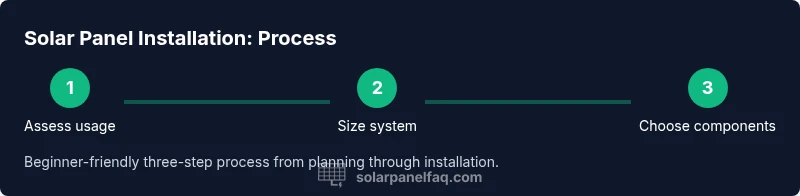
Based on your usage and roof area, estimate a likely kW target and select panel type (mono vs poly) and inverter approach (string vs microinverters).
Tip: On limited roof space, higher-efficiency panels can deliver more output per square foot. - 4
Request detailed quotes
Ask for three proposals with diagrams, equipment lists, warranties, and a transparent production estimate. Compare assumed system size, expected production, and maintenance costs.
Tip: Ensure quotes cover permitting, interconnection, and grid-tie specifics. - 5
Review warranties and certifications
Check module warranty (power output) and inverter warranty, plus installer workmanship guarantees. Look for third-party certifications (e.g., UL) and local compliance.
Tip: Warranties impact long-term maintenance costs and peace of mind. - 6
Plan permits and scheduling
Coordinate with your installer on permit submission, utility interconnection, and inspection timelines. Reserve a window for installation and post-install tests.
Tip: Keep a calendar of milestones and contact numbers.
Frequently Asked Questions
Do I need a permit to install solar panels on my home?
In most areas, a building permit is required and an electrical permit may be needed as well. Check with local authorities or a licensed installer to confirm.
Most homes need a building permit and an electrical permit; check with local authorities or a licensed installer to confirm.
How long does a typical residential solar installation take?
Most residential installs happen over a few days, depending on system size, roof complexity, and weather. Your installer should provide a clear timeline in the quote.
Most residential installs take a few days, depending on size and roof complexity.
Can I install solar panels myself?
Professional installation is typically required by code in many regions. DIY mounting may be possible for simple setups, but it’s not generally recommended due to safety and code concerns.
Usually you’ll need a pro; DIY is not commonly advised for safety and code reasons.
What affects the cost and payback of solar panels?
Costs depend on system size, equipment quality, installation difficulty, and local incentives. Payback varies with energy rates, incentives, and how much you use solar electricity.
Cost and payback depend on size, equipment, and local incentives.
Do solar panels work in cloudy weather?
Yes, panels generate electricity on cloudy days, though output is reduced. Performance depends on the level of cloudiness and panel efficiency.
They work in the clouds, just not at peak levels.
How should I compare solar panel quotes?
Look for a detailed design, clear warranties, estimated production, and the installer’s qualifications. Ensure payback estimates are transparent and consistent across proposals.
Compare quotes with details on design, warranties, and expected production.
Top Takeaways
- Define your energy needs before sizing a system
- Assess roof and shade early to maximize production
- Compare warranties and inverter options carefully
- Plan permits, interconnection, and financing ahead
- Choose an installer with clear documentation and support