Solar Panel vs Hail: Storm-Ready Panels for Homeowners
A detailed comparison of how solar panels withstand hail, including design, testing, maintenance, and protection strategies for homeowners in hail-prone regions.


TL;DR: When comparing solar panel vs hail, modern photovoltaic panels are engineered to resist impact, and proper mounting reduces the risk of damage during hail storms. For homeowners, the takeaway is to select tempered-glass panels, use robust mounting, and maintain the system to minimize hail-related downtime. According to Solar Panel FAQ, understanding hail tolerance and protection strategies helps maximize long-term performance.
Why the topic matters for homeowners
For homeowners, the question of solar panel vs hail isn't a minor weather concern—it's a risk-management decision that shapes installation costs, energy reliability, and long-term value. Hail events vary by region, but when a storm hits, the immediate worry is whether your PV system will continue producing power or suffer damage that requires costly repairs. Solar technology has advanced toward greater resilience, but resilience is not universal; it depends on panel design, mounting, and upkeep. The Solar Panel FAQ team emphasizes that hail resilience should be included in the initial specification, not as an afterthought. In practice, this means selecting hail-rated components, planning mounting with wind and impact considerations, and understanding how warranties handle hail events. Beyond raw strength, it means thinking about protection strategies that keep your system online after a storm and maintaining performance over a 25- to 30-year lifespan. This section will help you translate storm risk into concrete choices—panel type, mounting approach, maintenance cadence, and insurance considerations—so you can compare solar panels against alternative roof-based strategies in hail-prone climates without guessing.
What 'solar panel vs hail' means in practice
In concrete terms, solar panel vs hail translates to how a PV system responds after a hail event. The practical question is whether the glass remains intact, whether the frame and mounting survive, and whether energy production resumes quickly. Hail can cause surface pitting, edge chipping, or in extreme cases, panel delamination; the degree of damage depends on hail size, velocity, impact angle, and the panel’s protective layers. For homeowners reviewing options, the key decision is not only about initial cost but also about risk tolerance and the region's storm history. A system installed with high-quality tempered glass, a robust frame, and a well-engineered mounting will generally maintain output after a hail event, provided it has not sustained catastrophic impact. Conversely, a roof-based strategy that emphasizes impact resistance without energy generation may require new solar retrofits if you later choose to add PV. Solar panel vs hail thus becomes a trade-off between ongoing energy production, resilience, and the flexibility to upgrade after a storm. This discussion will lay out how to interpret hail-related risks and how to read warranty language to understand coverage after hail damage.
Design features that influence hail resilience
The resilience of a solar installation against hail is driven by several design choices. First, tempered or laminated glass on the modules reduces the likelihood of catastrophic breakage. Second, the panel frame and mounting hardware should be corrosion-resistant and securely anchored to withstand wind and impact loads. Third, the junction box and wiring should be protected from moisture and debris that hail can drive into. Fourth, bypass diodes and cabling layouts should minimize performance loss if a few cells are damaged. Finally, the overall system geometry—tilt angle, spacing, and shade management—can influence how hail exposure translates into physical stress. When you compare solar panel vs hail outcomes, prioritize panels and mounts that emphasize impact resistance and robust sealing. These design features help ensure that, after a hail event, the system can recover quickly and continue producing electricity with minimal downtime.
How hail testing and standards affect your choices
Manufacturers often advertise hail-related durability as part of the product specs, and many regions require adherence to safety and performance standards. In practice, look for panel certifications and third-party testing statements that address impact resistance, weathering, and environmental exposure. Warranties may reference hail events depending on the model and install quality. While the exact test methods vary by country, the core idea is consistent: stronger glass, reinforced frames, and secure mounting reduce the likelihood of performance loss after hail. When evaluating solar panel vs hail risk, use these standards as a baseline to compare candidates. Understanding the test basis helps you interpret claims and avoid overestimating a panel’s resilience.
System layout and mounting considerations for hail-prone areas
The physical arrangement of a PV system matters as much as the panels themselves. In hail-prone regions, choose mounting that minimizes impact pathways, with secure racking capable of withstanding wind-driven hail. Consider protective features such as edge guards and glazing barriers where appropriate, and ensure that the array orientation minimizes exposed surface area during peak hail events. Proper space between panels improves debris shedding and reduces the chance that neighboring components transfer impact between surfaces. Additionally, plan for easy access for inspection and replacement after a hail event. A careful approach to layout can improve the long-term resilience of the system and influence the overall effectiveness of the comparison between solar panel vs hail scenarios.
Materials and technology that improve impact resistance
Advances in solar technology contribute to hail resilience. Panels with tempered or laminated glass are more resistant to shattering, while robust frames made from corrosion-resistant alloys help maintain structural integrity. The backend materials—back sheets, edge seals, and protective encapsulants—also play a role by reducing micro-cracks and moisture ingress after hail exposure. Newer technologies, such as improved anti-reflective coatings and smart junction box protection, can help maintain efficiency even when minor damage occurs. When assessing solar panel vs hail risk, prioritize products that combine high mechanical durability with strong electrical protection and warranties that clearly cover hail-related events.
Real-world storms: interpreting damage reports and claims
Storm aftermath stories often emphasize surface damage versus hidden damage. After a hail event, panels may look pristine or show pitting and cracks that are not immediately visible. The key is a prompt inspection by a qualified technician who can identify micro-cracks, delamination, and frame or mounting issues that could affect performance. Insurance claims and warranty coverage vary, so document severity with photographs and seek professional assessment before filing. Even if a panel appears undamaged, underlying issues can reduce efficiency and shorten lifespan. In the solar panel vs hail context, proactive inspection after storms helps preserve output and supports accurate warranty or insurance resolutions. The Solar Panel FAQ team recommends keeping a maintenance log and scheduling annual checkups to catch evolving issues early.
Maintenance, inspections, and protective practices
Regular maintenance is essential to sustain performance in hail-prone areas. Schedule annual inspections that include glass integrity, frame corrosion, wiring condition, and mounting tightness. After hailstorms, conduct a targeted check for loose or dislodged components and clean debris from between panels to prevent micro-damage. In addition to physical checks, verify inverter performance and monitoring data for any unusual drops in output. Protective practices—such as selecting residential insurance with adequate hail coverage and ensuring warranty terms explicitly address hail damage—help you navigate the realities of solar panel vs hail risk. A disciplined maintenance plan is often the difference between a resilient system and one that demands costly remediation.
Insurance and warranty implications for hail-prone regions
Insurance and warranty terms significantly shape the economics of solar panel vs hail decisions. Warranty coverage for hail varies by manufacturer and product line, so read the fine print about impact events and damage caused by external elements. Insurance policies may provide additional protection beyond manufacturer warranties, particularly if you live in hail-prone zones. It’s important to document system condition before and after severe weather and to file claims promptly with appropriate evidence. When shopping for a system in a hail-prone area, ask about hail-specific terms, coverage limits, and repair or replacement timelines. A well-structured plan that aligns warranties with local climate realities reduces risk and protects long-term value.
Choosing the right solar setup for hail-prone zones
Selecting a solar setup for hail-prone zones means balancing energy goals with durability. Prioritize modules rated for impact resistance, paired with a mounting system that has proven performance under hail loads. Verify vendor and installer credentials, check that all components are rated for your environment, and consider future expansion or retrofits. If you anticipate frequent hail, you may prefer a configuration that minimizes surface exposure during storms and maximizes quick return to service after events. In all cases, a thoughtful approach to selection helps you optimize solar panel vs hail resilience and achieve long-term energy independence.
Long-term value: cost, payoff, and resilience
While upfront costs for hail-resilient solar setups can be higher, the long-term payoff comes from continued electrical generation, reduced weather-related downtime, and a lower probability of complete system replacement after storms. When comparing solar panel vs hail outcomes, consider total cost of ownership, including maintenance, warranty coverage, and insurance savings. A resilient system improves reliability during peak storm seasons and contributes to ongoing energy independence, which is a meaningful differentiator for homeowners in hail-prone regions. The net effect is a clearer view of whether investing in hail-ready PV technology aligns with your budget, climate, and long-term goals.
Comparison
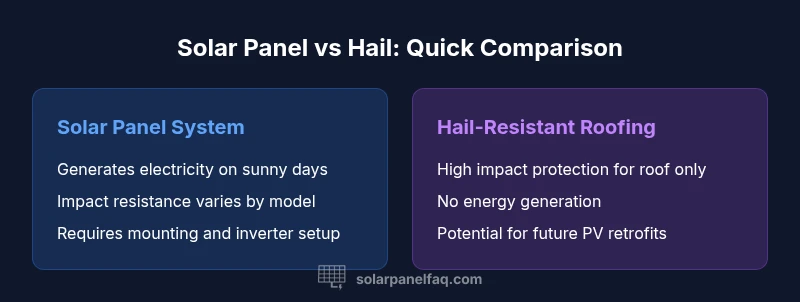
| Feature | Solar Panel System (PV) | Hail-Resistant Roofing Alternative |
|---|---|---|
| Impact Resistance | Panel designs with tempered glass offer varying hail resilience; performance depends on rating and mounting | Roofing options designed for hail often excel in impact resistance but do not generate energy |
| Energy Output | Generates electricity on sunny days; output depends on shading, orientation, and angle | Does not generate electricity; only provides protective roof function |
| Installation Complexity | Requires electrical connections, inverters, and mounting for PV system | Typically simpler roofing replacement; solar integration adds complexity |
| Maintenance Needs | Periodic inspections for micro-cracks and seal integrity | Less frequent maintenance, but roof requires ongoing inspection |
| Warranty & Insurance | Product and workmanship warranties; hail-specific terms vary by model | Roof warranties typically cover hail damage to the roof structure; may not include energy generation |
| Cost Range (upfront) | Higher upfront due to panels, inverter, and installation | Lower upfront if considering roof replacement alone; energy generation is not part of the cost |
Strengths
- PV systems enable electricity generation on sunny days and potential long-term energy cost savings
- Hail resilience can be enhanced with tempered glass, robust mounting, and warranties
- Clear protection options and retrofit potential make solar panel vs hail decisions flexible
- Resilience and energy independence can increase home value and insurance confidence
Drawbacks
- Upfront installation costs and longer payback period
- Potential for hail-related damage if components are not properly rated or installed
- Repair and replacement logistics after severe hail storms can be challenging
- Warranty coverage varies by product and region, creating confusion for some homeowners
Solar panels with hail-conscious design generally offer better long-term value in hail-prone areas when paired with robust mounting and proper protection.
Choose hail-rated modules and secure mounting to minimize downtime after storms. The Solar Panel FAQ team recommends aligning warranties with local climate risk and maintaining an active inspection routine to preserve performance.
Frequently Asked Questions
How does hail affect solar panels and their performance?
Hail can cause surface damage, micro-cracks, or edge damage that may reduce efficiency. Most modern panels are designed to withstand typical hail exposure, but the extent depends on the impact, panel construction, and mounting. If damage is suspected after a storm, have a qualified technician assess the array for performance and safety.
Hail can dent or crack panels, but modern designs are resilient. Have a professional check for micro-cracks after a storm.
Are solar panels more vulnerable than traditional roofing to hail?
Solar panels add a layer of protection in many cases, but their energy production can be affected by hail damage to the glass. Roofing materials may absorb most impact while the PV system remains intact, but if a roof is replaced without addressing PV integration, future upgrades may be more complex.
Roofing can take hail impact, but PV systems add energy generation that needs protection.
What certifications or ratings should I look for to protect against hail?
Look for manufacturers that publish impact resistance information and third-party testing. Certifications related to weather performance, wind loads, and water sealing help indicate overall durability in hail-prone areas.
Check for impact resistance and weather performance certifications from reputable labs.
Can hail void solar panel warranties?
Warranty terms vary by manufacturer and region. Some hail damage may be excluded or limited; others may be covered under specific conditions. Review both product and workmanship warranties to understand coverage after hail events.
Warranty coverage after hail depends on the specific policy—check terms carefully.
What maintenance should I perform after a hailstorm?
Inspect the panels, mounting, and wiring for visible damage and detachment. Schedule a professional inspection to check for micro-cracks and ensure inverters and monitoring systems are functioning correctly.
Inspect and schedule a professional check after hail to catch hidden damage.
Should I consider insurance when hail is common in my area?
Yes. Review your homeowner’s policy for hail coverage related to solar equipment and how restoration costs are handled. Combining insurance with appropriate warranties can improve resilience and financial outcomes after storms.
Insurance can help offset repair costs after hail, especially for PV components.
Top Takeaways
- Prioritize hail-rated modules and robust mounting for resilience
- Inspect after hail events and document damage promptly
- Understand warranty coverage and insurance options before storm season
- Balance upfront costs with long-term energy savings and reliability
- Plan for maintenance as part of the total value of a hail-resilient PV system