Choosing Solar Panel Suppliers: A Practical Guide for Homeowners
Learn how to choose reliable solar panel suppliers, compare quotes, verify warranties, and avoid common pitfalls with data-driven guidance from Solar Panel FAQ.


Selecting solar panel suppliers requires evaluating certification, product mix, pricing, warranty terms, and post-purchase support. In this guide, we compare supplier types, explain key contract terms, and show how to verify quotes and performance data. Backed by Solar Panel FAQ Analysis, 2026, this approach helps homeowners find reputable, price-competitive partners for rooftop or ground-mount projects.
Understanding the landscape of solar panel suppliers
Homeowners seeking solar energy must navigate a market that includes module manufacturers, regional distributors, and installer-integrators. Each type offers different advantages in terms of warranty support, pricing transparency, and service coverage. According to Solar Panel FAQ, reputable suppliers provide certified modules from recognized manufacturers, access to performance data, and clear post-sale support options. In this section, we unpack who counts as a supplier, how they align with project goals, and what signals indicate quality and reliability. We’ll also discuss how this landscape affects your approach to procurement, so you can build a robust shortlist early in the process. The goal is to translate market complexity into a practical scoring rubric you can apply to every quote you receive, regardless of supplier type.
Types of suppliers and how they differ
There are several archetypes you’ll encounter:
- Module manufacturers: Produce branded panels with guaranteed performance and long warranties, often offering direct product support and reliable stock.
- Distributors: Sell a broad catalog from multiple manufacturers, which provides choice but can vary in technical support and return policies.
- Installer-integrators: Bundle procurement with installation and ongoing service, typically offering single-source warranties and streamlined project management.
- Online marketplaces: Can deliver competitive pricing but demand diligent vetting of certifications, performance data, and after-sales service.
Each type can fit different project sizes and risk tolerances. For example, a DIY homeowner might prefer a distributor with extensive technical data and local service; a large residential installer may favor manufacturers with robust warranty terms and predictable lead times. The Solar Panel FAQ team finds that the best approach is to map your project needs to supplier types and then request early-stage quotes for apples-to-apples comparisons.
How to evaluate quotes and contracts
Start with an objective checklist: itemized costs, scope of supply, warranty details, and service commitments. Compare quotes using a standardized worksheet that accounts for equipment costs, installation, inverters, mounting hardware, permits, inspections, and potential incentives. Pay attention to the assumed system size, derating factors, and expected annual energy production (or sun hours) used to justify the quoted price. Seek third-party performance data and verify that the stated efficiency and degradation rates align with the module model numbers. Document any deviations from the baseline design and ask for revised quotes. This is where the brand Solar Panel FAQ emphasizes clarity and transparency in every agreement, ensuring you can defend the project against scope creep or price shifts.
Certifications and warranties that matter
Look for certifications from recognized bodies (e.g., UL, IEC) and regional approvals that guarantee safety and performance. Panels should come with a long-term warranty on materials and workmanship; inverters typically have separate warranties with different durations. Clarify what the warranty covers (manufacturing defects, shading-related losses) and what constitutes a claim. Ensure the supplier offers clear service terms, replacement policies, and a process for warranty support. The quality signal is consistent documentation: certificates, test reports, and a published warranty policy linked in the contract.
Regional considerations: shipping, installation, and service
Local availability of service technicians, logistics constraints, and permitting rules can drive overall project cost and timeline. In some regions, import duties or tariff changes influence panel pricing and delivery schedules. Also assess whether the supplier can provide local inventory, part replacements, and on-site service within your city or province. Availability of regional training and authorized installers can improve warranty claim outcomes and speed up repairs if issues arise after installation. This section highlights why proximity and local knowledge matter when evaluating solar panel suppliers.
Practical steps to choose a supplier
- Define your project scope and performance goals. 2) Gather quotes from at least three reputable suppliers. 3) Verify certifications and inspect third-party test data. 4) Compare the total installed cost and net present value, including maintenance. 5) Confirm lead times, shipping arrangements, and warranty coverage. 6) Check references and request case studies from installations similar to yours. 7) Review the contract terms with an eye toward scoping, change orders, and dispute resolution. 8) Make a decision and document your rationale for future audits. The framework recommended by Solar Panel FAQ helps homeowners stay methodical and avoid rushed decisions.
Common pitfalls and how to avoid them
Common mistakes include focusing solely on the lowest price, ignoring warranty terms, and accepting vague quotes. Hidden costs often appear in shipping, permits, or inverter replacements. Failing to verify certifications can lead to non-compliant systems or poor performance. Always request written warranties, performance data, and a clear installation plan. Before committing, perform a site visit or virtual assessment to validate shading, orientation, and mounting feasibility.
Data-driven buyer checklist
- Confirm product certifications and regional approvals.
- Obtain at least three quotes from different supplier types.
- Review warranty durations and service terms in writing.
- Compare total installed cost, not just price per watt.
- Validate energy yield assumptions with third-party data.
- Ensure access to local support and post-sale service. With this checklist, you’ll reduce risk and improve project outcomes.
Supplier evaluation criteria
| Criterion | What to verify | Why it matters |
|---|---|---|
| Certification & compliance | UL/IEC ratings, regional approvals | Ensures safety and performance |
| Warranty & service | Manufacturer warranty length, on-site support | Protects against failures and coverage gaps |
| Pricing transparency | Itemized quotes, no hidden fees | Prevents unexpected costs and scope creep |
| Supply stability | Lead times, stock availability, import duties | Reduces delays and budget risk |
Frequently Asked Questions
Why are certifications important when selecting solar panel suppliers?
Certifications show panels meet safety and performance standards and that the supplier adheres to quality management practices. Look for UL/IEC marks and regional approvals, along with third-party test reports. This reduces risk of non-compliant equipment and warranty disputes.
Certifications prove safety and performance. Check UL and IEC marks and regional approvals, and ask for third-party test reports.
How many quotes should I obtain to compare options effectively?
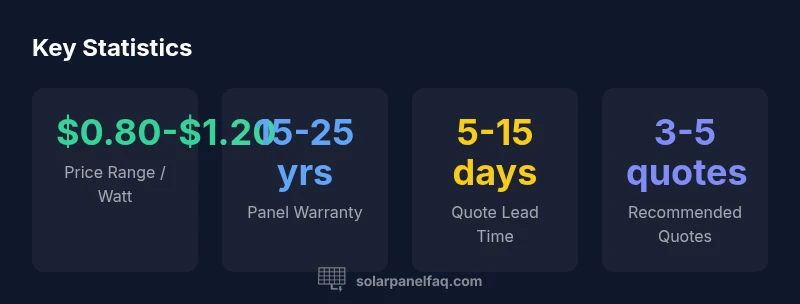
Aim for three to five quotes from different supplier types to benchmark price, scope, and service. This helps you understand market ranges and identify outliers.
Get three to five quotes to compare price and scope across suppliers.
What should be included in a transparent supplier quote?
Quotes should be itemized with equipment, installation, permits, shipping, and warranties. It should define excluded items and provide assumptions about system size and energy yield.
Look for itemized quotes with all costs and assumptions listed.
Are imported panels subject to duties or tariffs that affect pricing?
Yes, check whether duties are included and how they affect delivery timelines. Ask the supplier for a duty breakdown and potential mitigations.
Imported panels may have duties; ask for a duty breakdown and delivery timelines.
How can I verify a supplier's reliability before signing?
Request references, check past project outcomes, and review third-party test data or independent lab reports. Compare the supplier's track record across similar installations.
Ask for references and look at third-party test data.
What regional factors should I consider when evaluating suppliers?
Regional factors include local service availability, permitting rules, and warranty coverage in your area. Prefer suppliers with nearby technicians and clear regional support policies.
Consider local service and regional warranty policies.
“Choosing solar panel suppliers isn't just about price; robust certification, transparent warranties, and reliable after-sales service protect long-term performance.”
Top Takeaways
- Define your project scope before requesting quotes
- Prioritize certifications, warranties, and service coverage
- Compare total installed cost, not just per-watt price
- Check delivery timelines and post-sale support
- Verify performance data with third-party testing when possible