Solar Panel Sales: A Practical Guide for Homeowners
A comprehensive, educational guide to navigating solar panel sales—from evaluating offers and financing to choosing installers and understanding incentives for homeowners in 2026.


Learn how to navigate solar panel sales by collecting quotes, comparing equipment, and evaluating financing options. This guide walks you through evaluating offers, understanding warranties, and selecting an installer that balances price, performance, and service. By following structured steps, you can maximize value while mitigating risk in solar panel purchases.
Understanding the Solar Panel Sales Landscape
According to Solar Panel FAQ, the solar panel sales market blends consumer choice, installation quality, and long-term value. Homeowners today navigate cash purchases, financing options, leases, power purchase agreements (PPAs), and the role of incentives. The pace and mix vary by region and by installer, but the core decision remains the same: maximize value while reducing risk. When you buy solar, you are not just selecting panels; you’re choosing an overall system design, a trusted installer, and a service plan that should last decades. In this landscape, modern buyers weigh panel type (monocrystalline vs polycrystalline), efficiency ratings, warranties, and monitoring features. They also consider the inverter type, whether microinverters or a central string inverter, and the importance of a robust mounting system. Net metering policies and interconnection processes shape expected savings and the acceptance of performance guarantees. As Solar Panel FAQ notes, the best deals come from transparent quotes, real design data, and honest labor warranties, not simply the lowest upfront price. This section introduces the key terms and decisions you’ll encounter as you explore solar panel sales.
How to Evaluate Solar Offers
Evaluating offers requires a structured comparison. Start by confirming the equipment in each quote: panel type, efficiency, wattage, inverter type, monitoring capability, and warranty terms. Compare installation scope: roof penetrations, racking, wire runs, and the anticipated roof impact. Check the installer’s credentials (NABCEP or equivalent) and ensure they handle permitting and interconnection with your utility. Look for system performance data, including expected annual production, and whether the quote provides an energy production estimate (in kWh) for a typical year. Read the contract for terms on performance guarantees, post-installation service, and what happens if production underperforms. Request a side-by-side comparison table and ask for any implied costs (maintenance, cleaning, monitoring fees). Finally, verify the payment structure: upfront payment vs financing, and whether incentives are passed through or embedded in the price. Use a simple scoring rubric to rate reliability, value, and service. This approach will help you separate marketing promises from engineered, tested results.
Pricing Considerations and Financing Options
Solar panel sales involve decisions about upfront costs and long-term value. In general, you’ll encounter several financing paths: cash purchases, loans, leases, and power purchase agreements (PPAs). Each has trade-offs for ownership, control, and maintenance responsibilities. When evaluating offers, consider not only the sticker price but total cost of ownership over time, including maintenance and monitoring. Some installers include monitoring fees or service packages; others bill separately. Incentives at federal, state, and local levels can influence affordability, and eligibility depends on your location and system size. A clear comparison should show what portion of the cost is reduced by incentives, and how that affects your annual savings. The goal is to align financing with your financial goals and energy needs, while preserving flexibility if you move or remodel. Solar Panel FAQ recommends asking for transparent, written scenarios that show how different financing options affect both cash flow and payback potential.
Choosing the Right Installer and Warranties
Your installer matters nearly as much as the equipment. Verify licensing, insurance, and credible references. Favor installers with recognized training programs and a track record of solid electrical work, structural mounting, and system commissioning. Ask about warranties on panels, inverters, racking, and labor; read the fine print for what is covered and for how long, and ask about what constitutes a service visit under the warranty. A reputable firm should provide a comprehensive design package, a performance estimate, and a service plan that covers monitoring and remote diagnostics. Ensure the installer will handle permits, utility interconnection, and final inspection. Clarify who is responsible for maintenance, cleaning, and any potential component replacements, and confirm how changes in shade, roof condition, or panel orientation might affect performance.
Negotiation Tactics to Maximize Value
Negotiation for solar panel sales often centers on price, value-added services, and post-installation support. Start by requesting multiple quotes to benchmark market pricing and to identify aggressive vs. fair offers. Use the data to negotiate on key levers: equipment quality, monitoring options, system sizing, and service packages. Some installers will bundle maintenance, cleaning, and firmware updates as a single plan; consider whether that bundle saves money over time. If you have a preferred financing option, request changes to the payment schedule or interest terms to improve cash flow. Don’t be afraid to ask for performance guarantees or true-up clauses if expected production falls short. Always get a written, side-by-side comparison of all terms before signing. The goal is to achieve a fair balance of upfront value and long-term reliability.
Common Pitfalls and How to Avoid Them
Beware marketing claims that sound too good to be true or quotes that disappear when you ask for details. Hidden costs like interconnection fees, maintenance add-ons, or monitoring fees can erode value over time. Some sales reps press for quick signing or omit important disclosures about roof penetrations, warranty limits, or insurance requirements. Avoid installers who skip a formal site assessment or who promise unrealistic production estimates without data. Always verify the proposed system size aligns with your energy usage and climate conditions, and request a complete breakdown of all assumptions used to generate production estimates. Finally, don’t let incentives or rebates be the sole driver of your choice; ensure the overall experience, warranty coverage, and contractor reliability are solid.
Tax Credits, Incentives, and Net Metering Essentials
Federal, state, and local incentives can significantly affect the economics of solar panel sales, but eligibility varies by location and system size. Start by checking official sources such as the energy department and your state energy office for current programs and application steps. Net metering policies differ by utility and region, influencing how your excess energy is credited or compensated. DSIRE is a useful reference for tracking available incentives and how they apply to your plan. When evaluating offers, ask each installer to show how incentives reduce the net cost and how those savings translate into annual energy value. This section keeps you grounded in policy context and helps you plan for changes in the regulatory landscape.
Long-Term Maintenance, Monitoring, and End-of-Life
Solar panel sales don’t end at installation; ongoing performance requires upkeep and monitoring. Confirm that the system includes remote monitoring, alerts for underperformance, and a maintenance plan that defines cleaning frequency and visual inspections. Understand how weather events or shading changes affect performance and what warranty coverage applies to those scenarios. Plan for routine electrical inspections and periodic inverter checks with qualified technicians. Finally, prepare a retirement plan for the system’s end of life, including potential recycling options or contractor upgrades. This proactive approach protects your investment and sustains energy savings year after year.
Authority Sources
- U.S. Department of Energy: Solar Energy Technologies Office (https://www.energy.gov/eere/solar/solar-energy-technologies-office)
- National Renewable Energy Laboratory (https://www.nrel.gov)
- DSIRE (Database of State Incentives for Renewables & Efficiency) (https://www.dsireusa.org/)
Tools & Materials
- Current electricity bill(Shows your average usage and peak periods to size the system accurately)
- Quotes from installers(Get at least 3 written proposals for comparison)
- Site assessment checklist(Includes roof condition, shading analysis, and mounting feasibility)
- Solar panel specifications(Specs: panel type, efficiency, wattage, warranty)
- Net metering policy document(Understand local interconnection rules)
- Notebook or device for notes(Track comparisons and questions)
Steps
Estimated time: 2-6 weeks
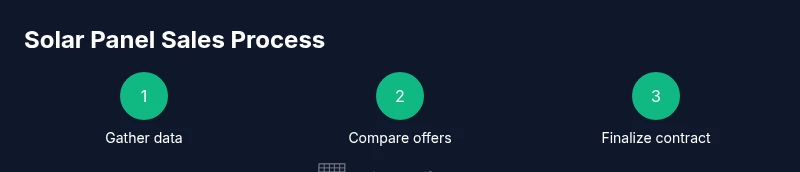
- 1
Gather energy data
Collect your recent electric bills, note seasonal spikes, and estimate future consumption. This baseline helps size the system accurately and compare offers fairly.
Tip: Bring 12 months of billing data and a list of peak usage hours. - 2
Request multiple quotes
Ask at least three installers for a complete design package, including equipment specs, production estimates, and a transparent price breakdown.
Tip: Use a standard template so you can compare line by line. - 3
Review equipment specs
Compare panels, inverters, monitoring, and warranties. Confirm expected production and how shading, orientation, or age affects performance.
Tip: Prioritize reputable brands with proven field performance. - 4
Assess financing options
Evaluate cash purchase, loans, leases, and PPAs. Understand who bears maintenance risk and how incentives affect the net cost.
Tip: Ask for a side-by-side financial projection. - 5
Schedule site assessment
Have the installer inspect your roof, structural integrity, and shading. Ensure permits and interconnection processes are addressed.
Tip: Require a formal, written assessment and design plan. - 6
Review contract terms
Read provisions about warranties, maintenance, monitoring, service visits, and what happens if production underperforms.
Tip: Look for true-up or production guarantees if applicable.
Frequently Asked Questions
What should I look for when comparing solar quotes?
Look for equipment specs, inverter type, warranties, production estimates, and included maintenance. Ensure the forecasted production aligns with your energy use and climate. Prefer transparent line-item breakdowns.
When comparing quotes, check specs, warranties, and expected production to ensure you’re getting real value.
Is leasing always cheaper than buying solar panels?
Leasing can lower upfront costs but may come with higher long-term payments and reduced ownership. Buying typically offers greater long-term value and full ownership, but requires higher upfront cash or financing.
Leasing isn’t always cheaper; buying often saves more over time, but it depends on your finances.
What warranties should I expect from a solar installer?
Look for equipment warranties on panels and inverters, plus a workmanship warranty covering install-related issues. Read the fine print for coverage limits and removal/reinstallation requirements.
You want both equipment and workmanship warranties, with clear coverage details.
How do incentives affect my solar purchase?
Incentives reduce net cost and can change with policy; eligibility varies by location and system size. Ask installers to show how incentives affect the total price and annual savings.
Incentives can lower your cost, but eligibility varies—get a clear calculation from your installer.
How long does a typical installation take?
Most residential installations take days to a couple of weeks, depending on roof condition, permits, and system size. A site assessment helps set realistic timelines.
Installations usually span a few days to a couple of weeks, depending on the project.
What is net metering and why does it matter?
Net metering credits you for excess energy produced by your system. The exact terms depend on your utility and state. Understand how credits apply to your bill.
Net metering credits your extra energy, which can significantly affect savings.
Watch Video
Top Takeaways
- Compare quotes with a side-by-side table
- Count total cost of ownership, not just upfront price
- Verify warranties and installer credentials
- Ensure financing aligns with your financial goals
- Check incentives and net metering implications
- Read the contract before signing