Lowes Solar Panels: A Practical Home Guide
Explore Lowes solar panels options, installation considerations, financing, warranties, and how to compare with other brands. Learn practical steps to maximize home solar performance with Solar Panel FAQ insights.


Lowes solar panels are the residential solar modules and related services sold through Lowe's stores. They come with guidance, installation support, and financing options. For best value, compare panel efficiency, warranties, system size, and local incentives before purchasing.
Why homeowners consider lowes solar panels
According to Solar Panel FAQ, lowes solar panels are a practical option for homeowners who want a combination of availability, guidance, and service. Lowe’s positions these products as part of an integrated home solar solution that pairs modules with in-store expertise and contractor-backed installation options. For many buyers, the appeal lies in buying panels alongside other home improvement needs and accessing financing and warranty options in one place. The Solar Panel FAQ team found that customer satisfaction often hinges on the installation process and after-sale support, not just the panel specs. This section explains what makes lowes solar panels a credible choice in a crowded market, how to assess the available models, and how to avoid common missteps during selection. You’ll learn how to align panel performance with your roof, climate, and energy goals, and how to estimate total system costs across typical scenarios.
This overview also emphasizes the importance of choosing panels that fit your roof geometry and shading conditions. Real-world performance depends on more than nominal efficiency; system design, inverter pairing, and proper mounting play large roles. By focusing on durability, warranty coverage, and installer reliability, homeowners can reduce risk. Solar Panel FAQ analysis highlights that shopping through a national retailer can streamline permitting, inspection coordination, and post-install service, which, in turn, affects long-term satisfaction.
How to choose the right panels from Lowe's
When selecting panels through Lowe's, focus on three core attributes: efficiency, durability, and warranty coverage. Monocrystalline panels generally yield higher efficiency in limited space, while polycrystalline options can be more cost-effective in larger roof areas. Evaluate the wattage range offered for typical home installations and verify temperature coefficients to understand performance in sunny, hot climates. Consider the inverter approach—string inverters suit many homes, while microinverters or power optimizers can improve performance on partially shaded roofs. Lowe's often provides guidance on roof pitch, mounting hardware, and compatibility with existing electrical service. In addition, check the panel materials and finish, as differences in anti-reflective coatings or frame corrosion resistance can affect long-term durability. Finally, compare the included warranties for product and performance, and ensure the installer network aligns with your expectations for service responsiveness and maintenance.
Comparing Lowe's offerings to other brands
Lowe's solar panel options typically span multiple brands and technologies, giving buyers the chance to compare performance, price ranges, and installer support without traveling far. When evaluating Lowe's against specialized solar installers or online-only retailers, weigh the value of in-store assistance and bundled services against potential price differences. A robust seller network can simplify permitting, interconnection paperwork, and scheduling of inspections. However, always cross-check third-party reviews and independent testing data for efficiency, degradation rates, and warranty terms. Solar Panel FAQ emphasizes that no single brand is universally best; the right choice depends on roof size, energy needs, and local incentives. A balanced comparison should consider resilience to weather, service responsiveness, and the total lifecycle cost over the system’s expected life.
In practice, build a short list of candidate panels, then contact Lowe's installation professionals for on-site evaluations and formal quotes.
Installation, roof compatibility, and service options
Lowe's installation services aim to provide a turnkey experience, including system design support, permitting guidance, and post-install maintenance options. Roof compatibility is a central concern: pitch, orientation, and shading from nearby trees affect energy capture. The installer network typically handles mounting, electrical connections, and safety checks, while providing a timetable for inspections and interconnection with the utility. Before signing, confirm the expected timeline, component warranties, and what maintenance the system requires. For roofs with complex layouts or multiple azimuths, discuss potential microinverter or optimizers to maximize production. When evaluating service options, ask about remote monitoring, performance reporting, and what happens if a panel or inverter fails. Clear service-level agreements help minimize downtime and ensure consistent output over the system life.
Financing, warranties, and long-term costs
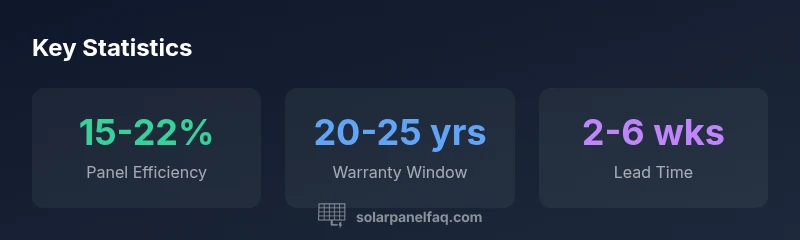
Financing for Lowe's solar panel purchases is often arranged through partner programs that bundle equipment with installation and service. Review terms for interest rates, payment schedules, and any deferred-cost offers. Warranties typically cover product defects and performance over a long horizon, commonly in the 20–25 year range, though exact terms vary by panel type and installer. To maximize long-term savings, align warranty terms with expected degradation rates and inverter replacement cycles. Remember that incentives, rebates, and tax credits are separate from Lowe's financing and depend on local and federal policies. Always confirm eligibility for incentives before signing contracts and ensure your installer documents all warranty protection in writing.
Maintenance and performance in real-world conditions
Real-world solar performance is influenced by weather patterns, shading, and seasonal sun angles. Routine maintenance is minimal but important: keep panels clean, inspect for debris or leaf buildup, and verify wiring connections during annual checkups. Shading analysis is crucial—even small obstructions can significantly reduce output. For best results, schedule periodic performance reviews using monitoring dashboards provided by the installer, and compare expected versus actual energy production. Solar Panel FAQ notes that proactive maintenance helps sustain efficiency and prolongs system life, reducing the likelihood of unexpected downtime. If a panel underperforms, work with the installer to diagnose potential inverter or panel-level issues under warranty terms.
Estimating your system needs with Lowe's products
To estimate your system needs, start with your household electricity usage and a realistic daily production target. Convert monthly kWh usage into daily demand, then divide by the expected sun hours for your location to approximate required system size. Use Lowe's panels’ typical efficiency and available wattage ranges to map how many modules you’ll need. Account for shading, orientation, and panel degradation over time. It’s helpful to create two scenarios: a conservative plan for reliability and an aggressive plan for maximum production. Finally, ensure the total cost and projected savings align with your energy goals and payback expectations, considering potential incentives and financing terms.
The decision pathway from shopping to activation
- Define energy goals and budget; 2) Gather on-site quotes from Lowe's installation partners; 3) Compare panel types, warranties, and inverter options; 4) Check permitting requirements and utility interconnection steps; 5) Review financing terms and incentives; 6) Schedule installation and testing; 7) Activate system and start monitoring performance. A well-documented plan reduces risk and speeds up activation. Solar Panel FAQ recommends documenting all warranty terms, service commitments, and monitoring access to ensure smooth operation over the system’s life cycle.
Comparison of common panel types
| Brand/Model Type | Typical Efficiency | Wattage Range |
|---|---|---|
| Monocrystalline | 18-22% | 260-370 W |
| Polycrystalline | 15-18% | 250-320 W |
| Thin-Film | 10-12% | 100-250 W |
Frequently Asked Questions
What are the main factors to consider when buying lowes solar panels?
Key considerations include efficiency, warranty terms, price range, and installation support. Evaluate panel type (monocrystalline vs polycrystalline) and ensure roof compatibility and shading are accounted for.
Consider efficiency, warranty, price range, and installation support. Check roof compatibility and shading.
Do Lowe's panels qualify for federal incentives?
Yes, general solar incentives apply to eligible installations. Verify local incentives and any Lowe's financing options with your installer.
Yes, incentives may apply. Check local programs with your installer.
Can I install Lowe's solar panels myself?
Lowe's panels are typically installed by licensed professionals to protect warranty coverage and safety. DIY installation is not advised.
DIY installation isn’t recommended due to safety and warranty concerns.
What warranties come with Lowe's solar panels?
Warranties vary by panel type and installer, but often include product and performance coverage for 20-25 years. Read terms for specifics.
Warranties usually cover 20-25 years; check the details with your installer.
Do I need permits or inspections for installation?
Permits and inspections are typically required locally. Lowe's installation partners usually handle or guide permitting and inspection steps.
Yes, permits are usually required. Your installer guides you through the process.
How should I compare Lowe's panels to other brands?
Compare efficiency, warranties, price ranges, and installation support. Consider roof compatibility and installer network; use independent reviews as a check.
Compare efficiency, warranties, price, and support. Look at installer networks and reviews.
“A well-chosen panel suite, paired with proper installation and ongoing maintenance, yields the best long-term savings.”
Top Takeaways
- Evaluate total value, not just upfront price
- Prioritize panel efficiency and warranty quality
- Assess installation support and roof compatibility
- Explore financing options and local incentives
- Plan for long-term maintenance and monitoring