How to Use a Solar Panel Without a Controller: Risks and Alternatives
Learn why using a solar panel without a controller is risky, how regulation protects batteries and panels, and practical, safer alternatives for DIY solar projects.


Controllerless operation is generally unsafe for charging or long-term energy storage. A solar charge controller regulates voltage and current to protect the battery and the panel. Without regulation, the panel can push voltages or currents beyond safe limits, causing damage, overheating, and reduced battery life. This guide explains why and outlines safer alternatives.
Why a controller matters
A solar charge controller sits between the panel and any battery or load you intend to power. Its main job is to regulate voltage and current so the battery does not see spikes that can cause overcharging, overheating, or chemical stress. Controllers also help protect sensitive electronics connected to the system and prevent reverse current at night, which can drain batteries. In practical terms, a controller translates the panel’s potential power into a safe, steady charging profile for the specific battery chemistry in use. According to Solar Panel FAQ, the best practice for most home solar setups is to use a controller whenever you intend to store energy in a battery. Without regulation, sunlight can cause the panel to push voltage beyond what the battery or electronics can safely handle. This mismatch can lead to gas buildup in lead-acid batteries, swelling in lithium-ion chemistries, and accelerated wear on the panel’s protective diodes. If your goal is to observe how a panel behaves, you can perform safe bench tests using a properly rated regulator or resistor load, but do not attempt long-term charging without a controller.
How solar panels are rated and what that means for direct connections
Solar panels are described by several electrical characteristics, including a nominal operating voltage, a voltage at maximum power, and current ratings. The panel provides voltage and current based on sunlight, but those values do not always line up with what a battery expects during charging. A direct connection to a battery can cause the panel to drive more current into the storage device than it can safely absorb, even if the panel appears to charge something at first glance. The key idea is that panel voltage can rise or drop with light, temperature, and wiring conditions, while a battery has a fixed acceptance range. Without regulation, these fluctuations can cause overvoltage, overheating, and degraded battery health. If you’re just learning, focus on the concept that regulation helps match the panel’s output to the battery’s acceptance rates rather than pushing raw power directly into storage. This understanding guides safer experimentation with solar power and helps you plan for a controller or safe alternatives as you build.
The risks of connecting panels directly to batteries or loads
Direct connections remove a critical safety layer. The most immediate risk is overcharging, which can generate heat, off-gas, and reduce battery life. In some chemistries, improper charging can trigger thermal runaway or swelling. Wires and diodes may overheat, presenting a fire hazard and damaging both the panel and connected devices. Additionally, fluctuating voltages can stress electronics and reduce the lifespan of any load connected to the panel. Even if you are seeing a momentary glow from a small device, the long-term effect without regulation is unpredictable. For educational purposes, you can study voltage behavior with a safe bench setup, but never rely on a panel charging a real battery without a controller.
Safe alternatives when you don’t have a controller
If you don’t have a controller, you still have safe paths to explore solar power. Use a regulated DC-DC converter or a device with built-in regulation to connect to a battery or load. Some small devices and low-power lamps include their own regulation or current-limiting features that let you observe solar behavior without risking overvoltage. You can also tether the panel to a purpose-built, regulated test bench that simulates a battery’s acceptance profile. The core principle is to ensure any charging path has voltage and current limits that prevent battery overcharge and component damage. If your goal is to store energy, the recommended route is to acquire a properly rated controller (PWM or MPPT) suited to your panel and battery chemistry. In all cases, avoid long-term charging with no regulation and be prepared to stop testing if you notice heat, smoke, or unusual smells.
Step-by-step: evaluating your setup safely (without direct battery connection)
-
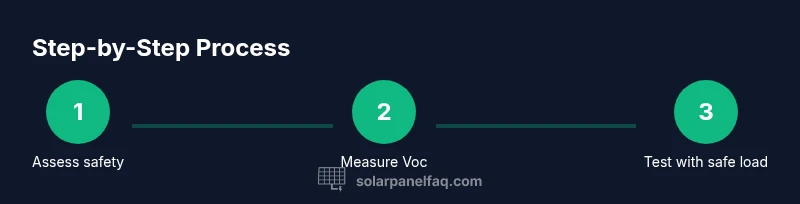
Check panel and load compatibility. Before connecting anything, confirm the panel’s voltage and current range, and ensure your intended load or battery match remains within safe limits. Do not assume the panel is safe to charge a battery without regulation.
-
Prepare a safe test area. Work in a dry, ventilated space with insulated tools and PPE. Keep connections off the ground and away from moisture. Unplug devices when not actively testing.
-
Measure open-circuit voltage (Voc) in bright light. Use a multimeter to observe how high the panel’s voltage climbs under sun. Keep hands steady and probes insulated to avoid short circuits.
-
Test with a safe load. Attach a low-wattage resistor or a regulated DC load that mirrors a small battery’s acceptance without exceeding voltage limits. Monitor voltage and current closely; if the load causes rapid voltage changes or heat, disconnect immediately.
-
Watch for overheating. A hot panel, cables, or connectors is a sign that the setup is stressed. If you notice sustained heat, stop testing and reassess.
-
Record results and decide next steps. Document Voc, load current, ambient temperature, and any observed behavior. If you need to charge a battery, plan to use a controller designed for your panel and battery chemistry.
How to size a controller conceptually and what defaults to avoid
Sizing a controller means aligning the panel’s current output with the battery’s acceptance range. In concept, pick a controller rated for at least the panel’s short-circuit current (Isc) and for the battery’s voltage. MPPT controllers optimize efficiency by adjusting the panel’s operating point, while PWM controllers regulate by switching voltage, which can be simpler and cheaper. Avoid undersized controllers, as they can overheat and fail, potentially causing damage to the panel or battery. Ensure the controller supports your battery chemistry, whether lead-acid, lithium, or another type, and verify temperature compensation features if your climate is variable. The overarching rule is to choose a controller that provides appropriate protection and stable charging profiles rather than relying on jury-rigged setups.
Direct vs regulated loads: what you can run safely
A regulated path can power small, energy-efficient devices like LED indicators or fans when the regulator is purpose-built for solar input and battery buffering. If you want to observe solar behavior without charging, use a safe, finite load that won’t draw more current than the panel can supply. Avoid direct connections to batteries or large loads that could push excessive current into storage. The safest approach is to use a regulator or a controller designed for solar charging, or to run loads that are explicitly rated for such a setup. The goal in every case is to prevent overvoltage, excessive current, and heat buildup while you learn.
Real-world scenarios and case studies
In many home projects, hobbyists start with a small 12V nominal panel and a basic load to understand how solar power responds to light. Without a controller, the moment the sun strengthens, the panel voltage can rise beyond what a low-capacity battery or electronics can tolerate. In more advanced builds, users realize the value of a controller or built-in regulation in their charge controllers to maintain safe, stable charging even as conditions change. Case studies consistently show that people who implement proper regulation experience longer battery life and fewer surprises during seasonal variations. While it’s educational to explore panel behavior, never rely on a controllerless setup for storing energy—use proper regulation for any sustained charging, and reserve non-charging experiments for bench testing.
Long-term planning and maintenance
If you plan to use solar power seriously, a controller is not optional—it's a core safety and efficiency feature. Regularly inspect wiring, connectors, fuses, and battery health. Clean panels to maintain output, check for corrosion, and ensure cables remain untangled and protected. For any system design, document all component ratings and operating conditions, so you can replace parts with compatible equipment in the future. By prioritizing regulation, you extend the life of both panels and batteries and reduce risk for you and your home.
Tools & Materials
- Solar panel (12V nominal or similar)(Ensure the panel's Voc is within safe limits for the test setup.)
- Multimeter (voltmeter/ammeter)(Measure open-circuit voltage (Voc) and short-circuit current (Isc).)
- Insulated safety gloves(Protect hands when handling exposed connectors.)
- Safety goggles(Eye protection against sparks or debris.)
- Low-wattage DC load or resistor bank(Test load with safe current; do not connect to a battery.)
- Regulated DC source or bench power supply(Optional; used to simulate a controlled battery-like load.)
Steps
Estimated time: 60-90 minutes
- 1
Assess compatibility and safety
Review the panel’s voltage/current characteristics and the intended safe test load. Confirm that you will not charge a battery directly without regulation. This initial check prevents unsafe setups before you connect anything.
Tip: If in doubt, assume direct charging is unsafe and skip to safe testing methods. - 2
Prepare the testing area
Choose a dry, well-lit space. Disconnect batteries and loads from the circuit. Put on PPE and organize cables to prevent accidental shorts during testing.
Tip: Keep a fire extinguisher nearby when experimenting with high-current sources. - 3
Measure open-circuit voltage (Voc)
In bright light, connect the multimeter to the panel’s output and record Voc. This helps you understand the panel’s voltage behavior under typical sun exposure without attaching a battery.
Tip: Be careful to avoid touching metal probes while the circuit is live. - 4
Test with a safe load
Attach a low-wattage resistor or safe load that mirrors a small, non-battery load. Observe voltage and current as the load is applied, and do not exceed the panel’s safe operating range.
Tip: Start with the lightest load and increase cautiously while monitoring for overheating. - 5
Observe temperature and behavior
Watch for unusual heating in wires, connectors, or the panel. If anything becomes hot or smells off, disconnect immediately and reassess.
Tip: Heat is your warning sign; never push a setup beyond safe limits. - 6
Document findings and plan next steps
Record Voc, current, ambient temperature, and any observations. Decide whether you’ll proceed with a controller-based setup or continue with strictly regulated tests.
Tip: Documentation helps you design a safe, scalable system later.
Frequently Asked Questions
Is it safe to use a solar panel without a controller?
No. Using a panel without regulation can overcharge batteries, cause overheating, and shorten battery life or damage electronics. Regulation is a fundamental safety step.
No, it's not safe to charge without a controller. Regulation protects both the battery and the panel and prevents overheating.
What are the main risks of direct connections?
Direct connections can lead to overcharging, overheating, gas buildup in some battery types, and potential fire hazards. Voltage spikes from sunlight fluctuations also stress components.
Overcharging and overheating are the biggest risks when connecting directly to a battery.
Can I test a panel without a battery?
Yes. Use a safe, finite load or a regulated bench supply to observe panel behavior. Avoid charging any battery directly without regulation.
Yes, but use a safe, regulated load rather than a battery.
How do I choose a controller?
Look for a controller rated for the panel’s current and the battery voltage, with MPPT or PWM options as appropriate. Check compatibility with your battery chemistry and climate conditions.
Choose a regulator rated for your panel and battery, considering MPPT vs PWM and battery chemistry.
Are there safe DIY hacks?
Focus on safe testing with regulated loads or integrated regulators rather than improvised direct connections. When in doubt, consult a professional.
Use regulated loads and avoid improvised direct connections; consult a pro if unsure.
What loads can run safely without a controller?
Low-power loads designed for unregulated solar input with built-in regulation or limited current are safest. Avoid running battery charging without a controller.
Only very small, regulated loads; avoid charging batteries directly.
Watch Video
Top Takeaways
- Always use a controller for charging
- Understand panel voltage vs. battery acceptance
- Test safely with regulated loads, not direct connections
- Choose a controller sized to panel Isc and battery chemistry
- Document and review before expanding the system