Wiring a Solar Panel: A Practical DIY Guide
Learn how to wire a solar panel safely for DIY off-grid or backup setups. This guide covers components, wiring configurations, safety, testing, and troubleshooting for homeowners.


According to Solar Panel FAQ, wiring a solar panel safely means selecting components designed for solar use and following a clear sequence: connect the panel to a charge controller, then to a battery bank, with correctly rated fuses and weather-rated wiring. Maintain proper polarity, protective enclosures, and secure mounting. This approach minimizes fire risk in small and larger home setups.
Safety First: Risks and Responsibilities
Wiring a solar panel introduces live DC voltages that can cause shocks, burns, or equipment damage if mishandled. The Solar Panel FAQ team emphasizes designing with clear safety boundaries, including securing panels from weather exposure, using strain relief, and wearing PPE (gloves and eye protection). Always de-energize circuits before working on electrical connections, and verify your wiring plan against local electrical codes. By prioritizing safety from the start, homeowners can avoid costly mistakes and potential fire hazards. According to Solar Panel FAQ, improper polarity and missing overcurrent protection are among common issues; planning with the right components reduces these risks.
Essential Components for Wiring
A successful panel wiring setup relies on properly rated hardware designed for solar use. You will need a solar panel or panel array, a charge controller matched to the system voltage and current, a battery bank or capacitor, disconnect switches, and protective fusing. Use weather-rated DC conductors with the correct gauge for your current and run length. Connectors like MC4 or equivalent are standard for modular solar installations, but ensure each connection is tight and corrosion-free. The right enclosure and mounting hardware protect terminals from moisture and impact. In many cases, a properly sized combiner box helps organize multiple panels while maintaining safe wiring practices.
Wiring Basics: Series vs Parallel Configurations
Wiring configurations affect voltage, current, and the compatibility with your charge controller. In series, voltages add up while current stays constant; in parallel, currents add while voltage remains fixed. For small off-grid setups, a single panel may suffice, but adding more panels usually requires a controller and battery bank rated for the combined voltage and current. When planning, ensure the controller’s maximum voltage rating and current rating exceed the total array output. Misconfiguration can lead to overvoltage, overheating, or premature equipment failure. Solar Panel FAQ analysis shows many DIY issues stem from incorrect configurations and mismatched controllers.
Basic Wiring Diagram for a Simple System
A typical basic wiring diagram involves: panel(s) → disconnects (optional but recommended) → charge controller → battery bank → output circuit. Place fuses close to the battery positive terminal and use wire gauges appropriate for the anticipated current. Grounding your system and routing cables away from heat sources reduces insulation damage. A diagram helps visualize polarity and path, but always confirm each connection with a continuity check before energizing.
Step-by-Step Wiring (Overview)
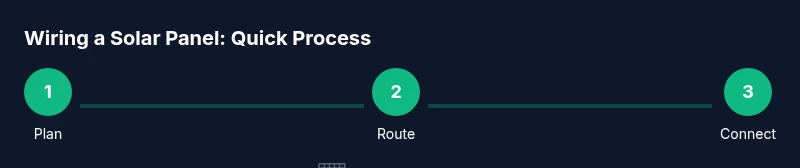
Before you begin, outline the exact route of cables, verify panel ratings, and have safety gear ready. Keep a clean workspace, label all conductors, and maintain separation between DC power paths and AC circuits. The overview below highlights logical stages: supply assessment, routing, connection to the controller, battery integration, and final testing. This overview should align with your device manuals and local electrical codes.
Protecting Your System: Fuses, Disconnects, and Enclosures
Essential protective elements include a properly rated fuse or circuit breaker on the positive lead between the panel and controller, a battery disconnect, and weatherproof enclosures for exposed terminations. Use corrosion-resistant hardware and dielectric grease where needed to maintain contact integrity. Enclosures should be rated for outdoor exposure and allow for drainage. These protections mitigate arc risks and prevent short-circuits in wet conditions.
Testing, Troubleshooting, and Commissioning
After wiring, perform stepwise testing: confirm open-circuit voltage with a multimeter, check panel temperature, and test under light load to observe regulator behavior. If readings deviate from expected values, recheck polarity, connectors, and fusing. Document any anomalies and consult the controller's manual for diagnostic codes. Ongoing testing helps catch creeping failures before they affect performance.
Common Mistakes and How to Avoid Them
Common DIY mistakes include skipping fusing, misrouting cables, mixing wire gauges, and failing to observe polarity. Develop a habit of double-checking each connection and wiring path, keeping conductors dry and protected, and using color coding. A clear plan and careful execution save time and reduce risk.
Maintenance and Long-Term Considerations
Inspect connections at least twice a year for corrosion or looseness. Keep panels clean and free of debris to prevent overheating; check seals and housing for cracks. Periodically test voltage and current to ensure the system still meets expected performance. Regular maintenance prolongs the life of components and maintains reliability over years of operation.
Tools & Materials
- Solar panel(s) or array(Verify rating matches your system design (VOC, ISC))
- Charge controller(Match to system voltage and current; MPPT preferred for efficiency)
- Battery bank or capacitors(Deep-cycle batteries typically used; consider compatibility with controller)
- Disconnect switches(One at the panel side and one at the battery side)
- Fuses or DC circuit breakers(Rated for system voltage and expected current)
- Weather-rated DC conductors(Appropriate AWG gauge for current; keep lengths short when possible)
- MC4 connectors or equivalent(Ensure secure, weatherproof connections)
- Terminal blocks and enclosures(Outdoor-rated, with drainage and ventilation)
- Conduit and clamps(Used for route protection if needed)
- Multimeter / voltmeter(Measure Voc, Vbattery, and continuity)
- Wire stripper/crimper(Quality tools prevent damaged conductors)
- Safety gear (gloves, goggles)(Personal protection while wiring)
- Dielectric grease or anti-corrosion spray(Promotes long-term contact integrity)
Steps
Estimated time: 2-4 hours
- 1
Plan system layout
Sketch your layout, identifying panel placement, routing paths, and the location of the charge controller and battery bank. Confirm that the chosen route minimizes exposure to moisture and heat. This planning reduces rework later and helps you size wires accurately.
Tip: Create a simple map showing panel-to-controller distances and potential obstructions. - 2
Inspect safety gear and components
Inspect all components for damage, corrosion, or loose connectors. Verify that the controller's voltage rating matches your array, and ensure safety gear is ready. Do not proceed if any part appears compromised.
Tip: Test connectors with a quick continuity check before connecting them. - 3
Choose wire gauge and routing
Calculate expected current and choose wire gauge accordingly (e.g., thicker gauge for longer runs). Plan routes away from heat sources, sharp edges, and potential water exposure. Leave extra slack for movement and maintenance.
Tip: Avoid underestimating the current; wire currents increase with panel temperature. - 4
Connect panel to charge controller
Attach panel leads to the charge controller's PV input following polarity. Use a fuse close to the panel side or a disconnect. Prevent contact between live conductors during assembly.
Tip: Keep the controller indoors or in a weatherproof enclosure if it will be exposed. - 5
Wire controller to battery bank with fusing
Run the controller output to the battery bank, inserting a correctly rated fuse or breaker on the positive lead near the battery. Observe correct polarity and secure terminations. Use proper labels for each connection to avoid mix-ups.
Tip: Check battery polarity with a meter before final energization. - 6
Install disconnects and enclosure
Mount disconnects in accessible locations and use weatherproof enclosures for exposed terminations. Ensure all terminals are torqued to specification and protected from moisture. Label every wire path.
Tip: Use strain reliefs where cables enter enclosures to prevent conductor fatigue. - 7
Test the system and verify outputs
Power up the system gradually and measure Voc, Vcontroller, and battery voltage under load. Confirm readings align with component specs and manufacturer guidance. Document results and address any anomalies before full operation.
Tip: Run a low-load test to confirm regulators engage properly.
Frequently Asked Questions
Do I need a permit to wire a solar panel at home?
Local codes vary; many jurisdictions require electrical permits for solar wiring and installation. Check with your local building authority and utility before starting.
Permits vary by location; check with local authorities before you begin.
Can I wire panels in parallel or series?
Yes, but you must ensure the charge controller and batteries are rated for the total voltage and current. Use proper combiners and maintain correct polarity across all panels.
Yes, but match the controller and battery ratings to your array and connections.
Is it safe for a beginner to DIY solar wiring?
DIY wiring can be safe if you follow best practices, use correct components, and adhere to safety guidelines. If you’re unsure, consult a licensed electrician or installer.
It can be safe if you follow safety guidelines or hire a professional if unsure.
What is the role of a charge controller?
The charge controller regulates voltage and current from the panel to the battery, preventing overcharging and protecting the battery health.
It controls charging to protect the battery and optimize performance.
What tools do I need for wiring a solar panel?
Common tools include wire cutters, strippers, a multimeter, crimping tool, screwdriver, and protective gear. Ensure all tools are rated for electrical work.
You’ll need basic electrical tools and safety gear.
Watch Video
Top Takeaways
- Plan wiring layout before starting.
- Use correctly rated components for safety and performance.
- Verify connections with metering and checks before energizing.
- Protect and label all pathways and terminations.