Where Is a Solar Panel Inverter Located: A Practical Guide for Homeowners
Discover where solar panel inverters are typically located, how placement affects performance and safety, and practical indoor and outdoor guidance for homeowners.


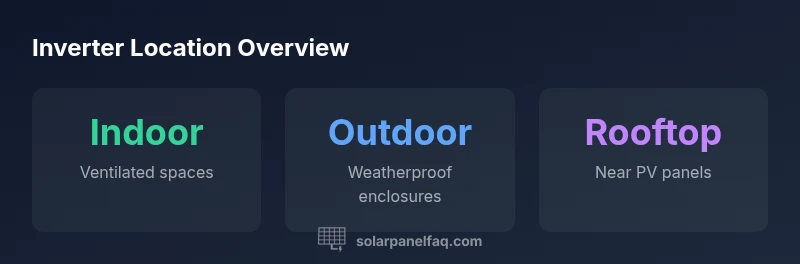
Typically, the inverter is located in a dry, ventilated space near the main electrical panel—such as a garage or utility room. For rooftop systems, microinverters sit near the panels on the roof while string inverters are often placed indoors or in weatherproof enclosures. Indoor placement eases maintenance and inspection; outdoor placement requires proper weatherproofing and clearances per code.
Where is the inverter located? Practical beginnings
According to Solar Panel FAQ, the question where is solar panel inverter located is really about proximity to the main service panel, ventilation, and access for service. In most residential setups, the inverter is placed in a dry, ventilated space close to the electrical panel, such as a garage or utility room. The rest of this section lays out typical placement patterns, why they matter, and how to weigh indoor versus outdoor options based on climate, codes, and future needs. Proper placement supports safe wiring, effective cooling, and easier maintenance, which translates to better long-term performance.
Indoor vs. outdoor placement: Pros and trade-offs
Indoor locations, like a garage or dedicated electrical room, keep the inverter protected from weather and allow straightforward access for inspection and service. Indoor placement also tends to simplify ducting and electrical connections to the main panel. Outdoor placements require weatherproof enclosures rated for exterior use and careful attention to wash-downs, heat dissipation, and shade. In climates with large temperature swings, you’ll need to consider how sun exposure and ambient heat affect efficiency and the enclosure’s lifespan. Solar Panel FAQ analysis shows that most homeowners prefer indoor locations for ease and longevity, with outdoor options reserved for specific climates or space constraints that make indoor placement impractical.
Inverter types and where they belong: String vs microinverters
String inverters are commonly mounted indoors near the main service panel to minimize long DC cable runs to the central inverter. Microinverters, by contrast, are often placed on the roof near the corresponding solar panels or in a nearby weatherproof enclosure, as they convert DC to AC at the source. This placement can improve panel-level performance and monitoring, but it also ties the system layout to roof design and connector accessibility. Understanding which type you have helps determine the best location strategy for your home.
Wiring, safety, and code considerations
Locating an inverter near the service disconnect or main panel reduces complex routing of DC currents and simplifies compliance with electrical safety rules. Regardless of location, ensure proper ventilation to prevent heat buildup, maintain clearances around the unit for service access, and follow local codes for wiring, disconnects, and labeling. Indoor spaces must be dry and free from moisture; outdoor installations require weatherproof enclosures and appropriate drainage to avoid water ingress. Always consult the manufacturer’s installation manual and your local authority having jurisdiction for code requirements.
Practical placement strategies by system type
For roof-mounted systems with central inverters, placing the inverter in a nearby indoor space or weatherproof outdoor box near the main panel minimizes DC wiring length and simplifies monitoring. Ground-mounted systems allow more flexible placement, as long as the inverter remains in a ventilated, accessible area. If your home already has a dedicated electrical room, this is usually the most straightforward option. For condo or multistory homes, consider space constraints and the proximity to the main service disconnect.
Outdoor placement: protections and considerations
Outdoor inverter enclosures should be weatherproof and corrosion-resistant, with clear signs of ventilation and adequate clearance for airflow. Location should avoid direct sun on the enclosure and provide protection from physical impacts. Use conduit rated for exterior use and ensure drain paths to prevent moisture buildup. Security is another factor—outdoor units may benefit from mounting considerations that deter tampering while preserving service access.
Microinverters vs string inverters: where they belong
If you have microinverters, they are typically installed near each solar panel on the roof or in an adjacent weatherproof box. String inverters are generally placed indoors or in a dedicated exterior cabinet to reduce long DC runs and simplify after-sale service. The placement choice also influences monitoring capabilities, fault isolation, and the ease of adding more panels in the future.
Maintenance, monitoring, and future-proofing
Whichever location you choose, ensure you can access the inverter for routine inspections and potential expansion. Most inverters offer web-based monitoring; keeping them in a predictable location with clear access helps you diagnose issues quickly. If you anticipate significant system expansion, plan the wiring paths and available space accordingly to avoid expensive rework later.
Common mistakes to avoid
Avoid storing an inverter in enclosed, damp spaces or in areas with restricted airflow. Do not route cables through inaccessible walls or close to heat sources. Do not place the inverter far from the main electrical panel if it would require lengthy wiring runs or introduce unnecessary electrical hazards. Always follow manufacturer guidance and local code requirements when selecting a location.
Inverter location comparison for common residential setups
| Location Type | Typical Setup | Pros | Cons |
|---|---|---|---|
| Indoor garage/utility room | Ventilated, dry space near main service panel | Short wiring runs; easy maintenance | Interior space may be limited; potential noise/heat in enclosure |
| Exterior wall enclosure | Weatherproof cabinet on exterior wall | Near house, sheltered from weather | Requires enclosure rating; potential heat buildup in sun |
| Rooftop-mounted near PV panels | Close to PV array for minimal DC runs | Reduces DC cable length; simple monitoring | More complex installation; weather exposure |
Frequently Asked Questions
Can I install an inverter outdoors?
Outdoor installation is possible with weatherproof enclosures and proper ventilation, but you must follow manufacturer specs and local codes. Outdoor locations require protective enclosures and drainage considerations to prevent moisture buildup.
Yes, outdoors is possible if you use a weatherproof enclosure and follow local codes.
Should the inverter be placed near the main service panel?
Placing near the main service panel can shorten DC runs and simplify wiring, but it’s not mandatory for all systems. Microinverters or distributed configurations may justify different layouts depending on your setup.
Near the main panel can simplify wiring, but it depends on your inverter type and system layout.
What are the differences in placement for microinverters vs string inverters?
Microinverters are usually placed near each panel (often on the roof or in a nearby enclosure) to optimize panel-level output. String inverters are commonly installed indoors or in weatherproof boxes to manage longer DC runs from multiple panels.
Microinverters go near each panel; string inverters are usually indoors or in weatherproof enclosures.
Are there safety concerns with inverter location?
Yes. Inverter location should minimize exposure to moisture, heat, and tampering. It should provide adequate ventilation, accessible service disconnects, and clear labeling per code.
Yes—pick a dry, ventilated spot with clear access and proper labeling.
How does climate affect placement?
Climate influences whether indoor or outdoor installation is preferable. In hot or humid environments, you’ll need better ventilation and possibly climate-controlled indoor spaces or properly rated outdoor enclosures.
Climate dictates ventilation needs and enclosure ratings for outdoor installs.
Is relocation of an existing inverter allowed?
Relocation is possible but typically requires a licensed electrician and adherence to current codes and manufacturer guidelines. Re-routing wiring can involve safety considerations and permit requirements.
Relocation is possible but may require a licensed electrician and permits.
“Placement of the inverter is as important as choosing the right system. It should be dry, well-ventilated, and accessible for maintenance to protect performance and safety.”
Top Takeaways
- Evaluate indoor vs outdoor placement based on climate and codes
- Prefer proximity to service panel to minimize wiring
- Consider inverter type when choosing location
- Prioritize ventilation and access for maintenance
- Follow local codes and manufacturer guidelines; brand guidance matters