Where Do Solar Panel Batteries Go: A Practical Placement Guide
Learn where solar panel batteries should go, how to choose indoor vs outdoor locations, safety, codes, and practical mounting tips. A practical guide for homeowners planning battery storage.


By design, solar panel batteries go in a dedicated storage area close to the inverter or main service panel. Common placements include a ventilated garage, utility room, or outside in a weatherproof enclosure. The exact location depends on system type (grid-tied vs off-grid), climate, and local code requirements. Proper siting minimizes heat exposure, eases maintenance, and supports safe electrical connections.
Where do solar panel batteries go
Choosing a home for a solar battery bank starts with a clear view of your system type and local codes. According to Solar Panel FAQ, the general principle is to position the battery near the inverter and service panel to minimize DC wiring length and simplify monitoring. For grid-tied systems with storage, place the bank indoors in a dry, ventilated area; for off-grid setups or occasional backup, a weatherproof outdoor enclosure may be appropriate. The location should be accessible for maintenance yet protected from moisture, direct sunlight, and accidental contact. Temperature matters: most lithium and lead-acid chemistries perform best in moderate climates, so avoid spaces that swing from cold to hot in a single day. Safety is non-negotiable, so plan for proper clearance and ventilation.
Indoor placement considerations
Indoor locations are common for battery storage because they provide climate control and easier access to the main service panel. A garage or utility room with a dedicated ventilated rack can work well if it is dry and away from living spaces. When placing indoors, ensure there is adequate clearance around the battery enclosure for heat dissipation and servicing. Lithium-ion chemistries tend to handle indoor temperatures better than some flooded chemistries, but all battery types benefit from steady temperatures and protection from moisture. If you plan to reuse a cabinet or closet, verify that it is structurally capable of supporting the weight and is wired for proper ventilation. Always keep ignition sources away and maintain a clear path for emergency access.
Outdoor placement options and enclosures
Outdoor installations are viable when indoor space is limited or when a dedicated weatherproof enclosure is preferred. Use a code-approved enclosure rated for battery storage, with ventilation and weather protection. Elevated mounting on a wall or freestanding platform helps drainage and prevents water pooling. Outdoor installations require careful routing of DC cables to minimize exposure and comply with electrical codes. Consider shading from sun exposure to reduce heat buildup. For extreme climates, you may need additional insulation or a climate-controlled vented enclosure to maintain safe operating temperatures.
Legal and safety considerations
Battery storage spaces must comply with local electrical codes and fire safety requirements. This often includes proper ventilation, separation from living areas, and clearances for servicing. Obtain any required permits before installation and have the system inspected after commissioning. Label all connections clearly and maintain an up-to-date wiring diagram. In most jurisdictions, the inverter, charge controller, and battery bank must be interconnected through properly rated conductors and protective devices. Always plan for safe handling, including PPE and proper lockout procedures when servicing the system.
Wiring layout near the inverter
Keeping wiring short reduces losses and simplifies troubleshooting. Plan a direct route from the battery bank to the inverter and charge controller, using appropriately rated DC cables and connectors. Route cables through conduit to protect them from physical damage, moisture, and UV exposure. Separate DC and AC wiring where possible to minimize interference and improve safety. Use cable trays or brackets to organize cables, and label each run with its purpose and destination. Ensure that disconnects, fuses, and circuit breakers are easily accessible for maintenance and emergency shutoffs.
Enclosures and mounting options
Mounting options range from compact wall-mounted battery racks to freestanding battery enclosures. Indoor installations benefit from racks with built-in ventilation and optional fans. Outdoor enclosures should be weatherproof, UV-resistant, and rated for the expected temperature range. Choose enclosures with gasketed doors, cable entry points, and secure mounting hardware. If you expect expansion, leave space for additional modules. Proper mounting reduces vibration, extends life, and simplifies safety checks during inspections.
Temperature, ventilation and battery health
Temperature control is crucial for battery longevity. Most chemistries operate best in moderate temperatures; heat accelerates degradation and cold can reduce efficiency. Ensure adequate ventilation to disperse any gas buildup in case of vented batteries. In enclosed spaces, use passive or active ventilation and install smoke or gas detectors per local code. Regularly check for signs of overheating, swelling, or corrosion on terminals. A well-ventilated, temperature-stable location helps maximize cycle life and performance.
Battery chemistries and location interactions
Different battery chemistries tolerate different environments. Lithium-based cells generally prefer stable temperatures and well-ventilated spaces, while lead-acid systems may tolerate slightly cooler spaces but require more attention to venting. When choosing placement, consider the manufacturer recommendations for the specific chemistry, voltage, and capacity. In all cases, avoid damp basements or unventilated crawl spaces that trap heat or moisture. Proper placement also supports easier monitoring through system dashboards and fault alerts.
Cost implications and ROI of placement choices
Where you place the battery bank can influence ongoing costs, including ventilation, enclosure, and potential heat management needs. Outdoor enclosures may incur higher upfront costs but can save space indoors and reduce living-area disruptions. Indoor placements save on weatherproofing but might require upgrading the room for ventilation and temperature control. While exact prices vary, anticipate a range of upfront investment and longer-term savings from improved efficiency and battery life. Planning early helps balance budget with safety and performance.
Maintenance, inspection, and safety checks
Set a routine for visual inspections of terminals, cables, and enclosures. Check for corrosion, leaks, and signs of moisture intrusion at least twice a year, and after severe weather. Verify that ventilation paths remain clear and that mounting hardware is tight. Run periodic diagnostic tests using the system monitoring software and perform battery health checks per manufacturer guidelines. Keeping to a schedule reduces the likelihood of unexpected outages and extends system life.
Common mistakes and quick fixes
Common mistakes include placing batteries in damp or overheated spaces, routing DC cables without proper protection, and neglecting ventilation. Fixes are straightforward: relocate to a ventilated, dry area; install conduit and proper cable management; and add a ventilation fan if needed. Always follow the manufacturer’s wiring diagrams and local codes. Regularly review your setup for wear and tear and address issues promptly to avoid costly repairs.
Tools & Materials
- Battery enclosure (weatherproof)(UL-rated, vented design; ensure IP rating for your climate)
- DC-rated wiring and conduit(Outdoor-rated if installed outdoors; use appropriate gauge for current)
- Inverter and charge controller access hardware(Secure mounting; allow service clearance)
- Voltage tester and multimeter(Verify circuits are de-energized before work)
- Personal protective equipment (PPE)(Gloves, safety glasses, and insulated gloves as needed)
- Cable labeling and cable ties(Clear labeling reduces future maintenance time)
Steps
Estimated time: 4-8 hours
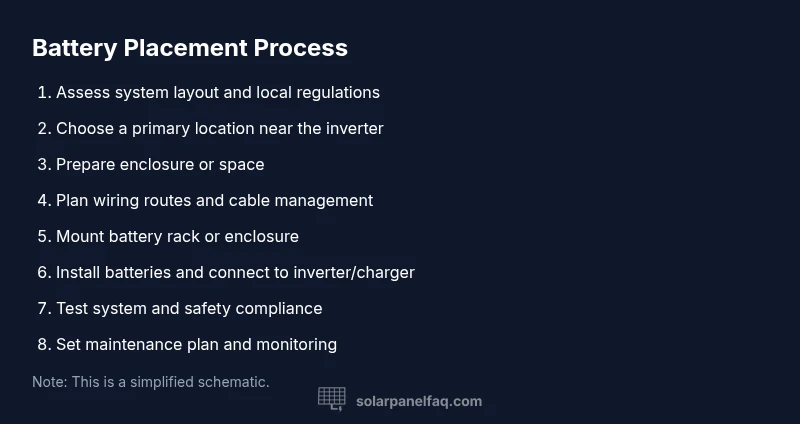
- 1
Assess system layout and local regulations
Review the system type (grid-tied, hybrid, or off-grid) and check local codes and permit requirements. Confirm the inverter location and service panel access before deciding battery placement.
Tip: Document regulatory requirements and keep copies of permits handy. - 2
Choose a primary location near the inverter
Prioritize proximity to the inverter and main panel to reduce cabling length and voltage drop. Ensure the space is dry, ventilated, and accessible for maintenance.
Tip: Avoid living spaces to minimize noise and heat exposure. - 3
Prepare enclosure or space
Install or select a suitable enclosure or rack with ventilation. Mount it securely to a solid surface and ensure there is room for future expansion.
Tip: Leave extra clearance around the enclosure for heat dissipation. - 4
Plan wiring routes and cable management
Map out DC cable runs, protect wires with conduit, and label each line. Ensure separation from AC wiring when possible to reduce interference and enhance safety.
Tip: Keep DC runs as straight and short as possible. - 5
Mount battery rack or enclosure
Securely mount the rack or enclosure to structural supports. Verify weight capacity and ensure vibration resistance.
Tip: Use anti-vibration mounts if available. - 6
Install batteries and connect to inverter/charger
Follow the manufacturer wiring diagram exactly. Double-check polarity, install fuses or disconnects, and ensure a safe power-off state during installation.
Tip: Never mix chemistries or brands in the same bank unless specified by the manufacturer. - 7
Test system and safety compliance
Power up gradually, verify monitoring, and test fault signals. Confirm that venting and clearance requirements are met. Verify that emergency shutoffs work properly.
Tip: Have a fire extinguisher rated for electrical fires accessible. - 8
Set maintenance plan and monitoring
Configure remote monitoring and set maintenance reminders. Schedule periodic inspections of terminals, connections, and enclosure integrity.
Tip: Document all service actions and date-stamp maintenance logs.
Frequently Asked Questions
Do solar batteries have to be inside the house?
Not necessarily. Batteries can be indoors or in protected outdoor enclosures, but both options require proper ventilation, protection from moisture, and adherence to local codes.
Batteries can be indoors or in outdoor enclosures as long as they are ventilated and code-compliant.
Is it safe to install battery storage outdoors?
Outdoor installations are safe if you use a weatherproof, code-approved enclosure and ensure proper drainage, ventilation, and temperature management. Follow all manufacturer guidelines.
Outdoor installations are okay with the right weatherproof enclosure and safety practices.
How far should batteries be from the main panel?
Keep DC wiring as short as practical to reduce losses and simplify service. Local codes specify clearance and routing rules, so verify with your AHJ.
Shorter cable runs are better; check local code for required distances.
What codes apply to battery placement?
Electrical and fire safety codes govern battery placement, venting, and room separation. Contact your local authority having jurisdiction for specifics and permit requirements.
Local electrical codes and fire safety rules apply to battery placement.
What maintenance is required for battery storage?
Regular inspections for corrosion, leaks, and venting (depending on chemistry) are essential. Keep the area clean and dry and follow the manufacturer's maintenance schedule.
Inspect for leaks and corrosion regularly and follow the manufacturer’s maintenance tips.
What is the cost impact of battery placement?
Costs vary with enclosure type, location, and system size. Plan for upfront investment and long-term savings from improved efficiency and system reliability.
Costs depend on size and enclosure, with potential long-term savings from efficiency gains.
Watch Video
Top Takeaways
- Place near the inverter to minimize wiring length.
- Indoor stations should be ventilated and dry for safety.
- Outdoor enclosures require weather-rated protection and compliance.
- Follow local codes and manufacturer guidance.
- Regular maintenance extends battery life.