Solar Panel System Design: A Practical Homeowner's Guide
Learn how to design a solar panel system for your home, from sizing and layout to permits and maintenance. This guide covers energy needs, orientation, components, and best practices for long-term performance.


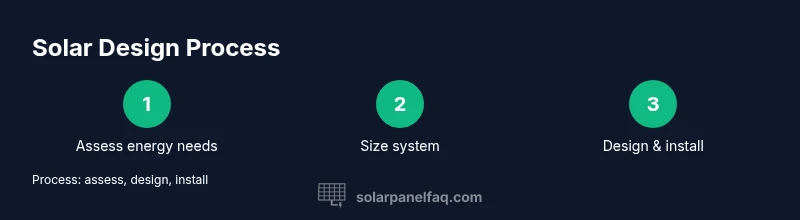
According to Solar Panel FAQ, designing a solar panel system starts with estimating your energy needs, selecting reliable modules, and mapping an effective roof layout. This guide provides a practical, step-by-step approach to sizing, orientation, shading considerations, wiring basics, and safety checks so homeowners can maximize output, minimize costs, and future-proof their installation.
What is solar panel system design?
Solar panel system design is the careful planning of a photovoltaic (PV) installation to meet a home’s energy goals while matching the roof geometry, budget, and local codes. It blends electrical fundamentals with practical constraints like shading, mounting options, and ease of maintenance. For homeowners, the goal is to delivered reliable power, maximize ROI, and reduce environmental impact over time. This section lays out the core concepts, common trade-offs, and a practical framework you can use when talking with installers or evaluating DIY routes. You’ll learn how different components interact, what constraints matter most, and how to prioritize your decisions for a durable, scalable system.
Sizing your system: energy needs and generation targets
Sizing your solar system begins with a clear picture of how much energy your household uses and what portion you want to offset with solar. Start by accumulating 12 months of utility bills to understand seasonal variations. Convert your annual kWh usage to a daily average, then estimate how many kilowatts (kW) of solar capacity are needed to meet that demand. Location matters: more sun hours = smaller system for the same output. A typical residential installation falls roughly in the 3–8 kW range, though larger homes with high energy use may require 9–12 kW or more. After sizing, set a target for annual energy production and plan for potential growth, such as an electric vehicle or future efficiency upgrades. Remember to account for system losses (shading, wiring, temperature) and inverter efficiency when estimating real-world output.
Layout and orientation: maximizing sun exposure
The layout of solar panels on your roof directly affects energy yield. South-facing arrays in the Northern Hemisphere generally capture the most sun, while the opposite is true in the Southern Hemisphere. Tilt angle should align with your latitude to balance winter and summer production, with adjustments for seasonal shading. Consider roof space, panel density, and edge clearance to avoid wind uplift or debris buildup. Shading from trees, vents, or chimneys reduces power generation, so plan the array geometry to minimize shade impact and, if necessary, deploy microinverters or power optimizers for resilience in partially shaded conditions.
Component selection: panels, inverters, and wiring
Selecting the right components is a balance of cost, performance, and durability. Panels come in mono- or polycrystalline types, with mono offering higher efficiency and a sleek look. Inverters are the system’s heart: string inverters are simple and cost-effective, while microinverters or power optimizers improve performance under shading. Choose wiring that matches the system voltage, and include appropriate safety devices, disconnects, and grounding. Plan for future upgrades by using modular layouts and compatible mounting hardware. A well-designed system specifies components that meet local codes and utility interconnection requirements.
Roof assessment and mounting considerations
Roof health and structure are critical to a durable solar installation. Assess the roofing material, slope, load capacity, and pitch to determine mounting strategy. Ballasted mounting minimizes roof penetrations on flat roofs, while penetrating mounts may be necessary for pitched roofs with structural reinforcement. Verify roof orientation and plan for drainage and snow loads. Ensure there is a clear path for maintenance, and identify access routes for future cleaning or repairs. Address potential moisture infiltration by sealing penetrations and using weather-tight flashings.
Efficiency, losses, and performance optimization
No system operates at perfect efficiency. Key loss factors include soiling, temperature derating, wiring resistance, and inverter efficiency. Temperature rises can reduce panel output, so consider roof materials and ventilation; modules perform better when kept cool. Reducing shading, using high-quality connectors, and selecting optimally matched modules and inverters minimize mismatch losses. Regular monitoring helps catch performance degradation early, enabling timely maintenance or design tweaks to sustain high overall efficiency.
Permitting, warranties, and commissioning
Most jurisdictions require permits for solar installations and post-installation inspections to verify safety and interconnection compliance. Read warranty terms for panels, inverters, and mounting hardware to understand coverage duration and what voids it. A robust commissioning process includes system tests, safety checks, and proper documentation for the utility. Keep a log of all installation details, inspection approvals, and warranty paperwork to simplify future service or resale.
Maintenance and ongoing optimization
To sustain performance, schedule periodic cleaning and visual inspections for loose hardware or corrosion. Monitor production versus expected output to detect underperforming strings or shading changes from tree growth. Track inverter status and alert systems to catch faults early. An annual review of energy goals ensures the system still aligns with your usage, and planning for expansions (e.g., battery storage) can maximize long-term savings.
Final design checklist and next steps
Before moving to install, confirm: energy goals, system size, orientation, shading analysis, component compatibility, permit requirements, and maintenance plan. Obtain multiple quotes from qualified installers, verify warranties, and review interconnection terms with your utility. With a solid design and clear plan, you’ll step into installation with confidence and a clear path to savings.
Tools & Materials
- Solar energy calculator app(For estimating daily usage and potential production)
- Measuring tape (25+ ft)(For roof layout, panel placement, and module spacing)
- Safety harness and fall protection PPE(Essential when working on roofs; follow OSHA guidance)
- Ladder or roof access equipment(Secure, stable access to roof area)
- Blueprint or roof plan copy(Helps in precise layout and permits)
- Notebook and pen(Record measurements and design decisions)
Steps
Estimated time: 2-6 hours
- 1
Define goals and energy profile
Gather electricity usage data from the past 12 months and set a target for how much of that load you want to offset with solar. Include future needs like EV charging or home battery storage in the plan. Quantify success criteria to guide component choices.
Tip: Use a 12-month bill history to capture seasonal variations. - 2
Estimate system size and production
Convert your daily kWh requirement into a kW size by considering sun hours and system losses. Use typical local sun hours as a baseline and adjust for your roof angle and shading. Establish a production target that aligns with longevity and payback goals.
Tip: Account for derate factors (inverter, wiring, soiling) when calculating output. - 3
Choose components (panels, inverter, mounting)
Select panel type and efficiency that fit your budget, then pick an inverter strategy (string vs microinverters). Ensure mounting hardware is compatible with your roof and climate. Check warranty terms and interconnection requirements.
Tip: If shading is likely, consider microinverters to minimize performance losses. - 4
Plan layout and orientation
Draft a layout that maximizes sun exposure, minimizes shade, and fits available space. Determine tilt angle based on latitude and seasonal goals. Ensure safe access for maintenance and compliance with building codes.
Tip: Plan for future expansion by leaving space and using modular components. - 5
Assess roof and mounting feasibility
Evaluate roof condition, material, and structure to support the weight and attachment method. Decide between penetrating mounts and ballast options while checking for potential leaks or durability concerns.
Tip: Consult a structural assessment if you’re unsure about roof capacity. - 6
Permitting and commissioning planning
Prepare permit applications, installation diagrams, and interconnection paperwork. Schedule inspections and set up a monitoring system for post-installation performance.
Tip: Track all documents and keep a dedicated folder for warranties and permits.
Frequently Asked Questions
What is the first step in designing a solar panel system?
The initial step is to estimate your energy usage and establish how much of it you want to offset with solar. This guides system sizing and component selection.
Start by calculating your yearly energy usage to set a realistic solar target.
What components are essential in a residential solar design?
Key components include solar panels, an inverter, mounting hardware, wiring, and safety disconnects. The interconnection with the utility is also important.
Pivotal pieces are the panels, inverter, framing, wiring, and safety devices.
How do shading and orientation affect energy production?
Shading reduces output and affects array performance. Orienting panels toward the sun and optimizing tilt improves energy capture, especially during peak sun hours.
Shade is a big deal—move, tilt, or reconfigure to keep panels in sun as much as possible.
Do I need permits to install solar panels on my roof?
Most areas require permits and inspections for solar installations. Check local building codes and utility interconnection requirements.
Yes, you’ll likely need permits and a utility interconnection review.
What maintenance is required after installation?
Regular cleaning and performance monitoring help sustain output. Inspect connections and mounting hardware annually.
Keep an eye on performance and inspect for loose parts and dirt buildup.
How long does it take to design a residential solar system?
A typical design process takes several days to weeks, depending on site complexity, permitting, and contractor coordination.
Designs usually take a few days to a couple of weeks, based on complexity.
Watch Video
Top Takeaways
- Define energy goals before hardware choices
- Maximize sun exposure through layout and orientation
- Choose compatible components for efficiency
- Account for shading and losses in production estimates
- Plan permits, warranties, and maintenance upfront