Solar Panel Set Up: A Homeowner's Step-by-Step Guide
Learn how to plan, install, and verify a home solar panel system with a practical, step-by-step approach. From permits to maintenance, get expert guidance for safe, compliant setup.


Set up a home solar panel system by planning your site, selecting components, mounting rails, wiring, and commissioning. This guide breaks the process into actionable steps, safety checks, and practical tips to avoid common mistakes. You’ll learn how to verify performance before you flip the switch and start generating clean energy.
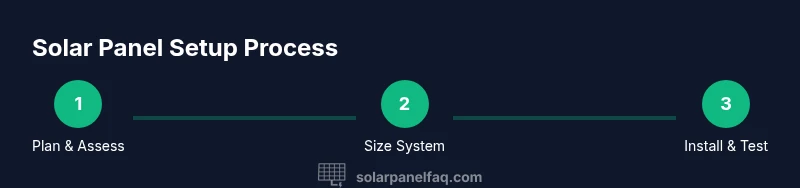
Site assessment and planning
Before any hardware arrives, evaluate your property for solar viability. In the southern-facing attic or rooftop, sun exposure and shading drive how many modules you need and where to place them. Use a simple shading map for an average sun path and measure the available roof area to estimate module count. Consider mounting options (fixed vs. tilt) and system type (grid-tied vs. off-grid). If you rent or live in a home with HOA restrictions, check covenants early. Solar Panel FAQ emphasizes safety and permits as core planning considerations to avoid delays. Confirm electrical service capacity with your main panel and plan a feasible inverter size to match production goals.
Key questions to resolve: Can the roof bear the load? Is there unobstructed southern exposure? What local permits are required? These early questions save time and money later on.
Permits, codes, and safety prerequisites
Installations must comply with local building codes, electrical codes, and utility interconnection requirements. Start by contacting your city or county permit office to learn which documents are needed and whether inspections are mandatory. Many jurisdictions require a licensed electrician for any high-voltage work or for the final connection to the service panel. OSHA safety standards apply to all rooftop work, including fall protection, harness use, and ladder safety. If you’re unsure about code language or permit steps, consult a local solar installer or electrical contractor who can guide you through plan review, permits, and the interconnection agreement. This stage prevents costly rework and noncompliant installations.
PLANNING TIP: Get permit timelines in writing and build a buffer into your schedule for inspections.
System sizing and component selection
Sizing determines how much energy you will produce and how your system interacts with your home load. Start by calculating your average daily kWh usage from utility bills. Then select modules with appropriate wattage, efficiency, and warranty terms. Choose an inverter that accommodates your array size and expected production, and decide between microinverters or a central string inverter. Don’t forget mounting hardware, conduit runs, combiner boxes, fuses, and monitoring equipment. By aligning module choice with inverter capacity, you avoid wasted energy and ensure reliable performance. Solar Panel FAQ stresses compatibility between components and proper derating for temperature and shading.
CHOICE FACTORS: climate zone, roof type, system size, and budget. A well-sized system avoids over- or under-sizing and yields the best return on investment.
Installation: mounting and wiring basics
Physical mounting involves securely attaching rails to the roof structure and aligning modules for maximum sun exposure. With safety gear in place, install rails, attach mounting clamps, and verify that fasteners are weather-tight. Run DC wiring safely using conduit and protect cables from abrasion and UV exposure. If your system uses a central inverter, connect modules in the proper series/parallel configuration, then route AC wiring to the service panel with an approved disconnect. Electric work should meet local codes; if in doubt, hire a licensed electrician. The goal is a clean, code-compliant install that minimizes shading losses and allows easy maintenance.
WORK PRACTICE TIP: Always de-energize the system and use lockout-tagout procedures when working on electrical connections.
Commissioning and performance verification
Before flipping the switch, perform a pre-commissioning check: verify wiring polarity, confirm inverter communication, and inspect for loose connections or damaged components. With utility interconnection in place, monitor initial production and check that inverter DC to AC conversion matches the expected rating. Run a basic performance test under typical operating conditions and compare results against your system’s specifications. Keep a detailed log of as-built diagrams, serial numbers, and warranty information. Regular monitoring helps catch temprano issues before they affect long-term output.
Authority sources
- Energy.gov: Solar energy guidelines and safety considerations. https://www.energy.gov/eere/solar
- National Renewable Energy Laboratory (NREL): Solar design and performance information. https://www.nrel.gov
- Occupational Safety and Health Administration (OSHA): Workplace safety standards for rooftop work. https://www.osha.gov
Consult these sources for authoritative guidance on installation best practices and safety.
Tools & Materials
- Roof anchor kit (harness attachment points)(Includes full-body harness, lanyards, and anchors rated for rooftop work)
- Safety harness and fall protection(At least one full-body harness per worker; rope-rated lanyards)
- Power tools and hand tools(Drill/driver, wrenches, torque wrench, screwdriver bits)
- Mounting rails and racking hardware(Aligned with panel size and roof type)
- Conduit, connectors, and weatherproof fittings(UV-rated conduit; watertight seals)
- DC wiring tools (MC4 connectors, crimping tool)(Ensure proper polarity and secure connections)
- Inverter and mounting hardware(Choose central or microinverters based on layout)
- Electrical testing tools (voltmeter, multimeter)(Verify continuity and insulation resistance)
- Roof weather sealant and flashing(For additional waterproofing at rail penetrations)
- Monitoring equipment (data logger or app)(Track production and performance over time)
Steps
Estimated time: 3-6 hours
- 1
Assess site and plan layout
Survey the roof orientation, shading, and available area. Decide on module count and whether to use fixed or adjustable racking. Document measurements and create a simple wiring diagram.
Tip: Photograph mounting points and shade maps for reference during ordering. - 2
Size system and select components
Calculate expected output from utility bills; choose modules, inverters, and mounting hardware that match your plan. Ensure compatibility among all parts and account for temperature derating in your climate.
Tip: Double-check warranty terms and service clearances for the inverter. - 3
Prepare mounting and electrical plan
Mark rail locations, verify roof integrity, and plan conduit runs to minimize bends. Prepare a routing plan for DC wiring and the AC disconnect near your main panel.
Tip: Avoid running wires through attic spaces where heat and moisture accumulate. - 4
Install mounting rails and panels
Attach rails securely to rafters or the masonry substrate. Stepwise install modules in rows, aligning clamps and ensuring consistent tilt and spacing.
Tip: Check for level alignment after each row and tighten fasteners to spec. - 5
Make electrical connections
Connect DC wiring with MC4 connectors, route conduits, and install the inverter. Bond grounding conductors and set up the AC disconnect per code.
Tip: Only perform high-voltage work if you are a licensed electrician. - 6
Commission and verify performance
Power up the system, verify inverter output, and monitor initial production. Record serial numbers, installation diagrams, and test results for warranty records.
Tip: Keep a log of performance in the first 30 days to establish a baseline.
Frequently Asked Questions
Do I need a permit to install solar panels on my home?
In most areas, a building permit and electrical permit are required for rooftop solar installations. Local codes vary, so check with your city or county building department. Inspections may be scheduled after installation to ensure compliance.
Most locations require permits and inspections for rooftop solar installations to ensure safety and code compliance.
Can I install solar panels myself or should I hire a pro?
Small, ground-mounted systems or straightforward rooftop setups with basic wiring may be feasible for experienced DIYers. For most homes, especially rooftop installs with high-voltage work, hiring a licensed electrician or solar installer is advised for safety and compliance.
DIY is possible in simple cases, but for rooftops, a licensed professional is usually the safer route.
How long does a typical installation take?
Most home solar installations take a few days to weeks, depending on permit timelines, roof access, and utility interconnection scheduling. The physical mounting and wiring can be completed in a day or two once approvals are in place.
Timing varies; permit and interconnection steps often dictate the schedule.
What maintenance does solar panel setup require?
Solar panels require minimal maintenance: keep panels clean, inspect for loose components after storms, and monitor system performance. Warranties typically cover modules and inverters for 20–25 years, with inverter replacement expected midway.
Keep panels clean and watch performance; expect inverter replacements during long-term use.
What about warranties and safety considerations?
Warranties protect modules and inverters for decades, but proper installation is crucial. Use certified components, follow local codes, and maintain records. If you’re unsure about safety, consult a licensed installer.
Warranties rely on proper installation and safety practices; hire a pro if unsure.
Is grid-tied or off-grid better for a typical home?
Grid-tied systems are most common and cost-effective for homeowners, providing net metering and backup when the grid is available. Off-grid setups require battery storage and are more complex and expensive, suited to remote locations.
Grid-tied systems are typically best for most homes; off-grid is for remote sites.
Watch Video
Top Takeaways
- Plan site and permits early to prevent delays.
- Size the system to match consumption and roof space.
- Use proper safety gear and compliant electrical work.
- Verify performance with a clear commissioning routine.
- Maintain records and monitor ongoing output.