Solar Panel Integration: A Step-by-Step Guide
Learn how to integrate solar panels into your home safely and efficiently, covering planning, components, permitting, installation, and long-term maintenance for homeowners and buyers.


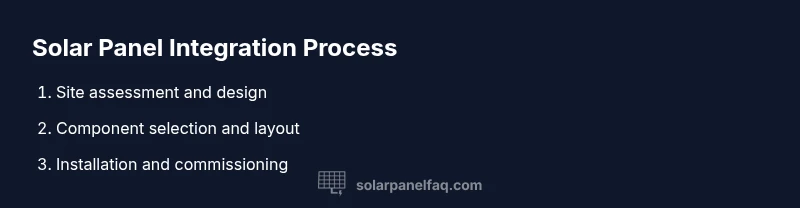
This guide shows how to integrate solar panels with your home’s electrical system, from roof assessment and component selection to permitting and commissioning. You’ll learn how to design a safe, code-compliant layout that minimizes losses and maximizes performance. According to Solar Panel FAQ, a well-documented plan reduces risk and improves long-term reliability for homeowners and buyers.
Why solar panel integration matters
Solar panel integration is more than simply placing modules on a roof; it’s a holistic approach to generating clean energy while preserving safety and grid reliability. A well-integrated system ensures power flows correctly, the inverter converts DC to AC efficiently, and the electrical panel can handle the additional load. For homeowners, this translates into reduced utility dependence, greater resilience during outages, and increased property value. The Solar Panel FAQ team emphasizes that integration decisions affect performance, safety, and warranty coverage. Thoughtful design minimizes losses from shading, wiring distance, and impedance while aligning with local codes and utility interconnection rules. By planning for future expansion, you can accommodate battery storage or additional solar capacity as your needs grow.
Assessing your home for integration
Before choosing equipment, evaluate roof orientation, slope, and shading across the day. Use historical sun data and a simple shading study to estimate how many panels are practical and where the best mounting locations are. Check your electrical service capacity by reviewing the main breaker rating and recent utility usage—this helps determine how much solar you can safely add without overloading the system. Gather utility interconnection requirements and any HOA guidelines early. Document your findings so you can compare quotes accurately and avoid scope creep. According to Solar Panel FAQ, a precise site assessment saves time and prevents costly redesigns later.
Choosing the right components
Component selection drives system performance and reliability. Select PV modules with proven performance and a warranty that fits your climate. Inverters come in string, microinverter, or power optimizer configurations; each has trade-offs in shading tolerance, monitoring, and maintenance. Choose mounting hardware compatible with your roof type (standing seam, asphalt, or tile) and consider an appropriate DC disconnect and a suitable monitoring solution. Don’t overlook wiring, conduit routing, and protective enclosures. The right combination reduces losses and makes future upgrades easier while supporting safety standards.
Permits, codes, and safety
Electrical work that ties into the home’s service panel typically requires a permit and inspection. Contact your local building department or utility for interconnection agreements, wiring diagrams, and labeling requirements. Key safety points include shutting off power before any work, using proper fall protection on roofs, and testing for proper grounding and bonding. Documentation should include a bill of materials, electrical drawings, and equipment specifications. Plan for inspection timelines and potential iterations to stay on schedule. A careful permitting process helps ensure long-term reliability and compliance with code requirements.
Site assessment and design basics
Your site design should account for roof geometry, wind and snow loads, and the physical spacing between modules. Factor in ventilation, debris accumulation, and panel tilt angle to optimize performance. Convert your design into a schematic that shows module rows, interconnections, and wiring routes to the combiner box and inverter. The layout should minimize shading from nearby structures or trees and allow for easy access for cleaning and maintenance. A clean, well-documented design reduces panel mismatch losses and simplifies future troubleshooting.
Electrical design and integration steps
Begin with a clear electrical schematic that shows module strings, blocking diodes if used, the DC disconnect, and the AC connection to the main panel. Size conductors to the required current and temperature ratings, accounting for voltage drop along the run. Plan for a dedicated subpanel or a properly rated breaker space in the main panel for the solar tie-in. Include monitoring wires and communications if you choose a smart inverter or microinverters. This design phase feeds into procurement and installation with fewer changes during build.
Installation workflow: DIY vs pro
Basic planning and mounting can be approachable for homeowners with strong electrical knowledge and comfortable roof access. However, most utility interconnections and AC wiring require a licensed professional to ensure code compliance and safety. If you’re DIY-ing, double-check permit requirements and ensure all work is inspected. When in doubt, hire a qualified installer to handle the critical electrical connections, interconnection applications, and final commissioning.
Commissioning and testing
Commissioning verifies that the system performs as designed. Steps include verifying voltages, current, and resistance values on each string, confirming proper grounding, and validating inverter communication with the monitoring system. Run a full system test under typical operating conditions and monitor for any abnormal readings. Record performance data for the first 30-60 days to establish a baseline and detect early issues. Keep a log of all inspections, tests, and commissioning actions for future reference.
Monitoring, maintenance, and long-term performance
Active monitoring helps you spot performance issues quickly. Use a system that provides real-time data on energy production, panel temperatures, and inverter health. Schedule periodic cleaning to remove dust and debris that reduce efficiency, and inspect mounting hardware for corrosion or looseness after severe weather. Warranty terms should specify what maintenance is required to keep coverage valid. Regular checks contribute to sustained performance and longer system life.
Cost considerations and payback (no hard numbers)
Solar panel integration is influenced by equipment choice, installation complexity, and local incentives. Compare quotes not just on price but on expected performance, warranties, and service availability. Consider potential utility rate changes, net metering policies, and local tax credits or rebates. A well-planned design often yields better payback by maximizing production and minimizing losses due to shading or suboptimal wiring. Keep future expansion in mind to avoid costly retrofits.
Safety, reliability, and warranties
Prioritize components with solid warranties and established reputations. Confirm that the system design adheres to national and local electrical codes and that the installer provides documentation for warranties and interconnection approvals. Proper labeling, clear diagrams, and thorough commissioning documentation help ensure safe operation and protect warranty eligibility. Remember that ongoing maintenance and timely repairs preserve reliability and system value.
Future-proofing your solar panel integration
Plan for expandability by leaving space for additional modules or a home battery system. As technology evolves, consider modular inverters and monitoring solutions that can accommodate upgrades. Stay informed about emerging codes or financing options and adjust your plan accordingly. A forward-looking approach keeps your home ready for higher efficiency standards and potential grid changes, while preserving value over time.
Tools & Materials
- Safety gear (hard hat, safety glasses, gloves)(Personal protective equipment for height and electrical work)
- Fall protection (roof anchors, harness)(Essential for roof work)
- Non-contact voltage tester(Check live circuits safely)
- Multimeter / clamp meter(Measure voltage, current, resistance)
- DC disconnect switch(Safety isolation on DC side)
- Conduit, conduit bodies, and wiring (as specified)(Route from panels to inverter/panel)
- Appropriate conductors (e.g., 10 AWG/12 AWG per code)(Correct gauge for current and voltage)
- Mounting rails and clamps (roof or ground mount)(Secure module mounting)
- PV modules(As planned in system design)
- Inverter(s) (string or microinverter)(Convert DC to AC for home use)
- Junction box and fusing components(Safe electrical connections)
- Torque wrench(Tighten mounting hardware to spec)
- Utility interconnection documents(Approval for grid connection)
- Labels, markers, and sealing tape(Clear labeling and weatherproofing)
Steps
Estimated time: 12-20 hours
- 1
Assess electrical service and load
Review the main service rating and current utility usage; perform a load calculation to estimate what the solar system can safely supply. Identify any existing limits on backfeed and ensure there is space for a dedicated solar breaker in the main panel. This step sets the foundation for all subsequent design decisions.
Tip: Start with a recent utility bill and a simple month-by-month load profile to understand peak times. - 2
Perform a roof and site survey
Inspect roof condition, orientation, tilt, and shading from trees or nearby structures. Verify roof anchoring points and assess accessibility for installation and future maintenance. Create a draft layout that maximizes sun exposure while keeping wiring runs short.
Tip: Use a sun-path diagram or mobile app to visualize shading across seasons. - 3
Select modules, inverters, and mounting
Choose PV modules with proven performance and a warranty. Decide on string vs microinverters based on shading patterns and monitoring goals. Pick mounting hardware compatible with your roof type and plan wire routing to a central point near the main panel.
Tip: Prioritize equipment with solid warranty terms and widely available service support. - 4
Plan permitting and interconnection
Identify required permits, labeling, and inspection steps. Prepare interconnection documents and utility applications well in advance to avoid delays. Schedule any necessary inspections and coordinate with the utility for a smooth connection.
Tip: Document all materials and schematics; keep copies in a home file for future reference. - 5
Prepare site and route wiring
Install mounting rails, run conduits from modules to the inverter and to the main panel, and ensure all openings are weather-sealed. Route cables to minimize exposure and protect against physical damage. Label all conductors clearly.
Tip: Keep DC wiring separate from AC wiring to reduce interference and simplify troubleshooting. - 6
Install modules and inverter equipment
Mount PV modules securely, connect strings with appropriate connectors, and install the inverter(s) as per manufacturer guidance. Install the DC disconnect in an accessible location and plan for monitoring hardware. Double-check all connections for tightness and corrosion resistance.
Tip: Perform a final physical inspection to confirm mounting integrity before energizing. - 7
Connect to service panel and utility
Make the electrical connections from the inverter to a dedicated solar breaker in the main panel, wired and labeled per code. Submit the interconnection package for utility approval and await the final inspection. Ensure proper grounding and bonding are in place.
Tip: Never bypass safety interlocks or skip the utility sign-off; it protects both you and the grid. - 8
Commission and test
With power off, verify voltage and current on each string, confirm inverter communication, and test the system under load. Compare performance data against the design targets and adjust settings if needed. Document results and store them with other system records.
Tip: Run a first-fire test during daylight with a helper present to monitor behavior in real time. - 9
Document, monitor, and maintain
Create a maintenance plan that includes regular cleaning, inspection of mounting hardware, and monitoring data. Keep warranty documents, permits, and test results organized for future service or resale. Schedule periodic check-ins to ensure continued alignment with performance goals.
Tip: Set up automatic monitoring alerts to catch performance deviations early.
Frequently Asked Questions
Do I need permits to install solar panel integration at home?
Most jurisdictions require permits and inspections for safety and interconnection. Check with your local building department and utility for documentation and timelines. Failing to obtain approval can affect warranties and insurance.
Yes. You’ll typically need permits and a utility interconnection agreement; speak with your local authority for exact requirements.
Can I install solar panels myself, or must I hire a licensed professional?
Basic planning and mounting may be feasible for experienced homeowners, but critical electrical connections usually require a licensed electrician. A pro ensures code compliance and safe interconnection with the grid.
DIY is possible for certain steps, but final connections and interconnection generally require a professional.
What interconnection options exist for grid-tied systems?
Grid-tied systems commonly use backfed breakers with net metering or utility approval. Microinverters or optimizers can improve performance in shaded conditions. Ensure the system is properly labeled and monitored.
Grid-tied systems often backfeed the grid and use either inverters or optimizers to improve performance.
How long does solar panel integration take from start to finish?
timeline varies by location, permitting speed, and interconnection workload. Planning and design typically take weeks, while installation and commissioning occur over a few days to a week.
It varies, but planning can take weeks and installation a few days to a week depending on permits and utilities.
What maintenance does solar panel integration require?
Routine maintenance includes cleaning panels, inspecting mounting hardware, and monitoring system performance. Address any shading changes or equipment degradation promptly to maintain efficiency.
Keep the panels clean, check for loose hardware, and monitor output for anomalies.
How does shading affect solar performance?
Shading reduces energy production and can disproportionately affect string-based systems. Microinverters or optimizers mitigate some losses by managing individual modules, improving overall performance in variable shade.
Shade can cut production; microinverters or optimizers help by managing each panel individually.
Watch Video
Top Takeaways
- Assess site and service before selecting components
- Choose compatible modules, inverters, and mounting
- Obtain permits early to avoid delays
- Document everything for safety and warranty
- Plan for future expansion to maximize value