Solar Panel Installation Tools: Essential Toolkit for Home Installations
Discover essential solar panel installation tools for safe, efficient residential installs. This guide covers measurement, mounting hardware, electrical work, and safety gear with practical tips to help you plan, select, and maintain a reliable toolkit.


By the end of this guide, you will know the essential solar panel installation tools, why each tool matters on the roof or rack, and how to assemble a safe, compliant toolkit. You’ll learn which tools are non-negotiable for most residential setups, plus practical tips for selecting quality, durable gear that lasts. The quick answer highlights the core categories: measurement and layout, mounting hardware, electrical work, and safety gear.
Why the right tools matter for solar installation
Installing solar panels safely and effectively hinges on the right solar panel installation tools. With a proper toolkit, you can achieve precise layouts, secure mounting, clean wiring, and correct cable routing. The stakes are real: roof penetrations, electrical connections, and wind loads all rely on reliable hardware and careful technique. According to Solar Panel FAQ, homeowners should start with a core toolkit of essential tools to ensure safety and code compliance. Investing in quality gear reduces on-site stress, speeds up work, and improves long-term performance of the system.
Core categories of solar installation tools
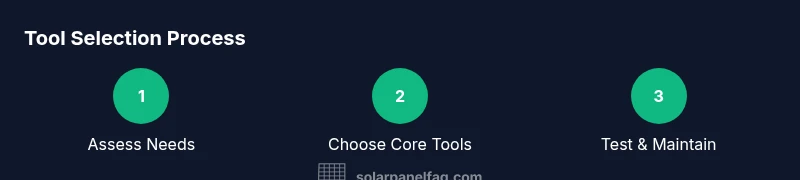
A practical toolkit groups tools into four broad categories: measurement and layout, mounting and construction, electrical work, and safety gear. Within each category, you’ll find non-negotiables and nice-to-haves. Understanding these groups helps you tailor the purchase to your roof type, system size, and local code requirements. The Solar Panel FAQ team emphasizes starting with a baseline kit and expanding as you gain experience. Planning ahead also helps you balance upfront costs with long-term reliability.
Measuring and layout tools explained
Accurate measurements are the foundation of a successful installation. Use a 30-foot tape measure or a laser distance measurer for length, width, and row spacing. Chalk lines or string lines help you achieve straight panel rows, while a carpenter's pencil or permanent marker marks drill points on roof decking or rails. For complex roof geometries, an additional framing square or combination square improves precision. By prioritizing measurement accuracy, you reduce the chance of misaligned panels or gaps that can degrade performance.
Mounting and construction tools you’ll rely on
Mounting rails, brackets, and fasteners create the structural backbone of the system. You’ll rely on a cordless drill/driver for most mounting tasks and an impact driver for heavy-duty fasteners. Keep a selection of drill bits for wood and masonry, plus a torque wrench for critical bolts. A level ensures rails stay even across the rooftop, and clamps help hold components during assembly. Investing in a solid set of mounting tools pays off in faster install times and a more durable, weather-tight roof interface.
Electrical tools for safe, code-compliant wiring
Electrical work requires careful tool selection. A multimeter and non-contact voltage tester verify circuit status and safety before touching conductors. Wire strippers, crimpers, and fish tape simplify routing and terminations. Conduit cutters and appropriate bending tools help you shape protective conduits, while a corded or battery-powered soldering iron may be needed for certain connections. Always de-energize circuits before starting, and adhere to local electrical codes and manufacturer guidelines for string configurations.
Safety gear and safe-work practices
Your toolkit is not complete without PPE and fall protection. A properly fitted hard hat, safety glasses, and gloves protect against sharp edges and falling debris. A safety harness and lanyard with proper anchor points are essential for roof work, while non-slip footwear and a stable ladder reduce fall risk. Plan for weather limits and never work alone on steep roofs. Regularly inspect anchors, harness straps, and anchor points to prevent equipment failure mid-project.
Tool quality, maintenance, and longevity
Choose tools with sturdy housings, comfortable grips, and durable blades. Look for reputable brands offering clear warranties and replacement parts. Regular maintenance—cleaning, lubrication, battery care, and storage in a dry case—extends tool life. Inspect chargers and cables for wear, and replace worn bits to maintain performance. A well-maintained toolkit remains reliable across multiple installations and saves money over time by avoiding repeated replacements.
Budgeting, buying, and renting tips
Start with a core, high-value set and add specialty tools as needed. Consider renting expensive items for a one-off project to keep upfront costs down. Compare tool kits by total cost of ownership, not just sticker price, and look for warranties and service options. If you plan multiple installations, it often makes sense to invest in reliable cordless tools you can reuse across jobs. Prioritize a balanced mix of essential tools and strategic upgrades to fit your budget.
Ready-to-use tool checklist for a residential installation
- Measuring tools (tape measure, laser measurer)
- Layout aids (chalk line, markers)
- Mounting hardware (rails, brackets, clips)
- Drilling and driving tools (drill/driver, impact driver, bits)
- Electrical tools (multimeter, voltage tester, wire stripper/crimp tool, fish tape)
- Safety gear (helmet, gloves, safety glasses, harness, lanyard, non-slip shoes)
- Miscellaneous (caulking gun, clamps, utility knife, spare batteries, battery charger)
Before you start, lay out your kit on a clean surface, check battery levels, and confirm you have the right roof anchors for your mounting system. It’s worth doing a dry run to verify panel layout and cable routes.
Tools & Materials
- Measuring tape (30 ft minimum)(Flexible steel blade, metric/imperial markings)
- Laser distance measurer(Accuracy to ±1/16 in if possible)
- Chalk line(For straight panel rows)
- Carpenter pencil / permanent marker(For durable marks)
- Spirit level / torpedo level(9" to 48" depending on rails)
- Framing square / combination square(90-degree reference)
- Cordless drill/driver(20V or higher, spare battery)
- Impact driver(For heavy-duty fasteners)
- Drill bits set (wood and masonry)(Keep sharp and non-worn)
- Torque wrench(Bolt torque for rails)
- Roof mounting rails and brackets(Compatible with panel size)
- Wrench set (metric/imperial)(Combination or adjustable)
- Pliers and diagonal cutters(Wire work and trims)
- Wire stripping tool(For wire terminations)
- Wire crimp tool(Professional terminations)
- Non-contact voltage tester(Check live circuits safely)
- Multimeter(Voltage, resistance, continuity)
- Fish tape / pulling rope(Run conductors in conduits)
- Conduit cutter(Shaping protective conduits)
- Safety harness and lanyard(Fall protection on roofs)
- Hard hat, safety glasses, gloves(Personal protective gear)
- Caulking gun and sealant(Weatherproof penetrations)
- Utility knife(General trimming)
Steps
Estimated time: 2-6 hours
- 1
Plan and measure the site
Define system size, layout, and anchor points. Measure roof dimensions, panel dimensions, and spacing; record results. Double-check alignment against local setback rules.
Tip: Always verify measurements twice and use a back-up measurement method. - 2
Mark layout and drill points
Mark rail positions and drill points with chalk line and marker. Confirm alignment with existing rafters or deck boards. Prepare your mounting rails on a clean work surface before roof work.
Tip: Verify drill points against your plan to avoid rework on the roof. - 3
Inspect roof structure and anchor points
Check the roof deck, rafters, and sheathing for strength and integrity. Identify anchor points that can bear mounting loads without compromising weatherproofing. Prepare appropriate roof penetrations or through-roof installations.
Tip: If uncertain about roof strength, consult a professional or structural guide. - 4
Pre-assemble mounting rails on ground
Lay out rails and brackets on the ground to ensure correct spacing. Use clamps to hold components in alignment during assembly. Tighten fittings to factory specs but avoid over-tightening before roof installation.
Tip: A dry run on the ground saves time and reduces mistakes on the roof. - 5
Drill through roof and install anchors
Drill at marked points using appropriate drill bits for roof material. Install roof anchors or through-roof fasteners per manufacturer guidelines. Seal penetrations to maintain weather resistance.
Tip: Keep drill collet clean and clear debris before sealing. - 6
Mount rails and secure hardware
Attach rails to anchors and align panels in a straight line. Torque bolts to recommended values and re-check alignment after each securing step. Use level to verify evenness across the row.
Tip: Document torque values and use a torque wrench for consistency. - 7
Route wiring paths and install conduits
Plan cable routes along rails or dedicated conduits. Pull conductors with fish tape and secure with clamps. Ensure conduit bends meet code minimum radii and seal terminations properly.
Tip: Label cables at both ends for easier troubleshooting later. - 8
Electrical connections and safety checks
Connect panels to inverters or string configurations following the manufacturer instructions. Use multimeter to verify voltage and continuity; perform insulation checks. Re-energize only after a final safety clearance.
Tip: Never bypass safety interlocks or jumpers; follow proper wiring diagrams. - 9
Inspect, test, and finalize
Do a final visual and electrical inspection. Confirm all fasteners are tight, seals are intact, and panels sit flush. Document all measurements, configurations, and test results for warranty and future maintenance.
Tip: Create a project photo log for future service or resale.
Frequently Asked Questions
What tools are essential for a basic residential solar installation?
A basic toolkit includes measurement tools, mounting hardware, electrical tools, and PPE. The exact items depend on roof type and system size.
For a typical home install, start with measurement tools, a drill, mounting rails, wiring tools, and safety gear.
Should I rent or buy solar installation tools?
For ongoing projects, buying makes sense; for one-off jobs, renting saves upfront costs. Consider warranties, maintenance, and availability of replacements.
If you’ll install more than one system, buying pays off; otherwise, renting is fine.
What safety gear is mandatory on a roof installation?
Wear a helmet, gloves, safety glasses, non-slip footwear, and a fall-protection harness with an approved anchor. Ensure ladder stability and fall protection.
Always wear PPE and use fall protection when working on a roof.
How can I verify tool quality before starting?
Inspect for damaged grips, loose parts, and frayed cords. Verify batteries hold charge and that calibration is accurate. Review warranties and service options.
Check for damage, test power and accuracy, and review the warranty.
Are cordless tools acceptable for solar installs?
Cordless tools are widely used for convenience and mobility. Ensure batteries have enough runtime and that torque and speed meet the task demands.
Yes—cordless tools work well if you pick reliable batteries and compatible chargers.
Watch Video
Top Takeaways
- Identify essential tool categories before buying.
- Prioritize measurement accuracy and safety gear.
- Plan layout to minimize rework and ensure code compliance.
- Invest in tool maintenance to extend lifespan.
- Use a checklist to stay organized during installation.