Solar Panel Installation in Michigan: A Homeowner's Guide
A comprehensive how-to for Michigan homeowners on installing solar panels, covering site prep, permits, system sizing, incentives, and safety. Learn steps to maximize output while navigating state-specific regulations.


This guide helps homeowners install solar panels in Michigan, covering site assessment, permitting, roof compatibility, system sizing, installation steps, inspections, and post-installation considerations. You’ll learn how to choose a system, estimate costs (using general ranges), secure incentives, and ensure safety and code compliance. By the end, you’ll be ready to plan your project.
Michigan-specific solar installation landscape
Michigan's climate and regulations create a unique environment for solar panel installation. Homeowners should plan for winter snow and variable sun exposure, as well as evolving policies on net metering and incentives that influence project economics. This section explains why location-specific planning matters and how to set realistic expectations for performance and payback. According to Solar Panel FAQ, Michigan residents often achieve meaningful production with properly sized systems, especially when combining high-efficiency modules with optimized inverters and mounting. The Solar Panel FAQ team notes that local permitting emphasizes safety, electrical grounding, and proper interconnection with the utility grid, which can affect the project timeline. By understanding these factors—roof orientation, shading, seasonal sun angles, and utility rules—you can tailor design choices to maximize energy output and ensure steady savings.
In practice, many Michigan homes benefit from balancing winter production with summer peaks. Effective design considers snow load and panel tilt to minimize snow shedding challenges, while maintaining productive angles for winter sun. The decision to pursue net metering versus a simplified interconnection affects bill offsets and payoff time. Solar Panel FAQ’s guidance helps homeowners set expectations about payback periods in a state where winter performance matters as much as summer gains. Overall, a well-planned system aligns with Michigan’s climate, utility policies, and long-term energy goals.
Before you start: site assessment and roof suitability
A thorough site assessment starts with sun exposure mapping, shading analysis, and roof condition. Ideal roofs face south or southeast with minimal shading during peak sun hours. In Michigan, snow accumulation and ice damming can affect panel performance and mounting, so ensure the roof structure can support the added weight and that mounting hardware is rated for low temperatures. Evaluate electrical service capacity and the location of the main breaker and service panel. Document current monthly usage and peak demand, as this informs system sizing. If you plan to add energy storage later, consider battery readiness and space for additional equipment. A well-documented assessment prevents surprises during installation and permit review. Safety considerations include fall protection and ladder stability when evaluating roof areas. A professional inspection can confirm roof integrity and identify necessary repairs before mounting begins.
System sizing and equipment choices
Size your system to meet energy goals while accounting for seasonal variation. In Michigan, combining high-efficiency modules with a well-matched inverter improves winter production. Choose between monocrystalline or polycrystalline panels; monocrystalline typically offers higher efficiency for constrained roof space. Decide on an inverter strategy: string inverters are common for straightforward setups, while microinverters or DC optimizers can improve performance on partly shaded roofs. Mounting options include flush roof mounts or ground-mounted racks, with weather-resistant hardware suited to cold winters. Plan for proper wiring, conduit routing, and protective disconnects following local code. If you anticipate future expansion or storage, design a modular, scalable system. A professional design review helps optimize tilt and orientation for Michigan conditions and can reduce losses from shading or soiling.
Permitting, interconnection, and inspections in Michigan
Before any hardware goes up, obtain the necessary permits from your city or county building department. A typical process includes submitting electrical and structural plans, verifying roof integrity, and confirming interconnection with the utility. Utilities may require a net metering agreement or interconnection agreement, plus inspections at several milestones. In Michigan, processing times vary by jurisdiction, so start early and coordinate with your installer to align with project timelines. Ensure your plan includes safety features such as clearly labeled disconnects, accessible wiring routes, and compliant grounding. Expect a final inspection and inverter verification by the local authority. Keeping detailed records of component specifications, warranties, and manufacturer guidelines will streamline the permit review and future maintenance.
The installation process: high-level steps and safety considerations
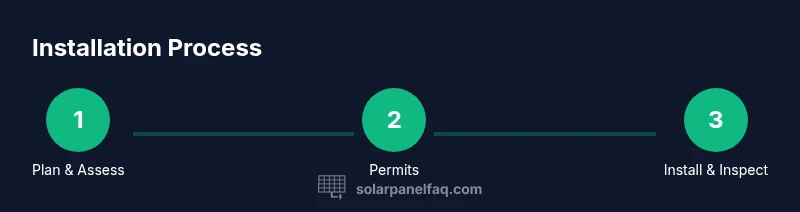
While a professional installer handles most on-roof work, understanding the sequence helps homeowners participate safely. Begin with a pre-install safety check and on-site plan focusing on fall protection, ladder safety, and PPE. Next, mount racking and attach rails to the roof structure, ensuring level alignment and correct fastener torque. Install panels, connect wiring to the combiner box, and route conduits to the inverter location. Install the DC disconnect and AC disconnect, then perform a system test and commissioning with your electrician. Finally, schedule inspections and monitor performance using the system monitor. Safety remains paramount when working near live electrical equipment or on a roof in winter conditions; never bypass safety steps.
Additionally, consider access for future maintenance and cleaning. Protect wiring from exposure to moisture and ensure all penetrations are properly flashed and sealed to prevent leaks.
Financials, incentives, and maintenance
Cost considerations vary with system size, equipment quality, and installation complexity. Michigan homeowners will encounter upfront costs for panels, inverters, mounting hardware, and labor, but long-term savings from reduced energy bills can be meaningful. Federal tax credits and potential state/local incentives can reduce net costs, though programs and amounts vary by year and municipality. After installation, perform regular maintenance: keep panels clean (when weather permits), inspect for loose connections after winter storms, and monitor performance data. Clean with soft brushes or water; avoid abrasive cleaners or high-pressure washing that can damage surfaces. If you plan to add battery storage or upgrade components in the future, verify warranty coverage and compatibility. Document all work, retain receipts, and revisit your plan periodically to adjust for energy usage changes and evolving incentives.
Tools & Materials
- Solar panels (modules)(Total wattage and number matched to system size)
- Racking/mounting system(Weather-rated, compatible with roof type)
- Inverter (string or microinverters)(Chosen for system design and shading considerations)
- DC/AC disconnects(Labelled, code-compliant safety devices)
- Conduit, wiring, and connectors(UL-listed components, appropriate gauge)
- Combiner box(For DC wiring ahead of inverter (if needed))
- Electrical service equipment inspection tools(Torque driver, voltage tester, and multimeter)
- Safety gear(Fall protection, gloves, hard hat, non-slip footwear)
- Permits and paperwork(Electrical, structural permits, interconnection agreements)
- Monitoring system(Optional, for real-time performance data)
- Professional inspection/contractor(Licensed electrician or solar installer as required by local codes)
Steps
Estimated time: 2-6 weeks (planning to permit to commissioning, varying by jurisdiction and complexity)
- 1
Plan and site-visit
Define goals, verify roof space, and map sun exposure across seasons. Record orientation, tilt, and shading; this informs system size and layout. Gather utility data and current energy usage.
Tip: Take photos of the roof from multiple angles and note potential obstructions. - 2
Size the system and select components
Choose panel wattage, module type, and inverter strategy based on roof space and budget. Decide between a single string layout or a microinverter setup to optimize for shading.
Tip: Consult a local installer to validate sizing against Michigan weather. - 3
Secure permits and interconnection
Submit structural and electrical plans to the local jurisdiction. Coordinate with the utility for interconnection and any net metering agreements.
Tip: Allow extra lead time for permit reviews in busy jurisdictions. - 4
Order equipment and schedule installation
Place orders for panels, inverter, racking, and wiring. Schedule installation during a dry, moderate-weather window to minimize delays.
Tip: Double-check warranty terms and lead times on all components. - 5
Install and connect safely
Install mounting rails, attach panels, run wiring to the inverter and disconnects, and complete an on-site electrical connection under supervision of a licensed electrician.
Tip: Never work on a live system; verify power is off before touching wires. - 6
Inspect, test, and commission
Have the system inspected by the local authority and the installer; perform commissioning tests and verify monitoring data accuracy.
Tip: Document all readings and keep a copy of inspection reports for future maintenance.
Frequently Asked Questions
Do I need a licensed electrician to install solar panels in Michigan?
Most Michigan projects require a licensed electrician for wiring and interconnection. Your local jurisdiction will specify whether a contractor license is required for the electrical work. Always verify credentials with the authority having jurisdiction.
Yes. In Michigan, final electrical connections typically require a licensed electrician, and you should confirm local rules with your city or county.
What permits are required for solar installation in Michigan?
Electrical and building permits are commonly required, along with an interconnection agreement with the utility. Approval timelines vary by jurisdiction, so check with your local building department and utility early in the planning process.
Permits usually include electrical and structural approvals, plus a utility interconnection agreement; timelines differ by locality.
Can I install solar panels on a shy shaded roof in Michigan?
Yes, but performance will be reduced. Analyze shading patterns, consider higher-efficiency modules, and possibly microinverters or optimizers to mitigate shading losses.
Shading reduces output, but with the right components you can still gain meaningful savings.
Are there incentives for solar in Michigan?
Federal incentives are available, and some local programs may apply. Availability and amounts vary by year and municipality, so consult authoritative sources for the current landscape.
There are federal incentives and some local programs; check current state and local offerings for specifics.
How long does a typical residential solar installation take in Michigan?
Timeline depends on permitting and system complexity, but many residential projects move from planning to commissioning within a few weeks to a couple of months.
Most projects progress from planning to commissioning within weeks to a couple of months, depending on permits.
Is DIY solar installation advisable in Michigan?
DIY installation is generally not recommended due to electrical code requirements, safety concerns, and interconnection rules. Professional installation ensures proper sizing, mounting, and inspections.
DIY is not advised; professional installation helps you meet code and safety standards.
Watch Video
Top Takeaways
- Assess roof and site thoroughly before purchasing equipment
- Secure permits and interconnection early to avoid delays
- Choose components intentionally for Michigan climate
- Plan for maintenance and potential storage upgrades