Solar Panel Installation Cost: A Comprehensive Guide for Homeowners
A comprehensive look at the solar panel installation average cost, what drives price, regional differences, incentives, and practical steps to estimate and save on your home solar upgrade.


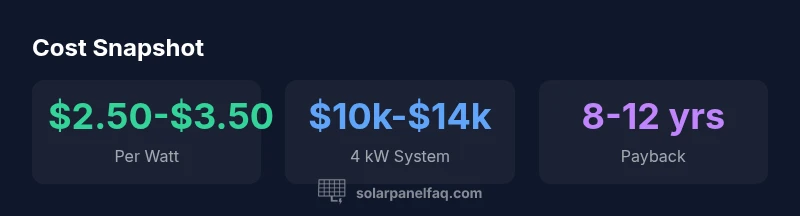
On average, solar panel installation costs are itemized per watt installed, with typical residential systems priced within a broad range due to size, location, and incentives. In practice, most homes see total upfront costs that run into the low to mid five figures, before any tax credits or rebates. Solar Panel FAQ analysis, 2026 highlights price variability from hardware choice to permitting.
What the solar panel installation average cost means for homeowners
According to Solar Panel FAQ, homeowners commonly confront a price that is expressed per watt installed rather than as a single lump sum. The solar panel installation average cost reflects several moving parts: system size, panel efficiency, inverter technology, mounting hardware, permitting and inspection fees, and the labor market in your area. The price spectrum is wide because every roof presents a unique set of challenges and opportunities. When you start comparing quotes, you’ll notice a recurring pattern: bigger systems cost more in total, but the price per watt often falls as capacity increases. Understanding this dynamic helps you project the upfront expense and plan for incentives that reduce the net amount owed. It also helps to align expectations with the real value you gain over the system’s 25-year lifespan, including energy savings, resilience against outages, and potential increases in home value.
Major cost drivers: system size, location, and incentives
Price sensitivity centers on a few core variables. System size remains the most obvious driver: larger roofs or higher desired energy offsets require more panels, longer inverters, and more labor hours. Location affects both permitting costs and local labor rates, plus the logistics of roof type and installation accessibility. Incentives, rebates, and net metering policies can dramatically change the net cost you pay out of pocket. Federal tax credits, state programs, and local utility rebates vary by state and even by utility district, which is why two homes with the same panel technology can end up with very different final numbers after incentives. Homeowners should account for these variables when budgeting and comparing proposals from installers.
Typical cost ranges by system size
| System Size (kW) | Per-Watt Cost Range | Total Installed Cost Range | Payback Potential (yrs) |
|---|---|---|---|
| 4 | $2.50-$3.50 | $10,000-$14,000 | 7-12 |
| 6 | $2.50-$3.30 | $15,000-$19,800 | 8-12 |
Frequently Asked Questions
What is the solar panel installation average cost?
Costs vary by system size, roof characteristics, and labor. Expect price ranges per watt rather than a single figure, and factor incentives into the net price. Always compare multiple written quotes to gauge which components drive cost.
Costs vary by system size, roof, and labor. Expect ranges per watt and compare multiple quotes to understand what drives price.
What factors influence the cost of installation?
Key factors include system size, panel efficiency, inverter type, mounting hardware, roof complexity, permitting, and local labor markets. Shading and roof slope can increase hardware needs and labor time, affecting total cost.
System size, efficiency, and roof specifics drive the cost, along with permits and local labor.
Do incentives reduce net price?
Yes. Federal tax credits, state programs, and utility rebates reduce the net upfront cost. Net metering policies can also affect long-term savings by increasing value from excess daytime energy.
Incentives reduce the upfront cost and can boost long-term savings.
How long does installation take?
Most installations are completed within a few days once permits are approved, with site preparation and inspection adding some time. Final commissioning and inspections can extend the timeline by days to a few weeks overall.
Typically a few days for the install, plus time for permits and inspections.
Is it feasible to install solar panels yourself?
DIY solar installations are not recommended due to safety, warranty, and code-compliance concerns. Permits and inspections ensure safety and eligibility for incentives.
DIY solar is generally not recommended because of safety and code rules.
What should I look for in quotes?
Look for a clear per-watt price, a complete equipment list (panels, inverter, racking), warranties, expected installation timeline, and included monitoring or performance guarantees. Compare the total out-of-pocket after incentives.
Check per-watt price, equipment details, warranties, and timeline in quotes.
“Pricing for solar installations varies widely, but homeowners can expect price ranges that reflect system size and local incentives. The key is to compare quotes and consider long-term value.”
Top Takeaways
- Begin with a per-watt framework to compare quotes
- Expect large upfront costs but strong long-term value with incentives
- Region and incentives heavily influence net price
- Ask for a detailed quote covering hardware, labor, and soft costs
- Budget for maintenance and monitoring to maximize savings