Cost of Installing a Solar Panel: A Homeowner's Guide
Explore upfront costs, incentives, financing, and long-term savings when installing solar panels. Learn how to estimate project cost and maximize ROI for your home.


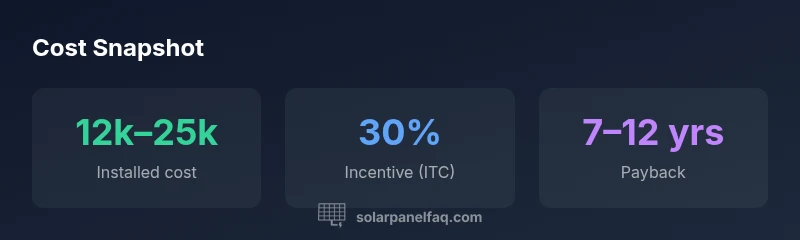
According to Solar Panel FAQ, the cost of installing a solar panel varies widely by system size, roof type, and incentives. For a typical residential setup, upfront costs often fall in a broad range before incentives, with regional differences shaping price. When federal, state, and utility incentives are included, the net price can drop significantly. This quick answer helps you anchor your budgeting and set expectations.
Drivers of Solar Panel Costs
The upfront price you see for a solar installation is driven by several core variables that interact in complex ways. System size is the primary driver: larger homes or higher energy usage demand bigger capacity, often 6 kW to 10 kW, which raises cost proportionally. Roof condition and orientation affect installation complexity; a roof with multiple angles, shading, or poor accessibility adds labor time and equipment (rails, mounting hardware) costs. The type of inverter (string, microinverters, or power optimizers) and the choice of solar panels (monocrystalline vs polycrystalline; efficiency ratings) also influence price per watt. Geographic location matters too: permitting fees, interconnection costs, and local labor rates vary by state and municipality. If you add roof repairs, electrical panel upgrades, or new conduit runs, your total price climbs. Finally, the installer’s markup, warranty options, and post-installation services (monitoring, performance guarantees) contribute to the final figure. Solar Panel FAQ recommends obtaining multiple quotes and asking for itemized line-items to understand where the biggest costs lie.
Upfront Costs vs. Long-Term Savings
The upfront price you pay for a solar installation covers equipment, labor, and permitting, and can vary widely even for similar homes. Panels, inverters, mounting hardware, wiring, and safety components all factor into the sticker price. Labor intensity—whether the roof is steep, complex, or shaded—drives time and cost. Permitting, interconnection, and inspection fees may differ by city and county, and some installers bundle these charges while others itemize them. In contrast, long-term savings accrue from reduced electricity bills, potential export credits, and avoided fuel price volatility. The net present value depends on electricity rates, household consumption patterns, and system degradation over time. A common rule of thumb is to view solar as a long-term investment: pay now to reduce future energy costs. When you run a simple cash-flow analysis, include potential inverter replacement, monitoring fees, and cleaning costs in later years. The result is a clearer picture of how the upfront cost translates to lifetime benefits.
Incentives, Tax Credits, and Financing Options
Incentives are a major lever to lower net cost, and they vary by year and jurisdiction. The federal investment tax credit (ITC) typically reduces the upfront price by a meaningful percentage, while state and local incentives may add rebates or performance-based incentives. Net metering policies, incentive eligibility, and program durations affect the timing and amount of savings, so check current programs before committing. Financing options are common tools to fit solar into a home budget: solar loans let you own the system with predictable payments; leases and PPAs allow little or no upfront cost but transfer some benefits and risks to the provider. Some plans include warranties, monitoring, or maintenance to simplify ownership. Always verify eligibility windows and chain of transfers if you move. When comparing proposals, separate hardware costs from soft costs (permits, interconnection, and design). This helps you see how changes in incentives or financing terms alter the bottom line.
Estimating Your Project Cost: A Practical Method
A practical method starts with your target system size based on current electricity use and future plans. Gather 3–5 quotes from reputable installers and ask for a breakdown by hardware, labor, permitting, and warranties. Use a conservative cost assumption for roof work or electrical upgrades if needed. Apply the ITC (or current incentive) to calculate net upfront cost, then estimate ongoing maintenance and inverter replacement costs. Run a few scenarios: a baseline 5 kW system, a mid-size 6–7 kW system, and a larger 9–10 kW system. For each, model annual energy production, present value of energy savings, and payback period. Don’t forget to factor in the expected system lifespan (25–30 years) and potential improvements in technology. A well-structured comparison should show both best-case and worst-case outcomes, helping you set expectations and choose the best value proposition.
Regional Variations and Typical Ranges
Regional variation is a normal part of solar pricing. Regions with higher labor costs or stricter permitting may see higher upfront prices, while areas with robust incentives or higher electricity rates can realize faster payback. The cost per watt tends to align with local market dynamics, though panel technology and installation standards are similar nationwide. In coastal climates, additional weatherproofing needs can increase hardware costs; in areas with frequent shade, you may need microinverters or power optimizers, which add to the price but improve energy production. In practice, expect a broad range for upfront costs and a wide spread in net costs after incentives, depending on your utility rate structure and available programs. Solar Panel FAQ notes that because programs and pricing shift over time, homeowners should re-check local incentives at least annually and re-run payback analyses when major policy changes occur.
Maintenance, Warranties, and Hidden Costs
Maintenance costs for solar panels are generally low, but not zero. Expect occasional cleaning in dusty or coastal environments to maintain performance. Inverter replacement is one of the most common later-life costs, typically occurring 10–15 years after installation, depending on brand and usage. Some systems include monitoring services that carry annual fees, and extended warranties can add to the upfront price but reduce risk. Shingle roof replacements or structural repairs discovered during the installation can also increase costs, especially on older homes. While most components carry long warranties, it is wise to budget a contingency for unexpected issues such as hail damage, panel microcracks, or hardware corrosion. The goal is to anticipate the non-recurring costs that appear in year 7–15 and to align them with your financing plan.
Case Studies: Size, Roof Type, and ROI
Case study A: A 5 kW system on a pitched roof with good southern exposure. The upfront price sits in the mid-range, with a payback period of around 8–10 years in a high-electricity-offtake area. Case study B: A 9 kW system on a flat roof requiring enhanced mounting hardware and a separate inverter. While the upfront price is higher, the larger scale drives energy savings and can shorten the payback to roughly 9–12 years. Case studies like these show how factors like roof orientation, shading, and usage profile alter the cost-benefit equation. Solar Panel FAQ emphasizes that a personalized calculation is essential to avoid over- or under-investing. If you plan for future upgrades, such as a home battery, factor the incremental cost and potential ROI into the overall analysis.
Estimated costs by system size (before/after incentives) and payback
| Scenario | Installed Cost before incentives | Installed Cost after incentives | Typical Payback (years) |
|---|---|---|---|
| Small residential (3 kW) | $9,000–$12,000 | $6,300–$8,400 | 7–12 |
| Medium residential (6 kW) | $15,000–$22,000 | $10,500–$15,400 | 8–12 |
| Large residential (9 kW) | $22,000–$30,000 | $15,400–$21,000 | 9–14 |
Frequently Asked Questions
What is the typical upfront cost to install solar panels today?
Costs vary by system size, roof condition, and location, but most homeowners see a broad range for installed prices before incentives. Obtain multiple quotes and ask for a fixed-price proposal to prevent surprise charges. Include costs for permits and potential electrical panel upgrades.
Costs vary by system size and location; get quotes and include permits.
How do incentives affect the total cost of solar panel installation?
Incentives can significantly lower net cost. The federal ITC typically reduces the upfront price by a meaningful percentage, while state or utility programs may add rebates or performance-based incentives. Check current eligibility and timelines before signing a contract.
Incentives can lower the upfront price a lot; check federal, state, and utility programs.
What factors influence the cost in my area?
Labor rates, permitting fees, interconnection costs, and roof complexity drive price differences by region. Urban areas may have higher labor rates but easier permitting; remote areas may incur transport costs. Local contractors can provide accurate estimates.
Cost varies by local labor, permits, and roof complexity.
Are there financing options for solar installations?
Yes. Many homeowners finance solar through loans, leases, or power purchase agreements (PPAs). These options shift the upfront cost into monthly payments or allow zero-down purchases. Compare total costs over the loan term and risk transfer in leases/PPAs.
There are loans, leases, and PPAs to fit different budgets.
Do solar panels increase home value?
Most studies show solar installations can improve resale value, but the increase depends on system size, installation quality, and local market conditions. Appraisers consider energy savings and roof integrity.
Solar can boost home value, depending on system and market.
What maintenance costs should I budget for?
Maintenance costs are typically low, often a few hundred dollars per year, though inverters or monitoring equipment may require replacement over time. Cleaning panels in dusty climates can help maintain performance. Plan for occasional inspections.
Maintenance is usually low, but plan for occasional inverter replacement.
“The most important step is modeling lifecycle costs—installation, incentives, and maintenance—so homeowners see true ROI. This helps compare offers on a like-for-like basis.”
Top Takeaways
- Estimate upfront costs based on system size and roof factors.
- Factor in incentives to lower net price.
- Plan for maintenance and occasional replacement costs.
- Shop around to optimize cost per watt.