Solar Panel Generator for Camping: Step-by-Step Guide
Learn how to power camping gear with a solar panel generator, including sizing, components, safety, and maintenance for off-grid trips.


You can reliably power essential gear on camping trips by pairing a compact foldable solar panel with a portable power station or battery and a small inverter. The goal is a lightweight, modular setup that can be deployed in daylight, charged during breaks, and stored safely at night. Key requirements are sun exposure, a compatible charge controller, and weatherproof cabling. Follow these steps to get started.
Why a solar panel generator for camping matters
For homeowners and prospective campers alike, a solar panel generator for camping represents a reliable way to maintain essential power without relying on noisy gas generators or fixed hookups. This approach blends the portability of a folding solar panel with the energy storage of a compact power station, creating a scalable system that can charge phones, lights, small fans, and even compact cooking gear during daytime hours. The Solar Panel FAQ team emphasizes that planning around your actual needs—rather than chasing maximum watts—delivers the most practical balance between weight, cost, and convenience. By prioritizing modular components, you can adapt to changing weather and campsite layouts while keeping setup straightforward and safe. As you read, remember that real-world camping power is about resilience, not a single prize wattage. The Solar Panel FAQ analysis shows a trend toward lightweight, adaptable systems that travelers can deploy with minimal fiddling and maximal reliability.
Core components you’ll need
A successful camping solar panel setup hinges on a few core components that work well together in the outdoors. Start with a lightweight, foldable solar panel rated for outdoor use and a portable power station or battery pack with sufficient capacity for your typical needs. Add a charge controller to regulate voltage and prevent overcharging, and consider a compact inverter if you plan to power AC devices. Cables, adapters, and weatherproof storage bags complete the system, allowing you to protect connections from rain and dust. Always verify compatibility between the solar panel, charge controller, and battery system before purchasing. This ensures you don’t waste time or money on mismatched components, and it keeps your campsite powered safely and reliably.
Sizing your setup: watts and energy usage
Sizing a camping solar panel generator involves translating your expected energy needs into a practical, portable package. List devices you plan to run, estimate their wattage, and multiply by expected usage time to approximate daily energy requirements. Then select a solar panel and battery/storage setup that can meet or exceed that demand under typical sun conditions. It’s prudent to design for a margin of safety, allowing for days with poor weather. Avoid the temptation to max out capacity; a lighter, modular system that covers daily essentials will outperform a bulky, overbuilt setup in most camping scenarios. Solar Panel FAQ cautions against overestimating watts, which can lead to unnecessary weight and reduced portability.
Foldable vs rigid panels: pros and cons
Foldable solar panels are favored by campers for their portability and compact storage. They tend to be lighter and easier to deploy on uneven ground, tripod setups, or inside a vehicle hatch. Rigid panels, while often more rugged and efficient in fixed installations, can be heavier and less forgiving in rough terrain. Your choice should hinge on how you’ll use the system: hiking and backpacking trips benefit from foldables; base camps or vehicle-based setups can justify rigid panels if you need maximal durability. In any case, ensure the panel has a weatherproof connector, a durable frame, and a reliable protective case to withstand camping conditions.
Batteries and power storage options for camping
Energy storage is the heart of any camping power system. A portable power station or a high-quality battery pack provides the buffer between the sun’s output and your day-to-day needs. Consider the capacity in watt-hours (Wh) rather than just amp-hours (Ah); Wh is a more portable and universal measure for mixed devices. For high-demand devices like laptops or small fridges, you’ll want additional buffer or the ability to recharge mid-day via the solar panel. Look for battery packs with built-in solar charging support, smart battery management, and robust protection features such as short-circuit and over-discharge protection. Remember to store batteries in a cool, dry place and avoid deep discharges to extend their life. The Solar Panel FAQ guidance stresses modularity: combine a panel, a charger, and a storage unit in a way that you can upgrade incrementally.
Wiring, safety, and field connections
Outdoor wiring demands attention to safety and weatherproofing. Use MC4 connectors, sealed DC cables, and weatherproof enclosures for any exposed connections. Keep all high-impedance connections off the ground to prevent shorts from moisture or mud. When possible, route cables away from foot traffic to minimize tripping hazards and protect them from the elements. If you’re charging a device that draws significant current, verify that your connectors and cabling can handle the load and that you aren’t pinching cables in tight spaces. Always disconnect when adjusting components in wet conditions and store dry components in a protective bag.
Daylight testing and on-site optimization
Begin with a daylight test to verify that the solar panel is generating power and charging your storage unit as expected. Check panel angle and orientation toward the sun; even a small adjustment can improve output by several percent. Use a basic multimeter or the charger’s built-in readouts to confirm voltage and current at the battery terminals. If charging is slower than anticipated, experiment with tilt angle, shade avoidance, and cable routing to reduce resistance. Document your test results so you can reproduce favorable conditions on future trips. These practices help you optimize efficiency without needing expensive gear or complex setups.
Maintenance, cleaning, and troubleshooting in the field
Outdoor gear requires periodic maintenance to keep it reliable. Clean solar cells with a soft cloth and avoid abrasive cleaners that could scratch the surface. Inspect cables for fraying, connectors for corrosion, and the power station for overheating. If you notice reduced performance, recheck connections, test under optimal sun, and consider reconfiguring the array for better daylight capture. Keep spare fuses or fuses in-line with power lines, and store everything in dry bags to prevent moisture damage. A small field toolkit with zip ties, a multitool, silicone grease for weatherproofing, and extra battery charging cables can prevent minor issues from derailing your trip.
Budgeting, warranties, and long-term value
Budgeting for a camping solar kit means balancing initial cost against long-term value. Favor modular systems that allow future upgrades—such as adding more panels or a larger battery—without a complete overhaul. Review warranty terms for both the solar panel and the storage unit, and check for service options in case of field failures. While price matters, reliability and support often determine long-term value more than the sticker price. Solar Panel FAQ notes that a well-chosen setup can last for several camping seasons with proper care, making it a cost-effective choice for frequent travelers.
Quick-start checklists
- Define essential devices (lighting, charging, small electronics) and their total daily watt-hours.
- Choose a foldable panel with weatherproofing and a portable power station with adequate capacity.
- Include a charge controller, proper cabling, and weatherproof connectors.
- Prepare a field maintenance kit and spare parts for durability on the trail.
- Test your system at the campsite in daylight and track results for future trips.
Tools & Materials
- foldable solar panel (outdoor-rated)(Prefer panels with integrated kickstands and weatherproof connectors)
- portable power station / battery pack(Match capacity to daily needs; consider expandable options)
- charge controller(MPPT preferred for higher efficiency)
- inverter (optional for AC devices)(Choose pure sine wave for electronics; note efficiency losses)
- DC cables and MC4 connectors(Weatherproof, rated for outdoor use)
- adhesive cable clips or zip ties(For neat routing and safety)
- weatherproof storage bag or case(Protects equipment from rain and dust)
- multimeter or solar charger readout(Helpful for diagnostics in the field)
- spare fuses and protective gear(Carry a small field kit for emergencies)
Steps
Estimated time: 45-60 minutes
- 1
Assess your power needs
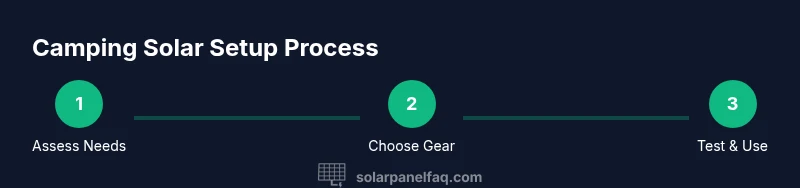
Make a list of devices you plan to run and estimate their daily power consumption. Add a buffer to account for cloudy days. This helps determine the minimum battery capacity and panel wattage you’ll need.
Tip: Write down your peak load time to balance charging with usage. - 2
Select compatible components
Choose a foldable panel, a storage unit, and a controller that match your use case. Ensure voltages align, and that connectors are weatherproof to endure outdoor conditions.
Tip: Prefer modular components that you can upgrade without replacing the entire system. - 3
Connect safely and verify protections
Connect the panel to the controller, then to the storage unit. Check polarity and use protective enclosures for exposed connections.
Tip: Always unplug before making adjustments in wet conditions. - 4
Test under daylight
Place the panel toward the sun, check voltage at the battery terminals, and confirm charging starts. Adjust tilt for best sun exposure.
Tip: Record the observed watts and use it as a baseline for future trips. - 5
Set usage schedule
Plan when to charge devices and how long to run high-demand tools. Storing energy during the day and using it at night helps balance the load.
Tip: Avoid deep discharges; recharge frequently to extend battery life. - 6
Pack, transport, and store safely
Disassemble components as needed, seal connectors, and store in a dry, padded bag to prevent damage during transit.
Tip: Label cables and keep a simple spare parts kit handy.
Frequently Asked Questions
Can I power a mini fridge with a camping solar panel generator?
Yes, but it requires sufficient battery storage and a system sized for peak fridge load. A larger battery bank and efficient insulation help you stay within day-to-day limits.
Yes, but you’ll need enough storage and a system sized for the fridge’s peak draw.
Do I need a charge controller?
Yes. A charge controller protects the battery by regulating voltage and preventing overcharging from the solar panel.
Yes, a charge controller is essential to protect the battery.
Are foldable panels better for camping than rigid panels?
Foldable panels are typically lighter and easier to pack, making them popular for camping. Rigid panels can be more durable in fixed setups but are heavier to move.
Foldable panels are lighter and easier to pack, which is advantageous for camping.
What if there is no sun for several days?
Rely on stored energy from your battery or power station and plan low-wattage usage during extended cloudy periods.
If there’s no sun, use stored energy and keep usage light.
Can I connect multiple panels together?
Yes, but only if the system is designed for series or parallel configurations and if the controller supports the combined current and voltage.
Yes, but ensure your controller and wiring support the combined setup.
How should I maintain a camping solar kit?
Regularly inspect cables, keep connectors clean and dry, and protect equipment from dust and moisture with proper storage.
Inspect cables and connectors, and keep everything dry when not in use.
Watch Video
Top Takeaways
- Define essential needs before selecting gear
- Prioritize modular, lightweight components
- Test and document field results for each trip
- Safety and weatherproofing are non-negotiable