Solar Panel for My House: A Practical Step-by-Step Guide
A comprehensive, educator-friendly guide to selecting, sizing, installing, and maintaining a solar panel system for your home. Learn from assessment to maintenance with practical steps, common pitfalls, and financing insights.


Start by confirming your home is suitable for solar, then size a system to meet your energy needs, choose reliable panel and inverter options, and plan permitting and installation. This quick guide covers assessment, selection, financing, and maintenance so you can confidently pursue a solar panel for my house today.
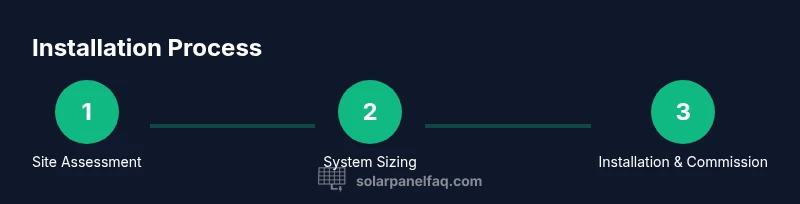
Assessing Your Home's Suitability for Solar
Your decision to pursue a solar panel for my house starts with a practical assessment of the site, roof quality, and sun exposure. According to Solar Panel FAQ, the most important factors are roof condition, structural support, shading, orientation, and available space for panels. Begin by documenting your roof age and material—some roofs need replacement before installation. Evaluate whether trees or chimneys cast shade during peak sun hours; shade can dramatically reduce energy production and undermine savings.
Next, map out the usable roof area by measuring length and width of each unshaded plane. A typical residential system uses a portion of the roof; for example, a south-facing, unshaded section of about 25-30 square meters might accommodate several modules. If roof constraints limit space, consider alternatives such as ground-mounted systems or a solar carport. Don’t forget to verify electrical service capacity and panel spacing requirements arising from local code or homeowner association rules.
Finally, conduct a simple energy audit. Look at your recent electricity bills to estimate daily usage in kWh, and note any seasonal spikes (air conditioning in summer, space heating in winter). This information helps you decide whether to oversize slightly for future growth or to optimize for net metering and battery storage. A well-prepared site assessment reduces surprises during installation and speeds permitting.
Sizing Your System: How Much Solar You Need
Sizing a solar installation begins with your actual energy use and the available sun on your site. Start by gathering at least 12 months of utility bills to determine daily average consumption in kWh and identify seasonal peaks. Then translate this usage into a target system size using simple rules of thumb and local conditions. In many markets, a 4 kW to 8 kW residential system is common for typical homes, but the exact size depends on roof space, shading, and the efficiency of chosen components.
Consider sun hours for your location—locations with more peak sun hours will require fewer modules to achieve the same production. Account for system losses from wiring, inverters, and temperature effects, typically a few percentage points. If you plan future expansion (e.g., electric vehicle charging or battery storage), size for modest growth rather than current needs alone. A well-sized system aligns with net metering policies, utility rates, and incentives to maximize long-term savings.
Choosing the Right Solar Panel Type
Solar panels vary mainly by silicon type and manufacturing quality. Mono-crystalline panels offer higher efficiency and better performance in limited spaces, making them a strong choice for roofs with restricted area. Polycrystalline panels are typically more affordable and can be a practical option when roof space is ample. When evaluating options, look for known performance metrics, warranty terms, and temperature coefficients that indicate how performance drops on hot days. Also consider aesthetics and color matching with your home’s roof.
Beyond panel type, assess durability, warranty length, and available mounting options. If your roof experiences partial shade, you might benefit from microinverters or power optimizers that minimize performance dips at shaded portions. For homes planning rooftop integration with future storage, coordinate with an installer about wiring routes and panel layout to simplify future battery additions.
Inverter, Battery, and Electrical Considerations
The inverter is the heart of converting DC produced by panels into usable AC power. String inverters are common and cost-effective, while microinverters or power optimizers can improve performance under partial shade and simplify system monitoring. If you’re considering energy storage, battery choices include lead-acid, lithium-ion, or newer chemistries; these add flexibility for outages and peak-demand management but require extra space and maintenance planning.
Electrical integration must be designed to match your main panel capacity and meet local electrical codes. Your installer will determine whether a separate disconnect, anti-islanding protection, and proper grounding are required. In some regions, net metering or time-of-use rates influence inverter selection and system sizing, so discuss these factors with your professional before committing.
Financing, Permits, and Installation Timeline
Financing options vary widely, from outright purchases to loans, leases, or power purchase agreements. Each path has different long-term cost implications and ownership considerations for your home. Permits and interconnection applications depend on local regulations; your installer should handle most paperwork, but it helps to understand the process and required documents up front.
The installation timeline can range from a few days to several weeks, depending on permit processing, utility coordination, and crew availability. While waiting for approvals, you can prepare placement decisions, organize electrical panel access, and schedule a contractor. The Solar Panel FAQ analysis shows that timely communication with the utility and clear project milestones reduce delays and keep installation on track.
The preparation work pays off once equipment arrives and your system is commissioned. After commissioning, you’ll receive inspection approvals and, finally, activation of net metering or storage integration if applicable. Staying organized with permits, warranties, and contractor contact information helps prevent last-minute surprises.
Maintenance and Performance: Keeping Your System Efficient
Once your system is up and running, ongoing vigilance ensures you get the expected performance over years. Regularly check for debris, dust, and shading that may affect production, and gently rinse panels with a soft brush or low-pressure water if required. Use the monitoring dashboard to spot declines in generation early and compare against your expected production. Inverters and battery systems typically offer diagnostic indicators—pay attention to abnormal warning lights or erratic readings.
The Solar Panel FAQ team emphasizes annual inspections and performance checks as a best practice. Schedule professional reviews every few years, especially after severe weather, and maintain copies of warranties and maintenance logs. Keeping a proactive maintenance routine helps sustain efficiency and protects your home’s long-term investment.
Tools & Materials
- Safety gear (gloves, goggles)(Protective equipment for handling modules and wiring.)
- Roof anchor harness(Required for roof work at height; ensure proper training.)
- Voltage tester / multimeter(Verify circuit de-energization and safety.)
- Measuring tape(Precise layout and spacing for rails and modules.)
- Ladder and fall protection(Safe access and rescue planning.)
- Mounting rails and racking kit(Compatible with chosen panel size and roof type.)
- Solar panels (modules)(Select appropriate wattage and warranty terms.)
- Inverter (and possibly microinverters)(Match with panel array and electrical panel.)
- Electrical disconnects and conduit/wiring(Code-compliant routing and protection.)
- Circuits and permits documents(Keep permits, warranties, and supplier paperwork on hand.)
- PPE and cleaning supplies(Hearing protection, soft brushes, non-abrasive cleaners.)
Steps
Estimated time: Estimated total time: 12-24 hours (plus permitting time depending on location)
- 1
Confirm roof suitability
Inspect roof age, material, and structural integrity. Check shading patterns and roof access for maintenance. Confirm main panel capacity and potential space for mounting.
Tip: Prioritize a shaded-free area with easy access for future maintenance. - 2
Calculate energy needs and propose system size
Collect 12+ months of usage data and compute daily kWh. Use sun-hours estimates and desired system efficiency to propose a target size.
Tip: Avoid oversizing for future growth; plan modest expansion if needed. - 3
Choose panel type and mounting method
Select mono- vs polycrystalline panels based on space and budget. Decide on roof-mounted vs ground-mounted mounting, considering wind loads and aesthetics.
Tip: Consider microinverters if partial shading is likely. - 4
Plan permits, contracts, and scheduling
Identify required permits, interconnection steps, and warranty transfer processes. Align project timeline with utility inspection windows.
Tip: Start paperwork early to avoid delays. - 5
Install mounting rails and electrical hardware
Secure rails with appropriate hardware, ensure proper sealing at roof penetrations, and route conduit safely to the main panel.
Tip: Double-check water-tight seals around penetrations. - 6
Mount panels and connect wiring to inverter
Attach modules, connect strings to inverter or microinverters, and verify polarity and cable routing. Use a qualified electrician for the final connections.
Tip: Keep panels oriented consistently to optimize output. - 7
Commission, test, and set up monitoring
Power up the system, verify production on the monitoring dashboard, and complete any required inspections. Schedule a final walkthrough with the installer.
Tip: Document all readings and keep your warranty paperwork handy. - 8
Activate system and establish maintenance plan
Finalize interconnection with the utility, enable net metering if available, and configure regular maintenance routines.
Tip: Set reminders for annual inspections and panel cleaning.
Frequently Asked Questions
What is the first step to install solar panels on a home?
Begin with site assessment: roof suitability, shading, and energy usage. Gather past utility data to estimate needs and check permit requirements.
Start with site assessment and energy data to determine needs and permit requirements.
Do I need to hire professionals to install solar panels?
Most installations involve electrical work and mounting on your roof, so hiring licensed installers is usually essential for safety and code compliance.
Yes, hire a licensed installer for safety and codes.
Can I install solar panels on a shaded roof?
Shading lowers output; you can mitigate with panel spacing, microinverters, or choosing higher-efficiency panels, but full shade reduces performance.
Shade reduces output; consider microinverters or layout changes.
How long does installation take?
Timeline depends on permits and utility interconnection; planning and coordination typically takes a few days to a few weeks.
Timing varies with permits and interconnection.
What maintenance do solar panels need?
Keep panels clean and unobstructed, monitor performance regularly, and inspect inverters and connections for signs of wear.
Keep them clean and monitor performance.
Are there incentives or permits required?
Incentives vary by region; permits are typically required and interconnection agreements may apply. Check local codes and utility programs.
Incentives differ by region; permits are usually required.
How much does a residential solar system cost?
Costs vary by system size, location, and incentives; get a local installer’s estimate for an accurate figure.
Costs vary by size and location; get a local estimate.
Top Takeaways
- Assess site thoroughly before purchasing panels.
- Size the system based on actual usage and sun exposure.
- Choose components with future expansion in mind.
- Handle permits and installation with a professional to avoid delays.
- Maintain a routine to preserve system performance.