How to Protect Solar Panels from Lightning: A Practical Guide
Learn practical, code-compliant strategies to shield solar panels from lightning. This guide covers grounding, surge protection, installation best practices, and maintenance for homeowners seeking reliable, safe protection.


Protecting solar panels from lightning means building a layered defense: assess risk, install proper grounding and bonding, add surge protection, and maintain equipment. This quick guide lays out the essential steps and safety considerations for homeowners to reduce the chance of damage while staying compliant with local codes.
Understanding Lightning Risk for Solar Installations
Lightning presents a real, though often indirect, threat to rooftop solar installations. A direct strike to your roof or nearby structures can induce damaging surges that travel through DC strings, AC inverters, and wiring into your solar array. According to Solar Panel FAQ, the goal of protection is not to prevent every strike but to limit damage and keep people safe when service or maintenance is needed. When you plan how to protect solar panels from lightning, start with a risk assessment: local weather patterns, site features (tall trees, antennas, metal roofs), roof type, and mounting height. This information guides you to a targeted protection strategy that balances safety, cost, and warranty requirements. The emphasis is practical steps—grounding, bonding, surge protection devices (SPDs), and careful installation—that align with code requirements and manufacturer documentation.
With a focus on real-world outcomes, you’ll learn to prioritize resilient components and build a maintenance habit that reduces downtime after a storm. Solar Panel FAQ analysis shows that homeowners who implement layered protection tend to experience fewer service calls and shorter outage periods after lightning events. The recommended approach is proactive and conservative rather than reactive, especially in regions prone to severe thunderstorms.
Tools & Materials
- Grounding electrodes (ground rods)(Copper-coated or galvanized; driven into the earth per local code)
- Copper grounding conductor(Copper, sized per code; used to connect array, inverter, and grounding electrodes)
- DC-side surge protection device (SPD)(Specifically rated for PV DC circuits and compliant with local codes)
- AC-side surge protection device (SPD) or main service SPD(Protects the AC side and inverter inputs; consult the inverter manufacturer)
- Bonding jumpers and clamps(Metal bonding to ensure equipotential bonding across system components)
- Weatherproof enclosure and conduit(IP-rated enclosures for SPDs and wiring terminations)
- Insulated tools and PPE(Insulating gloves, voltage detector, and eye protection)
Steps
Estimated time: 2-6 hours
- 1
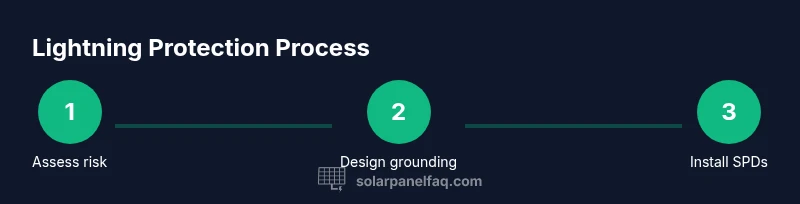
Assess site risk and codes
Review local electrical codes, utility requirements, and your site’s exposure to lightning. Note nearby tall structures, trees, or conductive paths. Use this assessment to determine the scope of grounding, bonding, and SPD needs. Documentation or permits may be required before making changes.
Tip: Document obligations with the authority having jurisdiction; failing to comply can void warranties. - 2
Design grounding and bonding layout
Create a plan that connects PV modules, DC combiner boxes, inverter, and the building ground with a continuous, low-impedance path. Use bonding jumpers to ensure equipotential bonding across all metallic components. Dimensioning should follow code guidance and manufacturer recommendations.
Tip: Include a clear diagram and label all protective devices before starting work. - 3
Install DC-side and AC-side SPDs
Mount DC-side SPD as close as possible to the PV array and inverter DC inputs. Install AC-side SPD at the main service panel or inverter AC inputs. Follow manufacturer wiring diagrams and ensure proper enclosure rating for outdoor exposure.
Tip: Power down the system and use two-person coordination when connecting SPDs. - 4
Route conductors and verify grounding
Run conductors in protected pathways, away from sharp edges and heat sources. Ensure proper separation between DC and AC conductors to avoid interference. Check impedance and bonding continuity using approved testing methods.
Tip: Use flame-retardant conduit and avoid permissive ad-hoc splices. - 5
Test system integrity and safety
After installation, perform a continuity test for the grounding path, verify SPD operation with manufacturer diagnostics, and confirm there are no floating grounds. Validate that the inverter and monitoring system reflect the protection status.
Tip: Test under safe conditions and document results for future maintenance. - 6
Document, maintain, and inspect regularly
Keep a detailed record of all protection devices, wiring routes, and inspection dates. Schedule periodic checks, especially after severe weather, to ensure SPDs and bonding remain intact.
Tip: Set reminders for annual inspections and promptly address any corrosion or loose connections
Frequently Asked Questions
What parts are essential for lightning protection on solar panels?
Key components include proper grounding/bonding, SPDs on both DC and AC sides, and robust routing of conductors. Together they form a layered defense that reduces surge energy and protects equipment. Always follow local codes and manufacturer guidance.
Essential parts are grounding, bonding, and surge protection devices on both DC and AC sides.
Do SPDs protect both DC and AC sides of a solar installation?
Yes, SPDs are designed for both DC (panel to inverter) and AC (inverter to service panel) sides. Using the correct type and rating for each side is critical for effective protection.
SPDs protect both DC and AC sides when properly specified and installed.
Is grounding required by code for rooftop solar systems?
Grounding and bonding requirements are typically mandated by national or local electrical codes. They ensure equipment safety and system reliability, especially during lightning events.
Grounding is normally required by code to protect people and equipment.
How often should lightning protection equipment be inspected?
Regular inspections are recommended, especially after storms or severe weather. Look for corrosion, loose connections, and damaged SPDs, and verify test results from recent maintenance.
Inspect SPDs, bonds, and conductors at least once a year or after major weather events.
What are the typical costs and incentives for lightning protection upgrades?
Costs vary with system size and components. Consult a licensed professional for a precise estimate and check for local incentives or rebates tied to PV safety upgrades.
Costs depend on your setup; talk to a professional to understand options and potential incentives.
Can existing solar PV systems be retrofitted with lightning protection?
Yes, many systems can be retrofitted with bonding, SPDs, and updated grounding. A professional should assess compatibility with your inverter, wiring, and roof structure.
Retrofitting is possible but requires careful assessment by a pro to ensure compatibility.
Watch Video
Top Takeaways
- Assess local risk and codes before any work
- Implement full grounding and bonding to establish equipotential paths
- Install DC-side and AC-side SPDs where appropriate
- Test protection regularly and document results
- Engage licensed professionals for safety and compliance