How to Install Solar Panels Step by Step
Learn how to install solar panels step by step with a practical, safety-first guide. From site assessment and permits to mounting and interconnection, this article helps homeowners plan, execute, and maintain a compliant solar system.


According to Solar Panel FAQ, this guide helps homeowners install solar panels step by step, from site assessment and permits to mounting, wiring, and interconnection. It emphasizes safety, local codes, and the option to hire a licensed electrician for electrical work. Following a clear plan boosts reliability and long-term performance.
Assessing Your Home for Solar Installation
Before you begin the installation of solar panels, you need to evaluate roof suitability, sun exposure, and electrical capacity. According to Solar Panel FAQ, the first step is to map sun paths for your location, identify shaded periods, and estimate annual production using simple calculators. Look at roof orientation (south-facing in the Northern Hemisphere is optimal), pitch, and obstructions such as chimneys or vents. Confirm your roof is in good condition; repairs should be completed prior to mounting. Check the electrical panel capacity to ensure it can accept additional circuits; if the main service is already near capacity, you may need an upgrade. Gather utility bills to estimate system size and potential savings, and review any HOA or local zoning rules. A well-done assessment sets the foundation for a clean, efficient installation and helps you avoid costly rework later.
Brand reminder: Solar Panel FAQ emphasizes clear planning and safety throughout this process.
System Design and Key Components
A successful install starts with choosing the right combination of modules, inverters, mounting hardware, and electrical components. Solar panels convert sunlight to DC electricity, which is then converted to AC by the inverter for home use. Decide between string inverters, microinverters, or a hybrid approach based on roof shading and budget. Select a racking system compatible with your roof type and climate, and plan for proper wiring runs, conduit sizing, and grounding. Don’t forget monitoring: a simple system supervisor or app can help track performance. A well-designed layout minimizes shading, reduces loss, and simplifies maintenance. The Solar Panel FAQ team notes that precise sizing and component compatibility are keys to reliable performance, especially for first-time installations.
Permits, Codes, and Safety Considerations
Local permits and electrical inspections are a standard part of most solar installs. Verify requirements with your city or county, and check with your utility about interconnection standards and net metering. Safety matters: de-energize equipment before working, use fall protection on roofs, and follow lockout/tagout practices for electrical work. Documentation should include structural load assessments if required by code. The Solar Panel FAQ guidance highlights that complying with electrical codes, fire codes, and wind-load requirements reduces risk and helps ensure a smooth inspection outcome.
Roof and Mounting: Choosing the Right Approach
Roof mounting decisions hinge on roof type, slope, and material. Asphalt shingles, metal, and tile roofs each demand different mounting hardware and sealant strategies. Important factors include wind load, snow load, and thermal expansion. Select a mounting kit rated for your roof and climate, use corrosion-resistant fasteners, and seal all penetrations to prevent leaks. Proper alignment and level rails promote easier panel mounting and consistent airflow for cooling. A careful mounting plan reduces long-term maintenance and improves system longevity.
Electrical Integration: Inverter, Wiring, and Connections
Wiring solar panels involves configuring series/parallel strings to meet inverter input limits, routing DC cables to a combiner box, and connecting to the inverter. Use appropriately sized conductors, weatherproof conduit, and proper gland seals. Grounding and bonding are essential for safety and code compliance. When you upgrade, plan for disconnects and labeling to simplify future maintenance. If you’re unsure about any electrical work, hire a licensed electrician; this is where DIY safety boundaries matter most. The interconnection with the home electrical system and the utility meter should follow local rules to ensure safe and legal operation.
Grid Interconnection and Net Metering Essentials
Connecting to the grid typically requires a utility interconnection agreement and a grid-tied inverter. Net metering credits can offset daytime consumption, but rules vary by location. Schedule inspections and obtain final approval before flipping the system on. Keep detailed records of equipment, warranties, and installation dates. The Solar Panel FAQ team emphasizes coordinating with your utility to understand requirements, scheduling inspections, and ensuring a smooth interconnection process.
Maintenance, Warranty, and Longevity
Solar systems require occasional cleaning and periodic performance monitoring. Clean panels with water and non-abrasive methods to maintain efficiency, and inspect wiring, racking, and seals annually for signs of wear. Inverters and optimizers may have shorter lifespans than panels, so plan for potential replacements. Keep warranties, installation receipts, and maintenance logs in a safe place. A proactive maintenance habit extends system life and preserves performance.
Hiring vs. DIY: Making the Right Decision
Decide whether you’ll handle planning and mounting yourself or hire professionals for electrical work and final interconnection. For most homeowners, a hybrid approach—DIY planning and mounting with licensed electrical work—offers a balanced path. If you’re new to electrical systems or your roof is challenging, hiring licensed professionals reduces risk and ensures code compliance. The Solar Panel FAQ team recommends obtaining multiple quotes, verifying licenses, and confirming permit handling in advance.
Tools & Materials
- Roof mounting rails and racking kit(Choose a kit compatible with your roof type (asphalt, metal, tile), wind rating, and panel count.)
- Photovoltaic (PV) modules (solar panels)(Select wattage and quantity to meet your system design.)
- Conduit, wiring, and cable clamps(DC and AC wiring; use outdoor-rated cabling.)
- DC disconnect switch(Required for safe maintenance and emergency shutoff.)
- AC disconnect / solar breaker(For grid interconnection safety and code compliance.)
- Inverter (string or microinverters)(Convert DC to AC; choose based on shading and layout.)
- Combiner box(Fuse or breaker protection for panel strings.)
- Grounding equipment(Grounding conductor and clamps per code.)
- Roof penetrations fasteners and sealant(Waterproof sealing around mounts.)
- Safety gear (harness, lanyard, helmet)(Fall protection and personal safety on roofs.)
- Drill, bits, torque wrench(Use manufacturer torque specs and proper settings.)
- Multimeter / voltage tester(Verify voltages and continuity before powering on.)
- Electrical tape and labeling system(Label all connections and breakers for maintenance.)
- Permits and inspection paperwork(Keep a copy of all approvals for warranty and future work.)
Steps
Estimated time: 8-16 hours (plus permitting)
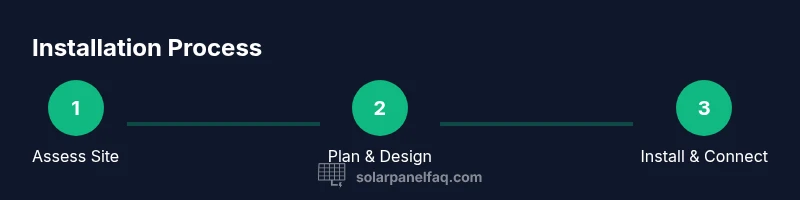
- 1
Assess site and obtain permits
Review local codes, HOA rules, and permitting requirements. Gather energy usage data and estimate system size. Confirm roof condition and shading to determine feasibility and plan. Why: Permits ensure safety and compliance; a proper site assessment prevents costly changes later.
Tip: Start permit filing early to avoid delays; document shading with photos for reviews. - 2
Measure roof area and determine array size
Map available roof area, considering 10–20% buffer for maintenance and orientation. Choose panel dimensions and count to fit the space while meeting energy goals. Why: Accurate sizing minimizes waste and maximizes production.
Tip: Use a string of diagrams (or a mobile app) to visualize layout before mounting. - 3
Select system components
Decide on panels, inverters (string vs microinverters), mounting hardware, and wiring strategy based on shading and roof type. Why: Component compatibility ensures efficiency and reduces maintenance.
Tip: Favor certified components with matching warranty terms. - 4
Prepare mounting layout and inverter location
Draft a mounting plan that aligns rails, allocates space for access, and locates the inverter in a shaded, accessible area. Why: A clear layout reduces on-roof time and improves safety.
Tip: Mark drill points on the roof and in interior spaces before starting. - 5
Install mounting rails
Secure rails to rafters or roof deck using appropriate fasteners; ensure rails are level and evenly spaced. Why: Solid mounting prevents panel sagging and leaks.
Tip: Torque fasteners according to manufacturer specs to avoid damage. - 6
Mount solar panels
Attach panels to rails with clamps or brackets; leave gaps for thermal expansion and cleaning. Why: Proper mounting minimizes wind uplift and vibration.
Tip: Avoid over-tightening; follow manufacturer torque guides. - 7
Wiring and string configuration
Connect panels in the chosen series/parallel configuration; route DC cables to the combiner box. Why: Correct wiring prevents hot spots and overvoltage conditions.
Tip: Label every string and keep cables neatly organized. - 8
Install inverter and grid interconnection
Mount the inverter, connect DC input strings, and install the AC disconnect. Coordinate with utility for interconnection and inspection. Why: Safe interconnection ensures proper power flow and compliance.
Tip: Schedule utility inspection early and keep all documentation handy.
Frequently Asked Questions
Do I need a permit to install solar panels on my home?
In most areas, yes. You’ll typically need building and electrical permits and an inspection. Check local jurisdiction rules and coordinate with your utility.
Yes, most areas require permits and an inspection for solar panel installations.
Can I install solar panels myself, or should I hire a professional?
DIY planning and mounting can be feasible, but electrical work and final interconnection should be performed by a licensed electrician to meet safety and code requirements.
DIY planning and mounting is possible, but electrical work should be done by a licensed professional.
How long does installation typically take?
Timing varies by location and permits, but installation and inspections commonly take several days to a couple of weeks.
Installation and inspections usually take several days to a couple of weeks depending on permitting.
Will solar panels damage my roof?
When installed correctly with proper seals and flashing, solar panels should not damage the roof. The risk is minimized with professional workmanship.
If installed correctly, solar panels should not damage your roof.
Is grid interconnection required where I live?
Most homes interconnect to the grid to utilize net metering. Requirements vary by utility and region; confirm with the local provider.
Most homes connect to the grid; check with your utility for interconnection rules.
What maintenance is needed for solar panels?
Periodic cleaning, routine inspections, and monitoring performance help maintain efficiency. Inverters may require eventual replacement.
Keep panels clean and inspect periodically; monitor performance for issues.
Watch Video
Top Takeaways
- Plan early and verify permits before starting.
- Choose compatible, certified components for reliability.
- Prioritize safety and consider professional electrical work.
- Coordinate with your utility for smooth interconnection.