Distance from Solar Panel to Charge Controller: A Wiring Guide
Learn how to determine the safe, efficient distance from your solar panel to the charge controller, balancing voltage drop, wire gauge, and routing for a reliable, durable system.


Goal: determine the safe, efficient distance from solar panels to the charge controller by mapping layout, estimating voltage drop, and selecting proper wire gauge. Plan for the shortest practical run, route away from heat and moisture, and verify continuity under load to minimize losses and protect equipment. Distances are not fixed; they depend on system voltage, current, insulation, and routing constraints.
Why distance matters for solar wiring
The distance from solar panel to charge controller influences voltage drop, wire resistance, heat generation, and ease of maintenance. Longer runs can erode system efficiency and increase losses in every hour of operation. According to Solar Panel FAQ, even small increases in length can add resistance and losses over a system’s life. While we want a clean, short run, the practical layout of your property—roof angles, mounting points, shading, and conduit access—often requires longer paths. The goal is to minimize unnecessary length while accommodating mounting hardware, safety considerations, and weatherproof routing. A well-planned distance also reduces exposure to physical damage and makes troubleshooting easier later. In 12V and 24V systems, the distance can have a more noticeable effect on voltage at the controller because the current is higher for a given power level. In higher-voltage systems (e.g., 48V), the same distance can result in smaller percentage losses, but the larger system may demand more careful cable sizing. In short, distance does matter, but it must be balanced with practical installation constraints, safety, and cost.
Tools & Materials
- DC-rated PV wire (appropriate gauge)(Use copper with outdoor-rated insulation; calculate gauge based on run length and expected current.)
- MC4 connectors(For panel-to-array connections and secure, weatherproof joins.)
- Conduit and fittings (weatherproof as needed)(Protect runs across exterior or exposed spaces.)
- DC-rated inline fuse or breaker(Place near the controller to protect the circuit.)
- Multimeter or DC voltmeter(Measure voltages and verify continuity under load.)
- Voltage drop calculator or app(Estimate drop to validate gauge choices before wiring.)
- Tape measure or distance meter(Accurate run length is essential for sizing.)
- Safety gear (gloves, goggles)(Wear appropriate PPE when handling wiring and connectors.)
Steps
Estimated time: 2-4 hours
- 1
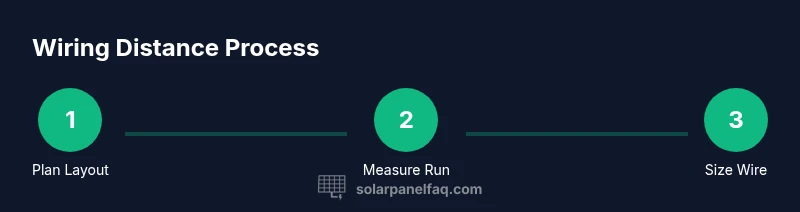
Define the layout and distance
Create a simple schematic showing panel location, controller, and battery bank. Mark the planned route with measured dimensions and note any obstacles. The goal is to minimize length without compromising system accessibility or safety.
Tip: Use a to-scale diagram or a free design tool to avoid last-minute changes during installation. - 2
Measure the run along the actual path
Measure the actual path from panel to controller, including routes over rooftops, through walls, and inside conduits. Record both the straight-line distance and the routed distance, as bends add length and can affect routing feasibility.
Tip: Use flexible measuring tape or a laser distance tool for accuracy. - 3
Estimate current and choose a gauge
Estimate the expected charging current under typical conditions and reference conductor resistance charts or a calculator to pick an initial gauge. Remember thicker wire lowers resistance and voltage drop but costs more and is harder to route.
Tip: When in doubt, opt for a larger gauge to reduce drop and improve longevity. - 4
Check voltage drop targets
Compare the expected voltage drop against your system voltage. If drop is excessive for the run length and gauge, plan to shorten the path, use a larger gauge, or raise the system voltage where appropriate.
Tip: Aim for the smallest drop that your components safely tolerate. - 5
Plan protection and routing details
Decide where to place fuses, safe routing through conduits, and how to protect cables from heat, moisture, and abrasion. Ensure outdoor-rated components and proper strain relief.
Tip: Keep DC wiring away from high-heat sources and avoid sharp bends. - 6
Prepare connections and test
Install connectors and conduct a dry fit before permanently sealing. Perform continuity tests and verify polarity, then test under load to confirm the system behaves as expected.
Tip: Always test with the system off and battery connected before energizing under full load. - 7
Document and finalize the run
Record the final run length, gauge, and routing details for maintenance and warranty references. Update diagrams if you later reposition components or expand the system.
Tip: Keep a copy of the plan with your system manuals.
Frequently Asked Questions
What is the recommended distance between the solar panel and charge controller?
There is no universal fixed distance. It depends on your layout, system voltage, and acceptable voltage drop. In practice, installers minimize the run while ensuring safe routing and weatherproofing.
There isn’t a single recommended distance; it depends on your setup. Keep the run as short as practical while meeting safety and weatherproofing needs.
How does distance affect voltage drop?
Longer runs increase the resistance of the wiring, which raises voltage drop at the charge controller. Higher gauge or higher system voltage can mitigate this effect. Always check voltage drop with a calculator or chart before finalizing wire size.
Longer distance means more resistance and more voltage drop. You can reduce that by thicker wire or higher system voltage.
How do I calculate the correct wire gauge for a given distance?
Start with the expected charging current and total run length, then consult resistance charts or a calculator to select a gauge that keeps voltage drop within acceptable limits. Consider climate, insulation, and conduit when finalizing the gauge.
Use current and run length, then check a gauge chart or calculator to choose the right wire size.
Does distance affect the warranty of solar components?
If you follow manufacturer guidelines for wiring size, routing, and protection, distance itself should not void warranty. Always check the specific warranty terms for your panels and controller.
Warranty usually depends on following the installer guidance and manufacturer specs, not just distance.
Can I place the charge controller far from the panels?
You can, but you must account for voltage drop and ensure safe routing. A longer distance requires bigger gauge or higher system voltage to stay within safe limits.
Yes, but plan for voltage drop and proper protection so the system remains efficient and safe.
Watch Video
Top Takeaways
- Plan shortest practical run to minimize voltage drop
- Size conductors based on run length and current
- Protect and route cables in dry, protected paths
- Test under load to verify correct operation
- Document final wiring plan for maintenance