How Far Should Solar Panels Be From the Inverter?
Learn how far solar panels should be from the inverter, and how distance impacts voltage drop, wiring, and safety. This guide covers planning, calculation, and best practices for residential solar installations.


How far should solar panels be from the inverter? There is no universal fixed distance. The right gap is determined by voltage drop limits, cable gauge, conduit routing, and local electrical codes. Plan for the shortest practical DC run that still meets safe enclosure clearances and installation requirements. A careful layout reduces wiring losses and simplifies service, monitoring, and future upgrades. According to Solar Panel FAQ, thoughtful distance planning saves money and improves long-term reliability for homeowners.
Why the distance between solar panels and the inverter matters
According to Solar Panel FAQ, the distance between solar panels and the inverter matters because it influences wiring losses, safety, heat management, and ease of maintenance. In most residential setups, the inverter sits near the main service area while the PV array sits on the roof or a ground rack. The longer the direct current (DC) run, the greater the resistance and potential voltage drop, which can reduce system performance and complicate protection strategies. A well-planned distance also simplifies monitoring, fault finding, and future upgrades. Key factors to consider include the route your DC wiring must take, the physical layout of your home, and the inverter’s input specifications. Planning for a sensible distance helps you balance efficiency with safety and cost, without forcing extreme conduitways or oversized cables.
Understanding DC wiring and inverter input requirements
DC wiring from panels to the inverter uses PV-rated conductors with durable insulation and weatherproof connectors. Each inverter model specifies its maximum input voltage, input current, and acceptable wiring configurations. If you place panels too far from the inverter, you may need thicker conductors to limit voltage drop, which can raise material costs. On the other hand, placing the inverter too close to the DC side can complicate service access or lead to protective device placement that’s not ideal for safety. Microinverters and optimizers change some distance considerations because they convert DC to AC at the module level, reducing long DC runs. The bottom line is to match your wiring plan to the inverter’s specifications and local code requirements.
Practical distance guidelines: no fixed rule, focus on integration
There isn’t a one-size-fits-all distance. Practical guidelines prioritize safety, ease of access, and code compliance over chasing a perfect numeric distance. Short runs reduce voltage drop and simplify wiring design, but you may need to route cables around obstacles or through roof penetrations. Use dedicated DC cables rated for outdoor use, and route through weatherproof conduit when passing between the roof and a structure. Also consider future expansions; leaving room in conduit spaces can save demolition costs later. In all cases, ensure the route minimizes exposure to heat sources, moisture, and physical damage.
How to calculate the ideal distance: a structured approach
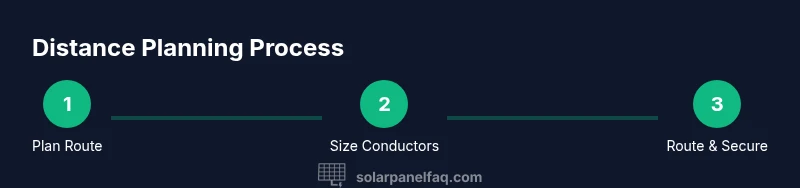
Begin by selecting an inverter location that minimizes the total DC run while keeping the AC side reasonably accessible. Measure the straight-line distance and map the route with potential corners and vertical drops. Choose conductors sized for the expected current and temperature conditions, then use a voltage-drop calculator or NEC/CEC guidelines to verify that the drop remains within the inverter’s acceptable range. Plan for protective devices, junction boxes, and proper strain relief. If you’re uncertain, consult a licensed electrician or solar installer to validate your calculations and ensure compliance.
Routing, enclosures, and safety considerations
Routing DC conductors between the panels and inverter requires planning for weather exposure, mechanical protection, and maintenance access. Use weatherproof conduit with appropriate fittings and gaskets where cables cross exterior walls or roof penetrations. Keep breakers, fuses, and disconnects accessible and clearly labeled. Secure cables with clamps and straps to prevent movement, and provide strain relief at terminations. Respect local codes on grounding, bonding, and equipment clearance. The planning phase is your best defense against costly retrofits later.
Inverter types and distance dynamics
Not all inverters respond to distance in the same way. String inverters tend to benefit from shorter DC runs where possible, because multiple panel strings converge before the inverter. Microinverters and optimizers place the conversion closer to the panels, reducing the impact of DC run length on performance. However, even with module-level or string devices, the physical routing, moisture protection, and safe access remain critical. Understanding your inverter type helps you tailor the run length, gauge, and routing strategy for the best overall result.
Common mistakes and myths about distance
A frequent myth is that “distance doesn’t matter” if you have a modern inverter. In reality, distance interacts with wire gauge, temperature, and code requirements. Another mistake is undersizing conductors to save cost; this increases voltage drop and can trigger fault conditions. Finally, attempting to route DC cables through living spaces or unprotected areas without conduit can void warranties and create safety risks. The reliable approach blends manufacturer guidelines with local code requirements and professional oversight.
Planning for future expansions
If you expect to add more panels or reconfigure strings, design the DC pathway with future growth in mind. Use larger conduits or extra empty conduit bays, and document the planned route with diagrams. Keeping an organized plan helps prevent expensive retrofits and ensures your inverter can accommodate expanded DC input without compromising safety or efficiency.
Tools & Materials
- PV DC conductors (PV wire, USE-2 or similar)(Choose gauge for expected current and distance; outdoor rating required)
- MC4 connectors(Weatherproof, compatible with panel wiring)
- Conduit and fittings(PVC or metal; use appropriate weatherproofing)
- Junction boxes(Weatherproof for exterior runs)
- Cable clamps and strain relief(Minimize movement and wear at terminations)
- Tape measure(Accurate distance measurement for routing)
- Wire stripper and crimping tool(For secure terminations)
- Multimeter or PV meter(Optional for verifying voltage/current along the run)
- Safety gear (gloves, safety glasses)(Personal protection during installation)
Steps
Estimated time: 2-6 hours
- 1
Choose inverter location
Select a location that minimizes the overall DC run while keeping the AC equipment accessible for service. Consider ventilation, heat exposure, and proximity to the main service panel. This decision shapes every subsequent route detail.
Tip: Document the chosen spot with a simple diagram to guide routing. - 2
Measure potential DC run
Map a route from the PV array to the inverter, including any roof penetrations, attic spaces, or wall cavities. Use a tape measure or a string to estimate the linear distance and the number of bends.
Tip: Add extra length for obstacles and future adjustments. - 3
Select conductor size
Choose PV-rated conductors sized for the expected current and temperature, accounting for the run length. Refer to the inverter’s input rating and applicable electrical codes. Undersized wire increases voltage drop and heat.
Tip: When in doubt, opt for the next higher gauge to reduce risk. - 4
Plan conduit path and protection
Lay out the conduit path with minimal bends and protect cables through exterior walls. Include junction boxes where needed and ensure weatherproofing at penetrations.
Tip: Use strain relief at every termination to prevent fatigue. - 5
Check codes, permits, and safety
Review local codes and obtain required permits before installation. Ensure grounding, bonding, and disconnects are correctly specified and accessible.
Tip: Consult a licensed professional to verify compliance. - 6
Have the system reviewed
Have the route, wire sizing, and protection verified by an installer or licensed electrician before powering up. This minimizes risk and ensures proper protection devices are in place.
Tip: Keep a copy of the route diagram and calculations for future work.
Frequently Asked Questions
Is there a fixed distance required between solar panels and the inverter?
No universal fixed distance. The optimal distance depends on system design, wiring method, and local codes. The goal is to minimize voltage drop while ensuring safe routing and easy access for maintenance.
There isn’t a universal fixed distance; it depends on your system and local rules.
How does distance affect inverter performance?
Longer DC runs can increase voltage drop and resistive losses, potentially reducing energy harvest and requiring larger conductors. Design the route to keep the drop within the inverter’s specifications.
Longer runs can increase losses; keep runs within the inverter’s specs.
Are microinverters less sensitive to distance?
Yes, microinverters convert DC to AC at the panel, so long DC runs are less impactful. Still, cabling, protection, and weatherproofing remain important, and the overall layout should be code-compliant.
Microinverters reduce DC run concerns, but proper cabling and code compliance still matter.
What if I plan to add more panels later?
Plan the DC pathway with potential expansions in mind, leaving room in conduits and ensuring the inverter can handle additional input. This avoids costly retrofits later.
Think ahead about expansion when you plan the route.
Do I need permits or inspections for DC distance changes?
Yes. Follow local electrical codes and obtain necessary permits. Any changes to DC wiring or routing should be inspected to ensure safety and reliability.
Yes, follow local codes and get permits for changes.
Should I hire a professional to determine distance?
Strongly recommended. A licensed electrician or solar installer can calculate voltage drop, wire sizing, and routing to ensure compliance and safety.
Yes—get a professional to verify your plan.
Watch Video
Top Takeaways
- Plan DC runs to minimize distance without compromising safety and code rules.
- Distance interacts with voltage drop, conductor size, and protection requirements.
- Choose the correct wire gauge and protect cables with conduit and strain relief.
- Inverter type influences distance strategy; module-level devices change the DC path impact.
- Document routes and revisit plans if expanding the system later.