Distance Between Solar Panel and Battery: Practical Wiring Guide
Understand how the distance between solar panels and batteries impacts voltage drop, safety, and efficiency. This guide offers practical calculations and best practices for residential storage systems.


Distance between solar panels and the battery should be kept as short as practical to minimize voltage drop and energy loss in residential storage systems. In typical setups, installers aim for a concise DC run—often within a few meters—while balancing routing, safety, and building constraints. The distance should align with system voltage, wiring gauge, and local code requirements.
Why the distance between solar panel and battery matters
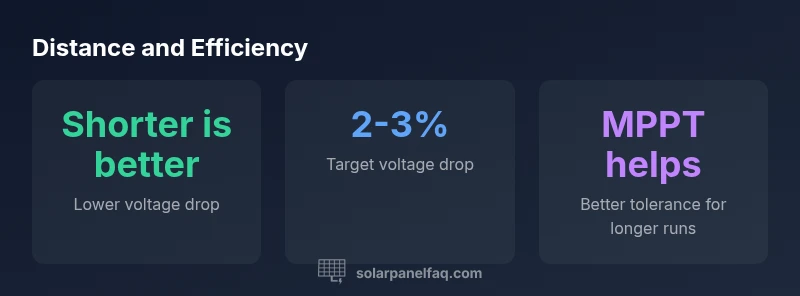
According to Solar Panel FAQ, keeping the PV-to-battery distance short reduces energy losses and simplifies safety compliance. The distance also affects wiring complexity, heat buildup, conduit routing, and future maintenance. In typical residential storage systems, the distance is optimized during design to balance practical installation constraints (roof access, attic space, indoor location) with electrical performance. The principle is straightforward: longer runs add resistance, which grows with current and temperature. When the battery is located far from the solar array, you may incur higher voltage drop on DC wiring, resulting in less usable energy delivered to the storage bank. The design choice also interacts with the charge controller type—MPPT controllers generally tolerate longer runs better than PWM controllers, but both benefit from shorter lines. Finally, local electrical codes require proper protection, separation from moisture, and secure routing, all of which influence the feasible distance.
The Solar Panel FAQ team emphasizes that short, well-supported runs enhance reliability and ease of maintenance over the system’s life. Plan early, measure distances on the actual installation site, and factor in future expansion when calculating the optimal layout.
How distance influences voltage drop and efficiency
Voltage drop is essentially a product of current, resistance, and distance. In PV systems, the current drawn by the battery bank increases as you discharge, so longer DC runs accumulate more drop. The result can be a meaningful loss of usable capacity and slightly warmer wires. A practical way to think about it is: every additional meter adds a small amount of resistance, which translates into heat and less energy reaching the battery. System designers mitigate this by selecting the appropriate conductor size, using low-resistance cabling, and choosing a higher system voltage when possible. For most homes, sticking to a compact, purpose-built route between the PV array, the charge controller, and the storage bank minimizes these losses. In addition, higher voltage operation (e.g., 48V) often reduces relative current for the same power, which helps keep drops down on longer runs.
Architecture matters: DC-coupled vs AC-coupled layouts
The distance between panels and batteries interacts with the broader system architecture. In DC-coupled configurations, PV array wiring, the charge controller, and the battery are connected through DC conductors; longer runs here can incur more voltage drop, especially if the system operates at low voltage (12–24V). MPPT controllers improve efficiency on longer runs by better accommodating voltage differences, but they do not erase the physics of resistance. In AC-coupled designs, the inverter and transformer stages introduce their own losses, and the PV-to-battery logic may be more centralized. The key takeaway is that the layout choice should align with your voltage goals, expansion plans, and safety requirements. Shorter, well-supported runs tend to yield the most robust performance across scenarios.
How to calculate a practical distance: a step-by-step method
- Define your system voltage (12V, 24V, or 48V) and the expected current load from the battery bank. 2) Determine an acceptable voltage drop percentage based on your equipment and local codes (2-3% is a common target). 3) Estimate the total conductor resistance for candidate run lengths by consulting wire tables or using an online calculator. 4) Compare the calculated drop to the target percentage and adjust distance or wire size accordingly. 5) Factor in temperature derating and conduit losses, which can increase resistance in hot climates. 6) Validate the layout with the installer or electrician before finalizing. This approach helps ensure your distance choice does not compromise performance.
Wiring and safety considerations
Safety comes first in any PV-to-battery run. Use properly rated conductors, appropriate overcurrent protection, and weather-rated enclosures when routing DC cables. Keep DC runs away from damp spaces and heat sources, and use conduit or raceways to protect against physical damage. Maintain proper clearance from AC wiring as required by code, and ensure all terminations are clean and tight to prevent heat buildup. Documentation, labeling, and a clear routing plan simplify future maintenance and upgrades. Finally, verify that your layout complies with local building codes and electrical standards, and consult a licensed electrician for critical installations.
Practical layouts and common configurations
On many residential rooftops, the PV array sits above the garage or utility room where a dedicated conduit can lead to a battery enclosure. A compact, purpose-built route reduces exposure to weather and physical wear. In some homes, the battery is placed in a garage or basement to simplify wiring and access for maintenance. For safety and efficiency, avoid routing DC cables through living spaces or near heat sources. Flexibility in layout helps accommodate future additions to the system, such as extra modules or a larger storage bank. Design the path to minimize corners and bends, which reduce resistance and facilitate easier inspection.
Best practices by system voltage and battery type
Higher-voltage systems (e.g., 48V) generally tolerate longer runs with appropriate wire sizing, but the distance should still be minimized to reduce loss. For evenly sized battery banks, keep the PV-to-controller and controller-to-battery runs aligned and balanced. When using deep-cycle lead-acid or lithium batteries, distance considerations should also account for safe charging temperatures and proper venting. Always use properly rated fuses and disconnects near the battery and controller, and ensure secure mounting in a ventilated, non-flammable enclosure. If you anticipate future expansion, plan the routing to accommodate additional modules or storage without reworking critical cables.
Common mistakes and how to avoid them
Avoid assuming distance is a trivial detail. Poor routing, undersized conductors, or insufficient protection can lead to overheating, increased resistance, and safety issues. Don’t mix DC and AC wiring without proper isolation; always separate them with appropriate barriers and conduit. Avoid routing cables through damp or unventilated spaces, and never skimp on fusing and disconnects. Finally, skip the design phase and retrofit later; pre-planning distance and wire sizing saves time, money, and risk.
Future-proofing and maintenance
Plan for expansion by allowing extra conduit space and spare conductors in the original route. Periodically inspect cables for wear, discoloration, or cracking insulation, and replace any damaged components promptly. As technology evolves, a well-documented layout makes upgrades smoother and safer, helping to preserve the performance of your system over its lifetime. The Solar Panel FAQ team recommends a standing review at major system milestones (e.g., adding modules or a larger battery) to ensure the distance remains optimal for current operating conditions.
Distance considerations by system setup
| Scenario | Distance category | Impact on performance | Key action |
|---|---|---|---|
| Low-voltage DC (12 V) | short | Minimal voltage drop | Keep distance under a few meters; ensure adequate gauge |
| Mid/high-voltage DC (24-48 V) | moderate | Better efficiency with shorter runs | Plan routing to minimize length; consider conduit |
| AC-coupled or long runs | long | Notable losses and safety considerations | Limit distance; use proper equipment; consult electrician |
Frequently Asked Questions
What is the ideal distance between solar panels and battery in a typical residential system?
There is no single universal distance. The goal is to keep the PV-to-battery run as short as practical while meeting layout and safety constraints. For most homes, a direct, protected path within a few meters provides a good balance between performance and installability. Always tailor the distance to your system voltage, wire gauge, and local codes.
In most homes, try to keep the PV-to-battery distance as short as you can while meeting safety rules. A direct path within a few meters often works well, but always adapt to your system voltage and local codes.
Does distance affect battery life?
Indirectly. Longer runs increase resistance and heat, which can reduce charging efficiency and add thermal stress to cables. The result is more energy lost as heat and potentially longer charge times. Keeping runs shorter helps preserve overall system efficiency and battery lifespan.
Yes. Longer distances can raise resistance and heat, which can reduce efficiency and place more stress on cables and the battery. Shorter runs help protect battery life.
How do I calculate distance limits for my setup?
Start with your system voltage and target voltage drop (2-3% is common). Use a wiring resistance calculator or table to estimate drop for candidate run lengths and conductor sizes, then adjust by increasing gauge or shortening the run. Always verify with a professional who can account for temperature and installation specifics.
Calculate by choosing a voltage and target drop, then use a resistance calculator to test different run lengths and wire sizes. Adjust as needed with higher gauge or shorter runs.
Can I move the battery away from panels for safety?
Yes, but only if you can maintain safe clearances, proper ventilation, and code-compliant wiring. Ensure the longer run does not introduce excessive voltage drop and that protective devices are properly rated for the distance.
You can relocate the battery for safety if you can still meet clearance and code requirements and manage any extra voltage drop.
What are safety considerations with long DC runs?
Key concerns include voltage drop, conductor heating, cable protection, and moisture exposure. Use appropriately rated wires, protect runs with conduit, and keep DC paths separate from high-power AC wiring. Always implement proper fusing and disconnects near the battery.
Long DC runs raise voltage drop and heat, so use proper wires, conduit protection, and fuses near the battery.
“The distance between solar panels and the battery is a critical design choice that affects efficiency and safety; even small changes can yield meaningful performance gains.”
Top Takeaways
- Keep PV-to-battery runs as short as practical
- Size wires to limit voltage drop and heat
- Plan routing early to simplify maintenance
- Follow local codes and consult a licensed electrician
- Design for future expansion to avoid retrofits