Can You Put Solar Panels on a Townhouse? A Practical Guide
Explore whether townhouse owners can install solar panels, including HOA rules, roof eligibility, and practical options like rooftop systems or community solar.


Yes—townhouse owners can install solar panels, but success depends on shared roof access, HOA rules, and local permitting. This quick answer outlines eligibility, common constraints, and practical options like rooftop systems, solar shingles, or community solar, plus initial steps to coordinate with neighbors and your installer. Consulting a local solar contractor and checking building codes are essential before buying.
Can a townhouse rooftop accommodate solar panels?
Townhouse rooftops can host solar panels, especially when there is a clearly defined, shared roof area and formal agreement among neighbors. In many communities, the primary challenge is access to the roof and ensuring the array does not block emergency egress or violate roof load limits. According to Solar Panel FAQ Team, success hinges on compatibility with building codes, the HOA's design rules, and the electrical interconnection with the main service panel. Start by mapping your roof's sun exposure, identifying any shading from chimneys or nearby trees, and confirming you have legal rights to place and maintain equipment on the shared roof surface. Beyond access, you must consider aesthetics and how the panels will look from neighboring units, as well as how the system will be zoned and wired to minimize voltage drop along the common cables. Even in townhouses with a private rooftop terrace, careful coordination with the HOA and adjacent homeowners is essential to avoid disputes and ensure a smooth permit path. The good news is that many townhouse projects achieve reliable energy production by using a central roof plane or distributing panels across multiple roof faces while following a well-designed plan. Community solar might be an option if individual roof installation is restricted; that approach provides a way to participate in solar without installing panels on your own roof. In all cases, early conversations with a licensed solar contractor and, if applicable, the HOA, can clarify feasibility, local permitting timelines, and the expected interconnection method.
Eligibility checklist: roof orientation, shading, and shared ownership
To determine if a townhouse is a viable site, run through a practical eligibility checklist. Roof orientation should face a favorable azimuth for maximum sun; ideally, rows should avoid significant shading from trees, other units, or tall chimneys during peak hours. Assess roof condition, slope, and the presence of a central roof plane versus individual sections; some associations require uniform treatment of all units. Shared ownership matters: you must have a documented right to install and maintain equipment on common elements, or obtain a formal amendment to the governing documents. Electrical capacity is critical: your main service panel must have sufficient capacity and space for a dedicated inverter and conduit routing to the meter. Finally, HOA rules and local permitting vary by jurisdiction—verify setback requirements, fire code clearances, and any architectural guidelines early in the process, so you don’t invest in a system that the community cannot approve. If you discover roadblocks, consider alternative pathways such as community solar or a roof-sharing agreement with neighboring units under a clear contract.
Options tailored for townhouse living
Rooftop solar on shared roof: Pros include consistent shading patterns and centralized permitting. Cons include HOA approvals and potential architectural constraints. Solar shingles offer a sleeker look but often come with higher upfront costs and potentially lower efficiency. Community solar provides a way to participate in solar energy without installing on your own roof, which can be ideal when roof access is restricted or compliance is challenging. In some markets, lender and utility programs support net metering or virtual net metering, enabling credits for off-site solar. For those who want full ownership, working with a cooperative or a formal agreement with neighbors can unlock shared-value projects. When evaluating options, request a design that accounts for shading, panel orientation, and the expected annual energy yield. The right approach balances aesthetics, performance, and the willingness of neighbors to participate in the project.
Permitting, HOA approvals, and neighbor coordination
The permitting path for townhouse solar begins with a plan packet prepared by a licensed solar installer. You’ll typically need structural and electrical drawings, a detailed layout showing panel locations, inverters, conduit routes, and interconnection with the meter. Submit these documents to the HOA and local building department, and be prepared for a review period that varies by jurisdiction. Open dialogue with neighbors who share the roof; a simple, transparent plan with clear benefits for the community can ease concerns about shading, fire safety, and maintenance responsibilities. If the HOA has architectural guidelines, align your panel color, frame finish, and mounting hardware with those requirements. In some cases, a special assessment or amendment to the master deed may be needed to authorize installation on common elements. Throughout this phase, maintain a clear record of all communications, approvals, and any requested revisions; delays often stem from documentation gaps rather than technical issues.
Financials, incentives, and long-term value
Solar installation for a townhouse involves upfront costs, ongoing maintenance, and potential long-term savings. Without quoting exact prices, consider the total cost of the system, installation, interconnection, and any HOA-related fees. Look for available incentives, such as local rebates, state programs, and federal tax credits where applicable; the value of these programs depends on your location and timing of enrollment. Community solar can reduce or eliminate the need for roof-mounted equipment while still providing bill credits. When evaluating financing options, compare purchase, loan, and power purchase agreement (PPA) structures to determine which aligns with your budget and risk tolerance. A well-designed townhouse solar project can improve property value and protect against rising electricity rates, but only if the system is properly sized and connected to reliable storage or grid-tied options. Solar Panel FAQ analysis suggests homeowners should model energy production over a typical year to estimate payback and net savings more accurately.
Maintenance, warranties, and potential pitfalls
Ongoing maintenance is typically minimal but important. Schedule periodic cleaning to remove dust or debris, check mounting hardware for corrosion or looseness, and monitor inverter performance through the monitoring app. Warranties vary by manufacturer and installer; ensure you have a clear understanding of what is covered for panels, inverters, mounting hardware, and the roof interface. Hidden pitfalls include shading changes over time from new landscaping, structural modifications to upper units, or alterations in the common area that affect the roof. Keep a long-term plan for inspection intervals, maintenance costs, and potential repair timelines. Regular maintenance helps preserve system performance and protects your investment.
Authoritative sources
- U.S. Department of Energy - Office of Energy Efficiency and Renewable Energy: https://www.energy.gov/eere/solar
- National Renewable Energy Laboratory (NREL): https://www.nrel.gov
- U.S. Environmental Protection Agency - Green Power Solar: https://www.epa.gov/greenpower/solar
Tools & Materials
- Safety gear (helmet, gloves, harness)(Roof work requires fall protection.)
- Ladder or scaffolding(Securely anchored for stability.)
- Measuring tools and sun-path app(Assess shading and orientation.)
- Electrical permit documents(Needed for interconnection and HOA submissions.)
- Solar panels and inverters(Quality, warranty, and compatibility with your roof.)
- Roof mounting hardware appropriate for roof type(Roof type determines rails and flashings.)
- Conduit and wiring materials(Routing to the main service panel.)
- Personal protective equipment (PPE)(Extra safety gear as needed.)
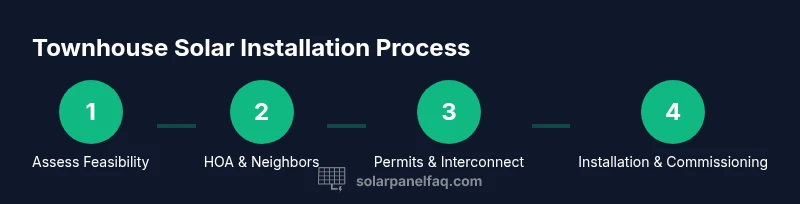
Steps
Estimated time: 2-6 weeks
- 1
Assess roof access and suitability
Evaluate roof space, orientation, and shading; confirm you have shared roof rights and HOA permission. Collect architectural drawings and verify load capacity with a licensed professional.
Tip: Map shade patterns at peak sun using a sun-path chart. - 2
Gather consent from HOA and neighbors
Present a clear, aesthetic-friendly design package to the HOA. Seek neighbor buy-in to minimize disputes about shading and maintenance.
Tip: Provide visual simulations to help non-technical neighbors understand impact. - 3
Check electrical capacity and interconnection
Inspect the main panel for space, conductor sizing, and compatibility with an inverter and possible storage options.
Tip: Ask the installer to perform a load calc and interconnection study. - 4
Obtain permits and finalize the design
Submit structural and electrical drawings to the local building department and HOA. Await approvals before ordering equipment.
Tip: Keep a detailed project calendar and track approval deadlines. - 5
Schedule installation and commissioning
Coordinate installation with all homeowners sharing the roof. Test functional performance and ensure utility interconnection is completed.
Tip: Schedule a final inspection with the inspector and utility if required. - 6
Set up monitoring and maintenance
Install monitoring software, train residents on usage, and establish a maintenance plan for panels and inverters.
Tip: Regularly review production data to catch performance drift early.
Frequently Asked Questions
Can HOA rules block solar panel installation on a townhouse?
HOA rules can influence the project; some associations require approvals or have design guidelines. Working with the HOA early helps resolve potential conflicts.
HOA rules can affect installation, so get approvals early to avoid delays.
Is rooftop solar always possible on a townhouse with shared roof space?
Shared roof solar is possible where there is legal access, space, and a plan acceptable to the HOA and utility provider.
Shared roof solar can work if approvals and access are in place.
What if shading from neighboring units changes over time?
Shading changes can affect production; design choices like tilt, spacing, and microinverters can mitigate losses.
Shading changes can reduce output; plan for future clearance.
Can I participate in solar if my HOA bans roof-mounted systems?
If roof installation is restricted, options include community solar or off-site solar agreements that still provide credits.
If roof installations aren’t allowed, community solar may be an alternative.
Are there federal or state incentives for townhouse solar?
Incentives vary by location; check federal tax credits, state rebates, and local programs applicable to your project.
Incentives depend on your location and timing—verify eligibility.
Will a townhouse solar system affect resale value?
A properly designed and installed system can enhance resale value, especially if there are clear energy savings and warranties.
A well-run solar system can boost resale value when well-documented.
Watch Video
Top Takeaways
- Plan HOA-aligned roof access to avoid conflicts
- Assess shading and orientation before committing to design
- Explore rooftop, shingles, or community solar options
- Understand permitting and interconnection early to prevent delays