HOA Solar Panel Guide: Navigating Rules and Installations
Learn how to navigate HOA rules to install solar panels. This educational guide covers rights, documentation, submission steps, and practical tips for homeowners considering solar with HOAs.


Goal: determine if your HOA allows solar panels and how to get approval. In most cases HOAs permit solar installations when you follow official guidelines and provide a clear design plan. Prepare your documentation, understand shading and aesthetics requirements, and plan a compliant installation route before buying panels. A quick review of your HOA’s CC&Rs and any municipal rules helps you avoid delays, fines, or design changes later.
Understanding HOA Solar Rights and Limits
According to Solar Panel FAQ, many HOAs recognize residents’ right to use solar power, but they balance that right against community aesthetics, safety, and shared resources. In practice, this means you are more likely to succeed if you know your CC&Rs, architectural guidelines, and any neighborhood-specific rules before drafting plans. Your first step is to map out your specific HOA’s approach: do they require a design review, disclosures to neighbors, or approval from a committee? You’ll also need to verify whether there are restrictions on panel color, mounting hardware, or the visibility of equipment from the street or common areas. The key is proactive compliance: anticipate concerns about glare, roofline changes, and the appearance of arrays. When you present your plan, show how it minimizes visual impact, preserves roof integrity, and does not compromise safety or homeowner associations' other amenities. Solar panel hoa considerations frequently hinge on transparency and collaboration.
Common HOA Requirements for Solar Installations
HOAs commonly address solar installations through architectural guidelines, covenants, and rules that balance homeowner energy goals with neighborhood aesthetics. Typical considerations include acceptable panel locations (rooftop vs ground-mower setups), mounting methods that minimize roof modification, color and finish of mounting hardware, and the overall silhouette from street view. Some associations require a formal design review, documented shading analyses, and peer notifications before approval. Others may request that the installer be licensed and that the work be performed by certified electricians. Importantly, many HOA agreements specify timelines for reviews and clear criteria for what constitutes compliance. Understanding these requirements up front helps you frame a proposal that avoids revisions and promotes cooperation. Solving the HOA puzzle is easier when you align your plan with board priorities and community standards, not just your own preferences.
How to Evaluate Your Home's Roof and Location
A successful solar panel installation starts with a sober assessment of your roof and site. Evaluate sun exposure patterns across seasons to maximize energy production while limiting shading from nearby trees or structures. Roof age and structure matter: confirm decking integrity, rafter spacing, and the load capacity of your roof to support solar equipment. Consider roof orientation; in many climates, a southern exposure (or the closest feasible alternative) yields the best performance. If you live in a multi-family or condo-like HOA, shared spaces or common roofs may require additional approvals. Document the roof’s condition with photos and measurements, and prepare to explain how your design minimizes penetration and maintains existing drainage. A well-documented site analysis can prevent back-and-forth and expedite approval processes.
Documentation You Will Likely Need
Most HOA approval packets require comprehensive documentation. Start with a site plan showing panel locations, mounting methods, and electrical routing into the home’s service panel. Include product data sheets for the solar modules and inverters, installer licenses, and warranties. A shading analysis (even a simple sun-path diagram) demonstrates the expected performance. Provide a compact narrative describing the installation’s aesthetics, sound, and safety considerations. Finally, attach any city or county permit applications if required by your municipality. A thorough packet reduces questions from the HOA and streamlines the review process. Keep digital copies and a printed version for easy sharing with neighbors, the HOA board, and the installer.
Designing for Aesthetics and Compliance
Aesthetics often drive HOA decisions more than raw performance. Propose a design that minimizes visual impact: low-profile mounting, neutral-colored rails, and modular panels with matte finishes to reduce glare. Coordinate with your installer to ensure electrical conduits and equipment are neatly routed, concealed where possible, and meet local codes. Include a contingency plan for alternative placements if the HOA objects to your initial site. Remember that some HOAs restrict changes to roof color, vent placements, or skylight visibility. Framing a design around these constraints shows the board you care about the community’s look while achieving your solar goals.
The Submission Process: From Plan to Approval
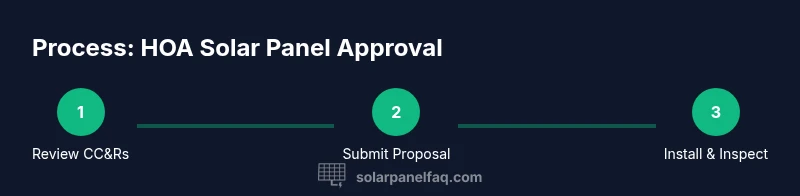
Submitting a complete and clear proposal is the keystone of a smooth HOA approval. Start by compiling your packet, then deliver it to the HOA review committee or management company according to the HOA’s preferred method. Expect a formal review window; ask for a written timeline and a point of contact. Be prepared to answer questions about mounting hardware, shading, electrical safety, and how maintenance will occur. If the board requests revisions, respond promptly with updated diagrams and data. Once approved, obtain any necessary permits from the city or county and coordinate the installation date with your installer and the HOA’s property manager. After installation, request a final inspection to confirm compliance with the approved plan.
Handling HOA Revisions, Delays, and Disputes
Delays and revisions are common in HOA processes. A proactive approach—documented communication, prompt responses to requests, and updated plans—helps prevent escalation. If the HOA requests changes, address them with clear diagrams and rationale that tie back to safety, performance, and aesthetics. When disagreements arise, seek a neutral third-party review (if allowed by the HOA) or consult state solar rights statutes for guidance. Keep a detailed log of all interactions, decisions, and dates. If legal concerns emerge, consider a brief consult with a local attorney who specializes in HOA and solar matters to understand your rights and potential remedies.
Financing, Incentives, and HOA Considerations
Financing solar is often a separate conversation from HOA approval. Investigate solar loans, leases, and power purchase agreements (PPAs) while ensuring your plan aligns with HOA policies. Some HOAs require that owners install specific equipment from preferred vendors or require independent inspections, which can affect financing options. Look for tax incentives, local rebates, and utility programs that maximize return on investment, but ensure that your total plan does not violate HOA restrictions. If your HOA permits a wide range of aesthetics, you may enjoy a smoother path to financing and faster payback. Always keep your HOA informed about any changes to the project’s scope that could impact approval.
Maintenance, Inspections, and Long-Term HOA Relations
Post-installation, ongoing maintenance and periodic inspections help sustain a positive relationship with your HOA. Schedule annual roof or panel inspections, share maintenance plans, and document any repairs. Keep records of warranty information and service appointments that could affect compliance or aesthetics over time. Proactive transparency with neighbors and the HOA board minimizes disputes and reduces the risk of retrofit requests that could disrupt energy production. Building a collaborative relationship with the HOA can yield easier processing for future improvements and a stronger community commitment to renewable energy.
Authority Sources
For authoritative context on solar energy policy and HOA interactions, refer to:
- https://www.energy.gov/eere/solar
- https://www.nrel.gov/
- https://www.epa.gov/solar
Tools & Materials
- Copy of HOA CC&Rs and architectural guidelines(Include any solar-specific amendments or addenda)
- Site plan with panel locations(Show rooftop and, if applicable, ground-mount areas)
- Product data sheets for panels and inverters(Include efficiency, dimensions, mounting details)
- Installer license and warranties(Proof of qualification and workmanship guarantees)
- Shading analysis or sun-path diagram(Demonstrates expected performance year-round)
- Communication plan(Letters to neighbors or community notices if required)
Steps
Estimated time: 4-8 weeks
- 1
Identify HOA rights
Review your CC&Rs and architectural guidelines to identify required approvals and any aesthetic constraints. Gather contact information for the HOA reviewer.
Tip: A quick call to the HOA can clarify the submission path and timeline. - 2
Evaluate roof suitability
Assess roof orientation, age, and structural capacity. Document shading and potential constraints from nearby structures.
Tip: Take photos from multiple angles and seasons to illustrate sun exposure. - 3
Assemble documentation
Compile CC&Rs, a site plan, product data sheets, warranties, and a shading analysis. Prepare a design narrative.
Tip: Create a single, easy-to-navigate packet with labeled diagrams. - 4
Draft a compliant design
Propose panel locations, mounting methods, and color finishes that minimize visual impact and meet safety standards.
Tip: Offer alternatives in case the primary plan is not approved. - 5
Submit the proposal
Deliver the packet to the HOA per their preferred method and request a formal review timeline.
Tip: Ask for a written acknowledgment of receipt and clear review dates. - 6
Respond to feedback
Address requests for changes promptly with updated diagrams and data.
Tip: Keep all communications concise and reference the approved criteria. - 7
Obtain permits and schedule installation
Secure local permits (if required) and coordinate with your installer and HOA.
Tip: Coordinate with utility interconnection to avoid schedule conflicts. - 8
Finalize and document compliance
Complete the installation, pass any inspections, and file final approval with the HOA.
Tip: Keep a folder with all approvals for future maintenance.
Frequently Asked Questions
Do HOAs typically allow solar panels?
Most HOAs allow solar installations, but approvals depend on architectural guidelines, safety considerations, and disclosure requirements. A well-prepared proposal aligned with the HOA's rules improves your chances.
Most HOAs allow solar, but you need to follow their guidelines and submit a complete plan.
What documents are required for HOA approval?
Common documents include the CC&Rs, a site plan, product datasheets, installation warranties, and a shading analysis. Some HOAs also require neighbor notice or a design review packet.
You typically need the CC&Rs, site plan, and product data, plus any required shading analysis.
Can I install solar panels without HOA approval?
Installing without HOA approval can lead to fines, required removal, or retrofits. Always obtain written approval or a formal denial to understand next steps.
No—avoid installing until you have written HOA approval.
How long does the approval process usually take?
Timelines vary by HOA, but expect a few weeks to a couple of months. Prompt responses to requests can keep the process moving.
Expect a few weeks to a couple of months, depending on the HOA.
Are there legal protections for solar rights with HOAs?
Federal and state laws often protect reasonable solar installations; local ordinances and HOA covenants may set constraints. Check your jurisdiction for specifics.
There are protections, but rules vary by location and HOA.
What if the HOA denies my request?
You can appeal the decision, modify the plan to address concerns, or seek third-party mediation. If needed, consult a lawyer who specializes in HOA and solar matters.
If denied, consider revisions or mediation with a professional.
Watch Video
Top Takeaways
- Know your HOA solar rights before planning
- Submit a complete, well-documented packet
- Design for aesthetics and safety to reduce revisions
- Track timelines and maintain open communication
- Coordinate permits, installation, and inspections