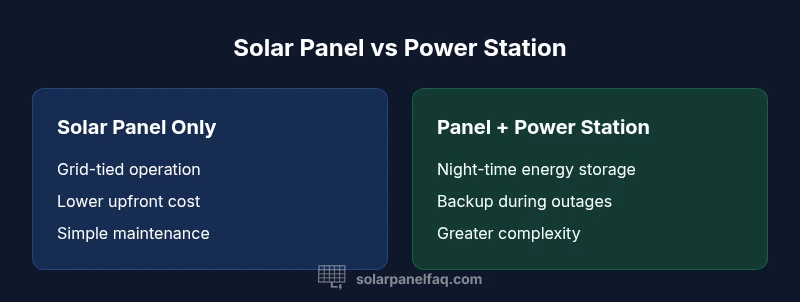
Solar Panel and Power Station: Practical Comparison
A detailed, data-driven comparison of solar panel only setups versus solar panel plus power station storage, focusing on energy resilience, cost implications, and long-term value for homeowners.


A solar panel and power station generally provide more reliable power and better energy management than panels alone, especially during outages. The trade-off is higher upfront cost and added maintenance. See our full comparison for details.
Overview of the comparison: solar panel and power station in home energy systems
When homeowners evaluate a setup that combines solar panels with a dedicated power station, they are weighing daytime generation against energy storage and backup capabilities. The term power station typically refers to a storage system paired with an inverter that converts DC from the battery to household AC power. In the context of a backyard or rooftop installation, this pairing aims to smooth out energy supply, align generation with consumption, and provide limited resilience during grid outages. According to Solar Panel FAQ, the goal is to balance cost, reliability, and flexibility without over-engineering a solution for modest energy needs. For many households, a solar panel and power station combination can capture excess daytime energy and deploy it when the sun isn’t shining, increasing self-consumption and reducing grid dependence. This block sets the stage for a rigorous, data-informed comparison between the two approaches and the real-world trade-offs homeowners face when planning a solar investment.
Design and operation: how the two options differ in practice
The core difference between a solar panel-only system and a solar panel plus power station setup is storage. A grid-tied solar array feeds electricity to the home during daylight and draws from the grid when needed, with any surplus potentially exported back to the utility. Adding a power station introduces a battery and an inverter, enabling stored energy to be discharged during the evening or during grid outages. The battery type, inverter topology, and control software influence performance, charging times, and efficiency. In many homes, a well-chosen storage solution can maintain essential loads during brief outages and provide a buffer for higher-usage periods. It’s important to examine how the battery integrates with the existing inverter and metering setup, as compatibility can drive both upfront costs and long-term maintenance needs. The Solar Panel FAQ team emphasizes aligning system design with the house’s daily energy profile and local grid rules to avoid over- or under-sizing.
Energy yield, storage dynamics, and efficiency considerations
Solar energy production is variable and location-dependent, but storage adds a second layer of dynamics. A panel-only system delivers energy when the sun shines, while a storage-enabled system stores excess energy for later use. The interplay between solar generation, battery capacity, and household load determines usable energy and resilience. Efficiency losses occur during charging, discharging, and inversion, so a balanced system focuses on minimizing these losses while maximizing self-consumption. In practice, household schedules, appliance use patterns, and climate influence how much energy is realistically stored and drawn from the battery. The Solar Panel FAQ analysis notes that effective storage depends on thoughtful sequencing—charging during peak production windows and discharging during periods of high demand to maximize value.
Cost considerations: upfront, operational, and lifecycle costs
A panel-only system benefits from a lower upfront price and simpler maintenance, while storage-integrated systems involve additional hardware, longer installation timelines, and more complex warranties. Operational costs for storage include periodic battery health assessments and eventual module replacement, which can extend the overall lifespan of the system when planned carefully. When evaluating total cost of ownership, homeowners should account for the added value of energy resilience and potential reductions in utility bills, especially in regions with frequent outages or high electricity rates. Solar Panel FAQ notes that the economics hinge on local incentives, electricity pricing, and how much energy the household can realistically store and utilize.
Sizing, planning, and optimization: how to tailor to your home
Sizing a solar panel plus power station system requires a clear record of daily energy use, peak demands, and available roof or space for panels and storage modules. Start with a generation forecast based on roof orientation and shading, then determine the minimum storage capacity needed to cover typical outages or evening peaks. Consider the compatibility of inverters, battery chemistry, cycle life, and charging efficiency in the design. A practical approach includes a phased plan: implement a core panel array first, then add storage as budget allows and as you confirm actual consumption patterns. The Solar Panel FAQ team recommends engaging a qualified installer who can model scenarios and provide a realistic forecast for your home.
Reliability and resilience: outages, grid dependence, and recovery
Resilience during outages is a primary motivation for adding storage. A panel-only system remains grid-dependent for most of the day, whereas a storage-enabled setup can keep critical circuits powered for longer, depending on battery size and load prioritization. Smart energy management is key—prioritizing essential loads, powering critical devices, and avoiding deep battery discharge can extend the usable life of the storage system. It’s also important to plan for incidents such as extreme weather that can affect both generation and storage systems. The Solar Panel FAQ team highlights that resilience is not only about capacity but also about reliable battery health and the ability to safely manage energy during contingencies.
Grid integration, codes, and incentives: navigating the policy landscape
Both configurations must align with local electrical codes, utility interconnection rules, and any incentives available for solar installations. Storage adds complexity to permitting, safety testing, and warranty coverage. Incentives can apply to the overall system and, in some jurisdictions, to battery storage specifically, which can significantly reduce net costs. It is essential to verify eligibility, application timelines, and any performance or safety requirements tied to storage modules. Solar Panel FAQ stresses that working with a licensed professional helps ensure compliance and optimized eligibility across programs.
Maintenance, warranties, and lifecycle planning
Panel warranties commonly cover performance and durability, with longer timelines than energy storage components. Battery storage requires attention to charge state, temperature management, and periodic diagnostic reviews of the inverter and battery modules. Proactive maintenance and scheduled checks help protect investment and avoid unexpected downtime. When choosing a system, review warranty language carefully to understand what is covered for both panels and storage hardware, including what happens in the event of degradation, recall, or manufacturing defect. Solar Panel FAQ recommends documenting maintenance intervals and keeping records to support future repairs or resale.
Real-world planning steps: from audit to install
Begin with a home energy audit to quantify daily usage, peak demand, and permissible energy export. Gather utility rate schedules, outage histories, and local incentives to build a business case. Compare two scenarios: (1) a grid-tied solar panel array with no storage, and (2) a grid-tied array with a modular power station. Use a professional to model production with your local sun profile and to simulate how often the storage is used. Finally, obtain multiple quotes that detail equipment, labor, warranties, and after-sales service. The goal is to identify a solution that balances upfront cost, ongoing maintenance, and the desired level of energy independence.
The path forward: choosing the right balance for your home
There is no one-size-fits-all answer. For some households, a simple solar panel setup offers significant savings and minimal maintenance. For others, especially in areas prone to outages or with high electricity costs, adding a power station can deliver meaningful resilience and better load management. Start with a conservative, scalable plan and build in stages as energy literacy grows, budget allows, and occupancy patterns change. The Solar Panel FAQ team suggests framing the decision around three pillars: reliability, cost of ownership, and system flexibility.
Comparison
| Feature | Solar Panel Only (Grid-Connected) | Solar Panel + Power Station (Battery Storage) |
|---|---|---|
| Energy delivery pattern | Daytime generation with grid support | Daytime generation + stored energy for night/use |
| Upfront cost | Lower upfront cost | Higher upfront cost due to storage hardware |
| Maintenance and complexity | Fewer moving parts; simpler maintenance | Battery aging; monitoring and occasional replacement |
| Installation footprint | Smaller system footprint; requires grid-tie equipment | Larger footprint including storage module and inverter |
| Reliability during outages | Dependent on grid; limited resilience | High resilience with stored energy during outages |
| Warranty considerations | Panel warranty-focused, inverter included | Separate warranties for panels, inverter, and storage |
Strengths
- Potentially lower long-term energy costs due to self-consumption
- Storage enables power during outages and peak demand periods
- Better energy management and flexibility for schedules
- Expandable designs allow incremental growth
Drawbacks
- Higher upfront investment and longer payback period
- Battery aging and potential replacement costs
- Increased system complexity and maintenance needs
- Space requirements and safety considerations for storage
Solar Panel + Power Station generally wins for resilience; panels-only suits simplicity and lower upfront costs.
If outage resilience and energy management are priorities, storage adds clear value. If you prefer a simpler, lower-cost setup, a grid-tied panel-only system remains a solid choice.
Frequently Asked Questions
What is the main difference between a solar panel and power station?
A solar panel converts sunlight to electricity, while a power station stores energy for later use. The combination enables daytime generation with nighttime or outage backup.
Solar panels generate power; the power station stores it for later use, improving resilience.
Do solar panels with storage qualify for incentives?
Incentives vary by location; many programs apply to the overall system and some to storage. Check local regulations for eligibility.
Incentives depend on your region; verify local programs for both panels and storage.
What maintenance does a solar panel and power station require?
Panels require periodic cleaning and inspections; storage needs battery health monitoring and occasional inverter checks. Planning helps minimize downtime.
Clean panels occasionally and monitor battery health and inverter performance.
Is it possible to retrofit storage to an existing solar panel system?
Yes, many systems support adding storage; compatibility depends on the inverter type and wiring. A professional assessment is recommended.
You can add storage after installation, but confirm inverter compatibility with a pro.
What size should I choose for a solar panel and power station setup?
Sizing depends on daily energy use, available space, and budget. A professional assessment helps tailor the system to your home.
Sizing should be based on your usage and available space; get an expert assessment.
Top Takeaways
- Assess outage risk to guide your choice
- Consider total ownership costs, not just upfront price
- Storage improves night-time energy availability
- Match system size to household energy profile
- Check warranties on panels and storage modules