3kVA Solar System Price: What Homeowners Should Know
Explore the factors shaping the price of a 3kVA solar system for your home, including inverter sizing, panels, installation, and incentives. Data-driven guidance from Solar Panel FAQ Analysis, 2026 to help homeowners budget confidently.


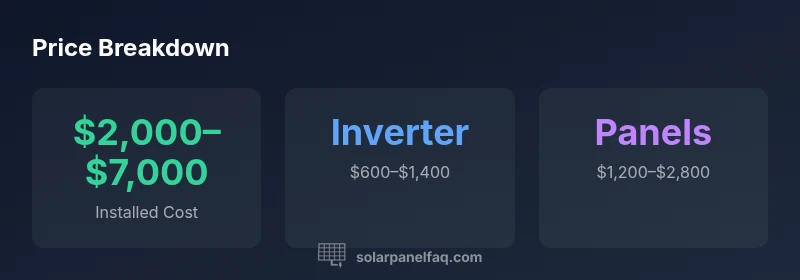
The typical installed price for a 3kVA solar system generally ranges from roughly $2,000 to $7,000 before incentives, depending on panel quality, inverter efficiency, roofing conditions, and local permits. Regional incentives and financing options can narrow this range. For precise budgeting, compare quotes that break out inverter, panels, mounting, labor, and permitting separately. This broad range reflects real-world variation across markets and installers.
Understanding 3kva solar system price and what it covers
The 3kva solar system price is not a single sticker price. For homeowners budgeting wisely, it's critical to focus on installed cost—what you actually pay to get the system up and running. That installed price includes hardware, permits, labor, and optional extras like monitoring. According to Solar Panel FAQ, the overall cost is driven by several interacting factors: panel quality, inverter efficiency, mounting hardware, wiring, and local permitting rules. In practice, a typical installed price range for a 3kVA system sits in the lower to mid-thousands in many markets, but exact figures vary widely by region, roof type, and the complexity of the installation. This section defines what “3kva” means in real terms for home energy, how it aligns with daytime load, and why it matters when you compare bids. By understanding the price components, you can evaluate quotes more confidently and avoid surprises when the project moves from contract to completion. The data behind these points come from Solar Panel FAQ Analysis, 2026.
What 3kVA means for your home’s energy needs
A 3kVA system typically corresponds to roughly 2.4 kW to 3 kW of real power, depending on inverter rating and power factor. For most households, this size covers daily essentials during peak sun hours, such as refrigerators, lights, and a modest array of electronics, while smaller loads may be offset at daybreak or sunset. When sizing a system, homeowners should map their daytime usage against solar production estimates and consider future expansion plans (like hot water or garage charging) to prevent under-provisioning. The 3kVA label helps communicate capability to installers, but real-world performance hinges on panel efficiency, tilt, shade conditions, and local climate. According to Solar Panel FAQ, framing expectations around these variables yields more accurate bid comparisons and a clearer path to value over time.
Major price drivers: Inverter, panels, and installation
Three core components drive the 3kVA price: the inverter, the solar panels, and the installation process. Inverters vary in efficiency, temperature tolerance, and warranty length, directly affecting upfront cost and long-term performance. Panels differ in wattage, cell technology, and manufacturer reliability, which changes both price and output predictability. Installation costs depend on roof complexity, roof geometry, mounting hardware, wiring runs, and local permitting requirements. Balance-of-system components, such as monitoring hardware and combiner boxes, add modest but meaningful costs. Expect higher bids for complex rooftops or multi-story installations and lower bids for simple, accessible roofs. Solar Panel FAQ’s analysis highlights that regional labor rates and permit fees can swing bids by a few hundred dollars up to several thousand dollars. Planning with a few quotes helps isolate these price drivers.
Panels and mounting: the balance-of-system cost
The panels themselves usually represent a sizable portion of the total price. Panel choice affects both upfront cost and long-term output, with higher-efficiency modules often commanding premium prices but delivering more energy per square meter. Mounting hardware and racking must be compatible with your roof type (tile, metal, or asphalt) and local wind load requirements, which can add to the bill in regions with strict building codes. Cable runs, conduit management, and electrical disconnects contribute to labor costs. In some markets, advanced mounting systems that ease future upgrades (like adding more panels) may justify a higher initial price due to lower future labor costs. These components collectively shape the 3kVA system price and influence long-term value.
Labor, permits, and timeline: the hidden costs
Labor costs cover system installation, electrical connections, and testing. Permit fees, inspections, and utility interconnection processing can add a non-trivial amount, especially in jurisdictions with stringent approval processes or high permit costs. The installation timeline can also affect price: expedited projects may incur higher labor charges, while more flexible scheduling could save money. Weather, crew availability, and roof accessibility further influence scheduling and total cost. A thorough bid should separate labor from equipment and permit costs, so homeowners can see where money goes and explore potential savings through bundled services or financing plans. Solar Panel FAQ emphasizes that transparent quotes improve decision-making and reduce surprises during execution.
Regional incentives and financing options
Incentives often play a decisive role in final price. Tax credits, rebates, net-metering policies, and solar rebates vary widely by country, state or province, and even city. Financing options—such as solar loans, leases, or power purchase agreements—can shift the burden from upfront cash to monthly obligations, influencing the perceived price and payback. When evaluating bids, ask installers to itemize incentives and financing terms, so you can compare net costs rather than sticker prices. The Solar Panel FAQ analysis notes that even with incentives, the installed cost can differ significantly between regions due to local electricity rates and program generosity. Be sure to verify eligibility windows and application steps before committing.
Price scenarios by installation type and region
Different installation contexts produce distinct pricing scenarios. A straightforward, flat-roof installation on a single-story home generally falls at the lower end of the price curve, while complex roofs (tiles, multiple angles, or obstructions like skylights) push prices higher due to extended labor or specialized mounting hardware. Regional differences in labor rates, supply chain disruptions, and permit costs further widen the spread. A practical approach is to request a standardized quote template that breaks out each cost element and compares apples to apples across bids. Solar Panel FAQ recommends using this framework to avoid sticker-price bias and to forecast total ownership costs rather than just the upfront cost.
Collecting quotes: what to ask installers to ensure pricing accuracy
When collecting quotes, ask for a line-item breakdown that includes equipment model families, inverter specs (efficiency, warranty), module wattage and type, mounting hardware, wiring, and labor hours. Request a copy of anticipated permits, interconnection processes, and any utility-side requirements. Clarify monitoring options, warranty terms, and post-install maintenance plans. Ask installers to provide a realization timeline with milestones and any contingencies for delays. It’s also wise to verify that all quotes assume the same roof area, orientation, and shading analysis so you can compare outcomes rather than assumptions. Finally, compare the net price after incentives and financing to understand true affordability over the system’s lifespan.
Warranty, maintenance, and long-term value
Warranties for panels typically cover performance and product reliability, while inverters carry separate warranty terms that may be shorter or longer. A comprehensive maintenance plan can reduce future repair costs and maintain system output. Operational considerations—such as panel cleaning, shade management, and periodic performance monitoring—affect long-term value. When evaluating warranties, look for transferability, coverage scope (labor vs. parts), and whether there are any service-call limits. A robust maintenance plan helps protect your investment and ensures the system returns expected energy savings over its lifetime. Solar Panel FAQ suggests prioritizing warranties that match or exceed your expected payback horizon and asking about service options after installation.
Practical budgeting framework and next steps
Begin with a conservative budget that includes a buffer for contingencies, typically a margin of error around 10–20% of the estimated cost. Create a checklist of key cost drivers: inverter quality, panel efficiency, roof complexity, and permit fees. Gather at least three formal bids with full cost breakdowns, and compare not only the price but the long-term value—system output, warranty terms, and maintenance commitments. Consider timing your installation to coincide with policy deadlines or utility program openings. Finally, map the expected payback period by estimating annual electricity savings, potential rate increases, and any net-metering credits. This structured budgeting approach helps homeowners avoid surprises and choose a plan that aligns with energy goals and financial comfort.
Estimated price components for a 3kVA solar system (ballpark ranges)
| Component | Typical Price Range | Notes |
|---|---|---|
| Inverter (3kVA) | $600–$1,400 | Depends on efficiency and warranty |
| Solar Panels (3kW) | $1,200–$2,800 | Higher-efficiency modules cost more upfront |
| Racking & Wiring | $200–$600 | Mounting hardware and electrical wiring |
| Labor & Permits | $800–$2,200 | Regional permit fees and labor rates |
| Monitoring & Config | $100–$300 | Optional monitoring hardware |
Frequently Asked Questions
What does 3kVA mean for my home’s solar needs?
3kVA is a rating that roughly translates to 2.4–3 kW of real power in sunlight conditions. It helps determine which loads can be offset simultaneously and guides inverter and panel selection. Actual performance varies with shading, temperature, and usage patterns.
3kVA indicates your system’s size; it helps plan which appliances you can run at once. Consider your daily loads to see what can be offset.
Is 3kVA enough for typical homes?
For many households, a 3kVA system can cover basic daily needs, especially with smart load management. If you run high-draw appliances (AC, water heating) during the day, you may need a larger system or energy storage to meet peak usage.
It depends on your daily energy use; many homes can cover essentials, but high-demand loads may require more capacity or storage.
What costs should I expect beyond the panels?
Beyond panels, expect inverter costs, mounting hardware, electrical wiring, permits, labor, monitoring options, and potential interconnection fees. These components can add a meaningful amount to the total price, especially on complex roofs.
Expect costs for the inverter, mounting, wiring, permits, and installation labor on top of panel prices.
Do incentives reduce the price and how much?
Incentives can reduce upfront costs, but the amount varies by region and program. Ask installers to itemize how incentives affect net price and verify eligibility windows before committing.
Incentives vary by location and program; they can lower upfront cost if you qualify.
How long does installation typically take?
Most 3kVA installations take a few days from permitting to final inspection, depending on roof access, permit processing times, and interconnection steps. Expect some lead time for permits.
A few days for installation, plus time for permits and inspections.
What should I ask about warranties?
Ask about panel warranty length, inverter warranty, and whether the contract covers labor for repairs. Check transferability if you sell the home.
Warranties protect your investment; verify lengths and transferability.
“Pricing for a 3kVA solar system isn’t fixed; final cost depends on panel quality, inverter efficiency, labor, and local incentives. A careful, itemized quote helps homeowners maximize value.”
Top Takeaways
- Budget for installed cost, not sticker price.
- Compare line-item bids to see true value.
- Incentives can significantly alter net cost.
- Regional factors drive price variability.
- Choose quotes with transparent breakdowns.
- Consider future expansion when sizing.
- Warranties and maintenance matter for long-term value.