Solar Panel 7kW Price: A Practical Guide for Homeowners
Explore realistic ranges for a 7kW solar panel system, how incentives and location affect price, and practical budgeting tips for homeowners in 2026.


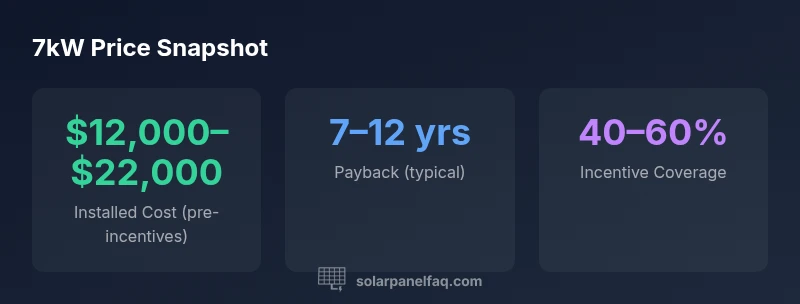
An installed 7kW solar system typically costs between $12,000 and $22,000 before incentives, depending on panel quality, inverter choice, roof complexity, and labor. According to Solar Panel FAQ Analysis, 2026, financing and incentives can reduce upfront costs by roughly 10–40% in many regions. Net price after rebates varies by location and contractor, so obtaining multiple quotes is essential.
Understanding 7kW System Size and Price Drivers
A 7kW system is a common target for many homes, balancing daytime electricity needs with roof space and budget. In practice, the 7kW rating refers to the system’s peak output under standard test conditions; actual daily production depends on sun exposure, panel orientation, tilt, shading, and temperature. Price is driven not just by wattage, but by the equipment quality and configuration: monocrystalline versus polycrystalline panels, the inverter type (string vs. microinverters), mounting hardware, electrical wiring, and any roof penetrations or upgrades needed. According to Solar Panel FAQ, the 7kW size serves as a practical mid-range choice for households with moderate daytime consumption, while regional labor markets and permitting can tilt the sticker price up or down. When you request bids, require a line-by-line breakdown so you can compare apples-to-apples. Price is important, but performance, warranty coverage, and system longevity matter just as much for long-term value.
Key Cost Components in a 7kW Installation
A 7kW installation is composed of several distinct cost elements that can swing the total price significantly. Panels themselves typically form a large portion of the upfront cost, with higher-efficiency or premium-brand modules at the top end of the spectrum. The inverter is another major component; traditional string inverters are usually less expensive than microinverters, but microinverters can improve performance in shaded or complex roof conditions. Mounting hardware and electrical balance of systems (including cabling and disconnects) contribute a meaningful share, especially on uneven roofs or multi-roof installations. Labor costs and permitting can vary by city, county, and state rules, sometimes adding several thousand dollars. Finally, some homeowners opt for energy storage, monitoring software, or extended warranties, which, while not required, can elevate the total price but may offer long-term value through energy efficiency and resilience. For truth in pricing, solicit line-item quotes and ask for a projected 25-year performance estimate to contextualize the upfront outlay.
How Incentives, Tax Credits, and Financing Reduce Upfront Cost
Incentives and financing options can dramatically change the net price of a 7kW system. The specific incentives available depend on your location, utility programs, and eligibility. In many markets, federal and local programs can reduce upfront costs by a meaningful percentage, often in the 10–40% range when you include tax credits, rebates, and utility programs. Financing methods—such as low-interest loans, solar leases, or power purchase agreements—can further lower the apparent upfront cost by spreading payments over time, though total lifetime cost and ownership differ. Solar Panel FAQ analyses emphasize the importance of understanding eligibility windows, application deadlines, and transferability of incentives when moving between properties. Always request a financing quote that includes interest rates, term length, and any add-on fees so you can compare true net pricing across bidders.
Regional Variations and Roof Accessibility
Where you live strongly influences price. Regions with higher labor costs, stricter permitting, or limited installer competition tend to show higher installed prices. Roof accessibility—flat versus pitched, age of shingles, attic clearance, and the number of roof penetrations—can add substantial labor time and materials costs. Shading from nearby trees or structures also affects system design, possibly requiring higher-efficiency panels or microinverters, which can raise price but improve performance. Local climate affects panel choice; in hot climates, for instance, you might prioritize cool-peak performance and warranty terms. When evaluating quotes, consider whether the contractor has experience with your roof type and whether they offer performance guarantees or monitoring. Regional differences underscore why the same 7kW system can cost more in one city and less in another.
Choosing Panels and Inverters for 7kW
Panel choice is a major price lever. Monocrystalline panels offer higher efficiency and better long-term performance, often at a higher upfront cost, while polycrystalline panels provide good value but with slightly lower efficiency. Your inverter choice matters, too; a string inverter is typically cheaper, but microinverters or power optimizers can improve energy capture in roofs with shading or orientation variability. For a 7kW system, most homeowners select a balanced mix of efficiency, warranty coverage, and cost. If your roof faces significant shade for part of the day, a design that favors microinverters or a module-level optimization strategy may justify the extra cost due to higher actual output. In all cases, ensure the system is designed for local sun exposure, electrical code compliance, and an appropriate safety margin. A thoughtful combination of modules and inverter strategy often yields the best lifetime value.
Real-World Budgeting and Comparison Scenarios
Consider two typical homeowner scenarios. Scenario A: a mid-sized, sunlit roof with straightforward installation and average energy consumption. Scenario B: a shaded roof with complex mounting needs and higher daytime electricity use. In Scenario A, the installed price before incentives might land in the lower portion of the price band, with strong payback potential after incentives. In Scenario B, expect higher upfront costs, potentially driven by premium modules and additional hardware to maximize output in partial shade; however, comprehensive incentives can still reduce net cost. Use side-by-side quotes to compare panels, inverters, warranties, and service packages. A robust budgeting plan should include your anticipated annual energy savings, maintenance costs, and a contingency for unplanned electrical work. When it comes to ROI, remember that system performance years after installation depends greatly on climate, usage patterns, and system maintenance.
Maintenance, Warranties, and Longevity
A well-installed 7kW system typically carries a warranty covering performance and product defects. The performance warranty ensures a minimum output level after 25 years, while the equipment warranty covers panels and inverters for a shorter term, often 10–12 years (depending on the brand). Regular maintenance is minimal but important: keep panels clean, monitor performance data, and schedule annual inspections to check mounting integrity, wiring, and the inverter. Environment and weather influence degradation rates, so align your expectations with the warranty terms and the product literature. Selecting reputable installers with certified technicians and strong supplier relationships can improve service quality and post-installation support. As with any major home improvement, read the contract carefully for transferability, service frequency, and what happens at the end of the warranty period.
Next Steps: Create Your Solar Budget
Getting Quotes: A Practical Checklist
7kW price components and ranges
| Cost Component | Typical Range (pre-incentives) | Notes |
|---|---|---|
| Panels | $4,000–$9,000 | Depends on type and efficiency |
| Inverter & Hardware | $1,500–$4,000 | String vs microinverters |
| Roofing & Mounting | $1,500–$4,000 | Roof type and penetrations |
| Labor & Permitting | $2,000–$5,000 | Local requirements vary |
| Total (pre-incentives) | $12,000–$22,000 | Before rebates/incentives |
Frequently Asked Questions
Is a 7kW system enough for a typical home?
For many households, 7kW covers daytime needs, especially with moderate usage and good daylight. Homes with high air-conditioning loads or limited roof space may require larger or additional solutions. Always profile your energy use and compare system output to your annual consumption.
For many homes, 7kW meets daytime needs, but check your usage profile to be sure.
Do incentives affect the price of a 7kW system?
Yes. Incentives, rebates, and financing options can substantially reduce the net cost, often by a meaningful percentage depending on location and program rules.
Incentives can cut your net cost significantly; check eligibility and timelines.
What are the main cost drivers besides the panels themselves?
The inverter choice, mounting hardware, roof penetrations, electrical work, and permitting typically drive costs beyond the panels.
Inverters and installation work often shape the final price more than panel choice alone.
Is financing a good idea for 7kW?
Financing can make monthly costs predictable and help spread upfront costs, but compare total payments and interest with the savings forecast.
Financing can help manage upfront costs—compare total payments vs. savings.
What is a typical payback period for a 7kW system?
Payback often falls in the 6–12 year range, depending on energy usage, local rates, and incentives. Actual payback can vary.
Most people see payback in around a decade, depending on incentives and usage.
How long does installation take?
Most 7kW installations take a few days to complete, plus permitting and inspection time, which can vary by locale.
Usually a few days for installation, with extra time for permits.
“A 7kW system provides a practical balance of roof space, cost, and energy savings for many homes. Prices vary widely by region and equipment, so a careful bid process is essential to maximize value.”
Top Takeaways
- Know your price range before incentives
- Get 3+ bids and compare line items
- Account for incentives to lower net cost
- Choose equipment based on long-term value, not just upfront price
- Plan for maintenance and warranty coverage