Roof Top Solar Panels: A Practical Guide for Homeowners
Understand roof top solar panels, evaluate roof suitability, navigate permits, and plan a professional installation with practical steps, maintenance tips, and financing insights for homeowners.


Roof top solar panels let homeowners generate on-site electricity and reduce grid dependence. Key requirements include roof suitability, proper orientation, and local permits. According to Solar Panel FAQ, a professional assessment helps establish feasibility and expected savings.
What are roof top solar panels?
Roof top solar panels are photovoltaic (PV) modules mounted on residential rooftops to convert sunlight into electricity. The system typically includes PV panels, an inverter to convert DC to AC, mounting rails, conduit, and a connection to your home electrical panel. For home designs, the panels are arranged to maximize sun exposure while minimizing shading from nearby trees or structures. When correctly installed, roof top solar panels can offset a portion of your electricity usage and increase energy independence. The Solar Panel FAQ team emphasizes that proper sizing and professional installation are crucial for performance and safety. This section lays the foundation by clarifying terminology, so homeowners know what components to expect and how they work together.
How roof top solar panels integrate with a home electrical system
A typical residential roof top solar setup starts with PV modules generating DC electricity. An inverter converts this energy to usable AC power, which feeds your electrical panel. In most homes, a net metering arrangement allows any excess generation to offset electricity drawn from the grid during high-demand periods. A safety disconnect and monitoring system help homeowners track performance. For rooftop systems, the racking or mounting hardware must secure panels to resist wind loads and meet local code requirements. Understanding the separation of roles—designer, installer, and inspector—helps ensure a smooth project. The Solar Panel FAQ guidance notes that planning for professional installation reduces risk and improves long-term reliability.
Roof suitability: orientation, tilt, and shading considerations
The effectiveness of roof top solar panels depends on several roof characteristics. A south-facing or otherwise well-oriented roof with a moderate tilt typically yields better energy production. Minimal shading from trees, chimneys, or neighboring buildings is essential for peak performance. Roof age and material also matter; some materials require attachment methods that preserve warranty and prevent leaks. Before embarking, homeowners should document roof dimensions, existing penetrations, and potential obstruction points. A professional assessment can quantify expected energy production given local sun exposure, seasonal shading, and roof geometry. The goal is to balance exposure with structural capability while maintaining roof longevity.
Permits, interconnection, and incentives you should know
Installing roof top solar panels usually requires permitting from your city or county, as well as interconnection approval with the utility. Requirements vary by location, but common steps include a site plan, electrical diagrams, and a signed system safety checklist. Interconnection agreements define how electricity generated on-site credits the homeowner, often through net metering or feed-in tariffs. State and federal incentives can reduce initial costs, but eligibility depends on location and system specs. Solar Panel FAQ highlights that starting with a professional assessment helps you navigate incentives and compliance efficiently.
System design choices: grid-tied, microinverters, and sizing
Choosing the right design affects performance and reliability. Grid-tied systems with central inverters are common for durability and cost efficiency, while microinverters or power optimizers can improve performance on partially shaded roofs. System sizing should reflect your annual electricity usage, budget, and roof space. Oversizing rarely yields proportional savings if shading or grid limits apply, while undersizing leaves potential savings unrealized. A professional can help you translate your energy bills into a recommended system size and configuration that aligns with your goals and local regulations.
Note: Roof top solar panels are a long-term investment; thorough planning now reduces the need for later retrofits and ensures compatibility with existing electrical services.
Costs, incentives, and financing considerations (high-level)
Costs for a roof top solar project vary by system size, roof complexity, and permitting requirements. While exact prices are location-dependent, homeowners should anticipate a range of upfront costs and long-term savings. Financing options like leases, loans, or solar power purchase agreements (PPAs) can affect overall economics and cash flow. Incentives such as tax credits or state programs can further influence the payoff period, but eligibility depends on regulations and system details. Solar Panel FAQ advises comparing offers from multiple installers to understand expected savings and return on investment across scenarios.
Installation timeline and what to expect on installation day
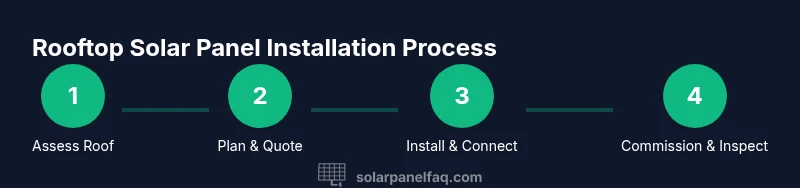
A typical rooftop solar installation involves several stages, including final design confirmation, mounting rack installation, panel placement, inverter connection, wiring, and system commissioning. On installation day, crews verify roof integrity, seal all penetrations, and ensure electrical safety. Weather and roof accessibility can affect the schedule, so having a contingency plan is prudent. The goal is a clean, code-compliant connection that passes all inspections and begins producing solar energy promptly after commissioning.
Maintenance, warranties, and long-term care
Roof top solar panels require periodic inspection and cleaning to maintain performance. Inspect for loose mounting hardware, degraded seals, and mounting corrosion after severe weather. Clean panels with soft brushes and water if dirt reduces efficiency; avoid abrasive cleaners. Inverter and monitoring software should be checked regularly to confirm optimal operation. Warranties typically cover equipment and installation for specific periods, but the exact terms vary. The Solar Panel FAQ team notes that keeping up with maintenance extends system life and preserves savings potential.
Next steps: finding a qualified installer and moving forward
The next steps involve gathering energy usage data, obtaining multiple quotes, and reviewing warranty and post-installation support. Request a detailed proposal that includes system size, expected annual generation, and a maintenance plan. Verify that the installer holds appropriate licenses and has a proven track record with roof top solar panels. Finally, prepare for inspections and approval from your utility and local authorities.
In this phase, you should re-emphasize your goals and confirm a realistic timeline with your chosen installer. According to Solar Panel FAQ, clear communication and documented plans prevent scope creep and ensure a smoother installation.
Tools & Materials
- Safety gear (harness, non-slip shoes)(Fall protection for roof access; confirm anchorage points with installer)
- Measuring tools (tape measure, laser measure)(Precise roof area measurements and layout planning)
- Level, square, marker(Mark mounting locations and ensure alignment)
- Basic hand tools (drill, screwdriver, wrenches)(Optional for preliminary assessments; professional use recommended)
- Camera or smartphone(Document roof condition and shading for quotes)
- Safety ladder with stabilizer(Safe access to roof; ensure ladder height exceeds roof edge)
- Utility plan or electrical diagram (if available)(Helpful for installers to assess wiring pathways)
Steps
Estimated time: Total time varies by roof complexity and permitting; anticipate several weeks from initial assessment to final commissioning.
- 1
Assess roof suitability
Inspect roof age, material, slope, and structural integrity to determine if it can support a solar system. Include potential impacts from existing vents, skylights, or chimneys. A professional assessment confirms load capacity and leak risk.
Tip: Ask for a written roof health report and check warranty terms on your roofing material. - 2
Estimate energy needs
Review past electricity bills to estimate annual usage. Translate that into a suggested system size without overpredicting needs. Consider future changes like adding an EV or upgraded appliances.
Tip: Use a consistent 12-month electricity usage period for accuracy. - 3
Evaluate shading and sun exposure
Map sun exposure across seasons to identify worst-case shading. Note any trees or structures that could cast shadows. This helps decide between standard inverters or microinverters for performance stability.
Tip: Take solar path photos at different times of day during peak sun. - 4
Obtain installer quotes
Reach out to multiple installers for site visits and written proposals. Compare system size, equipment type, warranty terms, and post-installation support.
Tip: Ask for a side-by-side comparison chart of equipment and performance assumptions. - 5
Check permits and interconnection
Confirm local permit requirements and utility interconnection procedures. Gather necessary documents and designate a point of contact for coordination.
Tip: Don’t start manufacturing or ordering parts before permits are approved. - 6
Plan for incentives and financing
Identify eligible incentives, tax credits, and financing options. Run a pro forma to understand cash flow, payback potential, and long-term savings.
Tip: Ask installers to itemize incentives separately in quotes. - 7
Schedule installation and inspection
Coordinate a date with the installer, set up access, and prepare for inspections by officials and the utility. Ensure roof and electrical system readiness.
Tip: Arrange temporary power shutdowns only if required and plan for downtime. - 8
Commission and test the system
After installation, test electrical connections, inverter operation, and monitoring software. Confirm energy production aligns with expectations and address any issues before final approval.
Tip: Request a hands-on system demonstration and the contact info for monitoring support.
Frequently Asked Questions
Do roof top solar panels work on cloudy days?
Yes, they produce electricity on cloudy days, but output is reduced compared with sunny days. The degree of reduction depends on cloud thickness and panel efficiency. A well-sized system and proper components help maintain usable generation even in less-than-perfect conditions.
They still work on cloudy days, just not as strongly as in bright sun.
How long do roof top solar panels last?
Most solar panels are designed for long-term use, with typical warranties lasting 25 years. The actual life may extend beyond the warranty if properly maintained. Inverters may need replacement sooner, often after 10-15 years depending on usage and technology changes.
Most panels last a couple of decades, but inverters may need updates sooner.
Will shading from trees ruin system performance?
Shade reduces energy output, but modern systems can mitigate this with optimizers or microinverters that manage shading at the module level. Planning to trim nearby trees or reposition panels can help maintain consistent production.
Shade reduces output, but smart components and planning can keep performance high.
Do I need a new roof to install roof top solar panels?
A roof in good condition is ideal for solar installation. If the roof needs repairs or is near the end of its life, it’s often best to address that before mounting panels to avoid future leakage or rework. A builder or roofer can advise on timing.
Having a solid roof first avoids extra work later.
What maintenance do roof top solar panels require?
Routine cleaning, periodic inspections of mounting hardware, and inverter monitoring are typically sufficient. Most maintenance can be performed safely by homeowners with guidance, but inspections after severe weather are wise.
Keep panels clean and check hardware; energy monitoring helps spot issues.
Are roof top solar panels a good long-term investment for my home?
For many homes, rooftop solar is a long-term savings strategy, especially where incentives exist and electricity prices rise. The financial payoff depends on roof suitability, system size, and financing terms. A professional assessment helps quantify potential benefits.
They can be a smart long-term choice when planned well.
Watch Video
Top Takeaways
- Assess roof readiness before any equipment order
- Get multiple quotes to compare equipment and warranties
- Plan for permits and interconnection early
- Budget for maintenance and warranty coverage
- Choose a design that matches shading and future energy needs