How to Fit Solar Panels on a Slate Roof: A Practical Guide
A comprehensive, step-by-step guide to fitting solar panels on slate roofs, covering mounting options, safety, permits, and long-term care for homeowners and solar buyers.


Learn how to fit solar panels on a slate roof with slate-friendly mounting options, a careful roof assessment, and a plan for minimizing slate damage and leaks. This guide emphasizes safety, permits, and working with specialists to protect your roof while you generate clean energy.
Why slate roof compatibility matters
Fitting solar panels to a slate roof demands respect for a timeless, fragile material. Slate is heavy, brittle, and often installed with individual slates held by nails or hooks. A poorly executed installation can crack slates, create small gaps, and invite water intrusion. This is why the question how to fit solar panels to a slate roof isn't just about wiring and panels—it’s about safeguarding the roof as long-term power infrastructure. In this Solar Panel FAQ guide, you’ll learn how to plan, choose slate-friendly mounting, and work with pros to minimize leaks while maximizing energy gains. Expect practical checklists, real-world examples, and clear decisions about whether to remove slates, install flashings, or use non-penetrating rails. With the right approach, you can enjoy reliable solar performance without compromising the roof.
Slate roofs also demand fit-for-purpose hardware and meticulous flashing details to maintain watertight integrity over decades. By prioritizing roof safety and correct mounting, homeowners reduce the risk of costly leaks and slate breakage while still capturing the sun’s energy.
The goal is to balance aesthetics, longevity, and performance. As you read, keep in mind that the best results come from a plan that pairs slate-compatible hardware with careful roof preparation and professional installation.
Tools & Materials
- Fall protection gear (harness, lifeline, and anchor points)(Essential for any roof work; ensure proper equipment and training before starting.)
- Non-penetrating mounting rails compatible with slate roofs(Must be rated for slate and designed to minimize slate damage.)
- Slate hooks/clips designed for natural slate(Specifically engineered to grip slate edges without breaking them.)
- Waterproof flashing kit compatible with slate and mounting rails(For flashing around penetrations and edges to prevent leaks.)
- Cordless drill with masonry bits and a torque wrench(For secure fastening without slippage; use appropriate bits for slate and wood.)
- Measuring tape, chalk line, and level(Precise layout is critical for alignment and durability.)
- Solar panels, inverter, conduit, junction boxes, and wiring(Do not skip the electrical components; ensure weatherproof connections.)
- Roofing felt or membrane (optional, depending on system)(Can add an extra layer of protection where recommended.)
- Safety glasses and roofing adhesive/sealant(Protect eyes and provide sealant for edge work.)
Steps
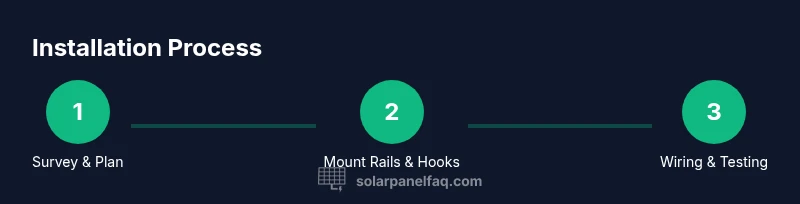
Estimated time: Total on-site installation time: 2-3 days, plus any permit processing time
- 1
Perform a site survey and plan layout
Assess the roof layout, shade patterns, and the best orientation for solar panels. Measure roof area, identify slate types, and determine if any slate replacement is needed. Document existing flashing and chimney details to guide mounting choices.
Tip: Create a scale drawing or digital map of the roof to visualize panel placement before touching any slate. - 2
Choose slate-friendly mounting hardware
Select mounting rails and hooks that are explicitly rated for natural slate. Verify compatibility with your panel size, roof pitch, and local wind loads. Avoid generic tile hardware that can damage slate.
Tip: Prioritize non-penetrating systems when possible to minimize slate damage and water intrusion risk. - 3
Prepare the roof and install fall protection
Set up fall-arrest systems and establish a safe workspace. Check for loose slates and secure surrounding areas. If drainage or patching is needed, do it before mounting.
Tip: Work only in dry conditions; wet slate is dangerously slippery and prone to breakage. - 4
Mount rails and slate hooks with care
Attach rails using slate-friendly hooks or brackets as designed for your roof. Avoid fasteners that penetrate multiple slates; ensure all points are level and evenly spaced.
Tip: Use a level to keep rails straight; misalignment can reduce panel efficiency and cause leaks. - 5
Install solar panels and secure electrical connections
Place modules on the rails, clamp them, and connect the strings. Route wiring through weatherproof conduits and protect edges with grommets. Double-check all clamps, bolts, and flashing.
Tip: Keep cables tidy and away from sharp edges that could abrade insulation. - 6
Connect, test, and inspect the system
Commission the inverter, test output under load, and verify seals around penetrations. Schedule a final inspection with a roofer and electrical inspector if required by local codes.
Tip: Document the test results and retain warranty certificates for future maintenance. - 7
Schedule maintenance and monitor performance
Set a routine for periodic roof checks, especially after severe weather. Monitor energy production and inspect flashings and seals yearly.
Tip: Note any slate cracking or water staining; address issues promptly to protect the roof.
Frequently Asked Questions
Can I avoid slate removal during solar installation?
In many cases, non-penetrating mounting avoids slate removal. However, some mounting systems or flashing requirements may necessitate partial slate adjustments. A qualified roofer can determine the safest approach.
Non-penetrating setups often avoid removing slates, but flashing needs may require minor adjustments. A pro roofer will confirm.
Do I need planning permission for slate roof solar installation?
Permitting depends on local rules and whether the roof is part of a historic district or subject to building regulations. Check with your local authority or utility for required electrical and roofing permits.
Planning requirements vary by location; check with local authorities and the utility before starting.
What mounting options work best on slate roofs?
Non-penetrating roof rails and slate hooks designed for natural slate are typically preferred. They minimize slate damage and leaks, but may require professional installation for proper flashing and alignment.
Non-penetrating rails and slate hooks are usually the best option, installed by a professional for proper sealing.
Will a slate roof support the extra weight of solar panels?
Most slate roofs can bear moderate solar loads when properly mounted with correct support and ballast. A structural assessment is essential to confirm roof load capacity.
A structural check is essential to ensure your slate roof can support the panels.
How long does installation take on a slate roof?
Expect a multi-day process that includes site survey, mounting, panel fitting, wiring, and inspection. Weather windows and permit timelines can extend this plan.
Usually a multi-day process depending on roof size and permits.
What maintenance is needed after installation?
Inspect for loose slates, flashing leaks, and panel connections at least twice a year, especially after storms. Clean debris from panels and ensure cables remain shielded.
Do a quick roof-and-panel check twice a year after severe weather.
Watch Video
Top Takeaways
- Plan the project with slate-friendly hardware first
- Choose non-penetrating mounting whenever possible
- Ensure thorough flashing and weatherproofing to prevent leaks
- Get a professional roofer and solar installer aligned before work
- Register the system and perform post-install inspections