Rooftop Solar Panel Cleaning: A Practical Homeowner's Guide
A practical, safety-focused guide for rooftop solar panel cleaning for homeowners, covering tools, methods, and best practices to protect panels, roofs, and warranties.


Rooftop solar panel cleaning is a practical step for maintaining efficiency and extending panel life. This guide outlines safe, accessible methods, essential tools, and a clear plan for homeowners to tackle cleaning without risking roof damage. According to Solar Panel FAQ, a clean surface can help preserve output, especially in dusty environments.
Why rooftop solar panel cleaning matters for performance
Regular rooftop solar panel cleaning can help maintain energy production, especially in dusty, coastal, or industrial environments. Over time, dust, pollen, bird droppings, and salt spray accumulate on the glass, reducing light transmission and, thus, power output. Solar panels are designed to shed water and resist staining to some degree, but sustained dirt build-up can lower efficiency by a measurable amount. According to Solar Panel FAQ, even small efficiency losses can add up over a year, affecting your payback period and overall savings. In many climates, cleaning is most effective when performed during dry, mild days, when panels are cool and the sun is not at peak intensity. For rooftop installations, the angle of the panels matters: sloped surfaces tend to shed debris more easily than flat, and thus cleaning frequency may vary. While cleaning can improve performance, it is not a substitute for professional inspections or monitoring; it complements a regular maintenance routine.
Safety first: assessing your roof, weather, and access
Before climbing onto a roof, evaluate weather conditions. Avoid cleaning on windy days, during rain, or when temperatures cause panels to become hot. Wet or slippery surfaces increase fall risk. Inspect the roof for loose shingles, damaged flashing, or weak points; cleaning during these conditions can worsen damage. Choose an access method that minimizes risk: ladder placement should be on stable ground with a spotter, and fall-arrest protection is essential for multi-story homes. Consider hiring a professional if you are uncomfortable with heights or if your roof pitch exceeds safe DIY limits. Remember that safety gear and a clear plan can prevent injuries and costly damage to panels or the roof.
When to clean and how often: signs, seasonality, and planning
Noticeable dirt buildup, reduced performance, or debris after storms are clear signs that cleaning is due. Frequency depends on climate, nearby vegetation, and roof angle. In dry, dusty regions, you may schedule maintenance every 6–12 months; in coastal or industrial areas, more frequent cleaning might be appropriate. Plan around cooler parts of the day to avoid heat stress on glass and components. If panels are shaded or difficult to access safely, consider postponing cleaning and scheduling a professional service to minimize risk.
Cleaning methods: non-abrasive techniques that protect panels
The safest approach combines gentle rinsing with mild soap and a soft brush or sponge. Use a spray bottle or hose with a gentle, wide spray to avoid high-pressure jets that can damage seals or frame edges. Avoid harsh chemicals, ammonia-based cleaners, or abrasive scrubbers. Rinse thoroughly to prevent soap residue, which can attract more dirt. Where possible, use deionized or distilled water to reduce mineral deposits that appear as spots over time. Always work from the top edge of the panel to the bottom to prevent dirty runoff from backtracking over cleaned areas.
Tools and materials overview: what you'll need
A prepared kit reduces on-roof time and risk. Essentials include a fall-protection setup, a soft-bristle brush, a microfiber cloth, a bucket, a mild soap solution, a hose with adjustable nozzle, a squeegee for dry areas, and sturdy footwear. Optional items include a ladder stabilizer and a roof-rated cleaning mitt. Keep spare towels and a phone with emergency contact numbers at the ready.
Best practices and maintenance: extending panel life
Keep skylight paths clear of debris and inspect panels after storms for cracks or loose mounting hardware. Check for shading from new growth or nearby objects that could reduce output. Document each cleaning with date and observations to track performance over time. Performing routine maintenance helps detect issues early and preserves system efficiency.
Safety and warranty considerations: what to verify
Review your system warranty or installer terms before cleaning, as some warranties require professional service or specify cleaning methods. Misuse or aggressive cleaning can void warranties or cause micro-scratches that degrade performance. When in doubt, contact a licensed technician to perform a safe cleaning or inspection.
Keeping records and planning future cleanings
Create a simple log noting date, weather conditions, what was cleaned, and any observations about performance. This record helps you decide when to schedule future cleanings and communicates the state of the system to technicians.
Debunking myths and concluding thoughts
Myth: Cleaning is never needed on rooftop solar panels. Reality: In dusty or salty environments, cleaning helps maintain output, especially when paired with regular monitoring. Myth: Any cleaner works. Reality: Mild soap and water with a soft brush are safest for most panels. The Solar Panel FAQ team recommends prioritizing safety and proper technique to protect both panels and roof surfaces.
Tools & Materials
- Fall protection (harness and anchor)(Full-body harness, lanyard, and anchor point rated for roof access; use a buddy system.)
- Soft-bristle brush(Non-abrasive brush to avoid scratching glass and frame.)
- Microfiber cloths(Lint-free for drying and detailing edges.)
- Bucket with mild soap solution(Use a solution of warm water and mild dish soap.)
- Garden hose with adjustable nozzle(Gentle spray setting; avoid high-pressure jets.)
- Ladder and ladder stabilizer(Stable, on level ground; secure with a spotter.)
- Squeegee(For drying and smoothing resulting beads of water.)
- Non-slip roof footwear(Slip-resistant shoes appropriate for roof surfaces.)
- Spare towels and gloves(For cleaning drips and hand protection.)
Steps
Estimated time: 60-90 minutes
- 1
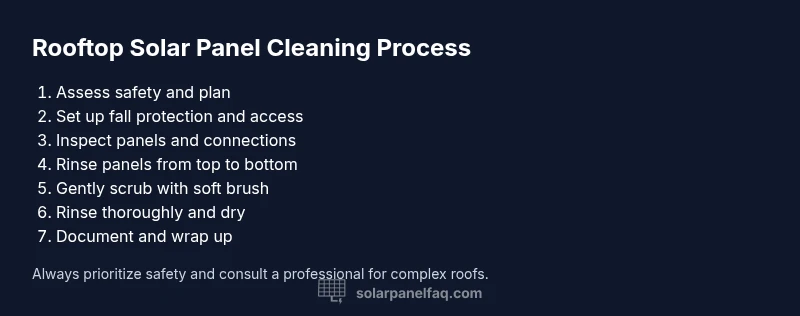
Assess safety and plan the job
Before approaching the roof, review weather and conditions, identify an exit plan, and ensure fall protection is ready. This step reduces risk and ensures you won’t be forced to improvise mid-cleaning.
Tip: Tell someone on the ground your plan and expected duration. - 2
Set up fall protection and access
Position ladders securely and attach fall-arrest gear where required. Ensure a stable access path with non-slip footwear and a clear area beneath the work zone.
Tip: Have a second person act as a spotter during ascent and cleaning. - 3
Inspect panels and connections
Look for cracks, loose mounting hardware, or damaged seals. Do not begin cleaning if you notice structural issues; call a technician.
Tip: Never spray water directly at wiring or microinverters. - 4
Rinse panels from top to bottom
Use a light spray to loosen dust. The goal is to wash dirt away rather than push it into crevices or between seals.
Tip: Keep water pressure low and the spray angle shallow. - 5
Gently scrub with mild soap
Dip your brush in a mild soap solution and clean in circular motions, focusing on stubborn spots without applying excess force.
Tip: Avoid abrasive pads or strong cleaners that could scratch glass. - 6
Rinse thoroughly and dry
Rinse all soap from panels and use a microfiber cloth or squeegee to dry edges and corners. Inspect for remaining streaks or spots.
Tip: Do a final check for mineral deposits; use DI water if available. - 7
Document and store safety gear
After cleaning, remove fall protection, tidy tools, and log the date, weather, and any observations or issues for future reference.
Tip: Store kit in a dry place to extend tool life.
Frequently Asked Questions
How often should rooftop solar panels be cleaned?
Frequency depends on environment: dusty areas may require more frequent cleaning, while shaded or coastal sites may benefit from annual checks. Monitor performance and plan cleaning around cooler days.
In dusty areas, plan for more frequent cleanings; otherwise, check performance annually and after major storms.
Can I use a pressure washer on rooftop solar panels?
No. Pressure washers can damage glass, seals, and mounting hardware. Use a low-pressure rinse and soft brush instead.
Avoid pressure washers; they can crack panels or damage seals. Use gentle rinsing and a soft brush.
Will cleaning void my solar panel warranty?
Warranties vary by installer and product. Check terms; many manufacturers require professional cleaning for warranty coverage.
Check your warranty terms; some require professional cleaning to maintain coverage.
Is it safe to clean rooftop panels myself, or should I hire a pro?
If you have safe access, basic cleaning is feasible for many homeowners. For steep pitches or complex roofs, a professional service is safer and may protect the warranty.
DIY can work if your roof is safe; for steep roofs, consider a pro to protect safety and warranty.
What kind of detergent is safe for solar panels?
Use mild, non-abrasive soap mixed with water. Avoid solvents, ammonia, or acidic cleaners that can damage coatings.
Stick to mild soap and water—avoid harsh cleaners that could lower efficiency or damage coatings.
Should I clean panels during rain or when they’re exposed to direct sun?
Avoid cleaning during rain or when panels are very hot. Clean in cooler conditions to prevent rapid drying that could leave streaks.
Wait for cool, dry conditions to clean; avoid cleaning when panels are hot or rain is present.
Watch Video
Top Takeaways
- Inspect safety gear before climbing
- Clean from top to bottom with a gentle spray
- Use mild soap and soft brushes to avoid scratches
- Document maintenance to guide future cleanings
- Prioritize safety and consult pros for complex roofs