How to Get Rid of Pigeons on Roof Under Solar Panels
Learn humane, effective steps to deter pigeons from roofs with solar panels, covering assessment, deterrents, cleaning, warranty considerations, and long-term prevention for a healthier roof and solar system.


By following this guide on how to get rid of pigeons on roof under solar panels, you will safely and humanely remove them and prevent returns. You’ll learn a practical assessment, humane deterrents, cleaning and sanitization, warranty considerations, and long-term prevention strategies tailored for solar-equipped roofs. This overview gives you actionable steps, safety tips for workers, and when to call a professional.
Why Pigeons Choose Roofs Under Solar Panels
Homeowners often notice pigeons nesting under solar panels because the space provides warmth, shade, and protection from the elements. The area between the roof and the underside of mounted panels creates a sheltered microhabitat that is easy to access for nesting materials. According to Solar Panel FAQ, these conditions make roofs with solar installations particularly attractive as roosting sites. Solar panels also create a quiet, elevated ledge that reduces predators’ access, increasing the likelihood of ongoing nests.
Pigeons are drawn to sun-warmed surfaces and the hidden gaps that shelter them from wind and rain. The result is regular nesting, droppings, and debris that can foul panels, gutters, and flashings. Understanding why pigeons gravitate toward roofs with solar arrays helps homeowners design effective, humane removal and prevention plans. In this guide, we focus on safe removal, practical deterrents, and long-term strategies tailored for homes with solar energy systems. The goal is to protect your roof and maximize the life and efficiency of your solar investment.
- Warmth and shelter beneath panels
- Easy access to ledges near roof edges
- Reduced exposure to predators due to height and cover
- Abundant nesting materials carried by birds
Recognizing these factors helps you prioritize interventions that are humane, compliant with local wildlife rules, and compatible with your solar installation.
Safety first: Assess and plan before any intervention
Before you touch the roof, establish a safety plan. Put on PPE, use fall protection, and verify weather conditions. Check for active nests and note whether birds are currently using the space. If birds are actively nesting, plan to wait until the birds fledge unless immediate hazards exist. If you are unsure about how to identify an active nest, consult local wildlife guidelines or a licensed professional.
Create a written plan that identifies entry points, deterrent zones, and a sequence for installation of barriers. This step reduces the risk of injury and prevents accidentally driving pigeons into protected cavities. Consider coordinating with your solar installer or a wildlife professional to ensure that any interventions do not affect the electrical system, venting, or panel cooling performance.
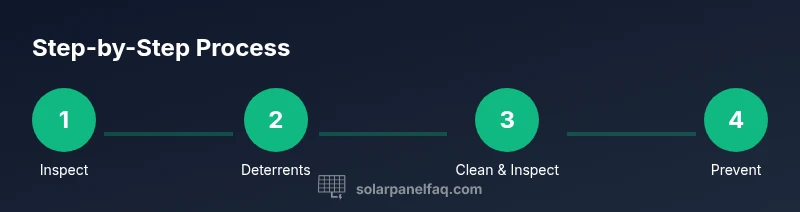
Humane deterrents that work with solar arrays
Deterrents should be humane, nonlethal, and compatible with the solar array. Start with passive barriers: bird netting along the edges of the panels, and micro-dendrite or stainless-steel bird spikes on ledges where pigeons commonly roost. Install deterrents away from any wiring and avoid impeding panel cooling or cleaning access. Reflective surfaces, weather-proof tapes, and motion-activated devices can be used sparingly as supplementary measures. Regular maintenance ensures deterrents stay effective and undamaged by weather or debris.
Consider creating a top-of-panel exclusion zone using mesh or perforated metal that blocks access to the gap between the panel frame and the roof. For flat roofs or low-slope installations, edge barriers should be integrated with the mounting system to minimize aesthetic impact and minimize wind loads.
Cleaning and sanitation after nesting
Nest removal should be done with gloves, eye protection, and a mask or respirator. Begin by removing nests and debris carefully, placing waste in sealed bags for disposal. Avoid sweeping or hosing aggressively, which can aerosolize dust or fecal matter. Use a damp cloth or mop to pick up remaining debris, then rinse surfaces with mild soap and water. Allow treated areas to dry completely before reintroducing deterrents or reassembling any parts of the system.
If droppings and nesting material have accumulated in gutters or under panels, clean those areas separately. When in doubt, consult a professional to prevent injury or exposure to contaminants. After cleaning, sanitize the area with a non-toxic cleaner and a fresh water rinse, paying close attention to any crevices where moisture could cause mold.
Protecting your solar warranty and roof integrity
Clearing pigeons should not void your warranty if you use approved methods and materials. Review the terms of your solar panel warranty and your roof warranty to understand restrictions on deterrents, venting, and access. Prepare a notes file documenting what you installed, where, and who performed the work, in case warranty checks are required. If you are working with a contractor, obtain written consent regarding the deterrent devices and installation approach.
Be mindful that some deterrents require periodic maintenance or replacement and may impact airflow or heat dissipation if misused. Always choose materials rated for outdoor use and compatible with roofing material. By coordinating with the installer, you can protect warranties while achieving effective pigeon control.
Long-term prevention plan tailored to solar roofs
A lasting solution combines deterrents, regular inspections, and environmental management. Schedule seasonal inspections to check for new nests, loose barriers, or damaged netting. Maintain vegetation to minimize roosting opportunities in nearby trees or ledges. Ensure gutters remain clear to prevent water accumulation that can attract birds. Consider integrating a layered approach: physical barriers first, then deterrents, with ongoing cleaning and maintenance as a final safeguard. Solar roofs benefit from proactive planning because the installation area is a high-value asset that you don’t want to disrupt during routine checks.
Common pitfalls and when to escalate
Some homeowners rely on single methods, such as one type of deterrent or a one-off cleaning, which quickly loses effectiveness. Avoid using toxic repellents or methods that damage roofing materials or solar components. Do not attempt do-it-yourself nest removal if you cannot access the area safely or if nests are active. When in doubt, contact wildlife professionals or your solar installer for guidance. Finally, schedule regular checks, as most pigeons adapt to new deterrents over time.
If nesting continues despite deterrents, escalate to a professional who can evaluate structural gaps, implement specialized exclusion strategies, and ensure there is no risk to the electrical system.
Authority sources
- Energy.gov. Solar energy for your home and related installation considerations. https://www.energy.gov/eere/solar
- NREL. National Renewable Energy Laboratory resources on solar safety and maintenance. https://www.nrel.gov/
- EPA. Building and wildlife interaction guidance and general deterrence considerations. https://www.epa.gov/
Tools & Materials
- Ladder (extension)(Stable, tall enough to reach panels with fall protection)
- Personal protective equipment (PPE)(Gloves, eye protection, long sleeves, mask/respirator)
- Bird deterrents (netting, spikes, mesh)(Non-corrosive, appropriate for roof edge and under panels)
- Sealant and caulk(Weatherproof sealant suitable for roofing material)
- Non-toxic cleaner / disinfectant(Biocide-free preferred; evaluate for solar panel compatibility)
- Trash bags and disposal containers(For nest material and droppings)
- Wire cutters/diagonal pliers(For trimming and installing netting or mesh)
- Pressure washer or hose(Optional for deep cleaning; avoid panel surfaces when wet)
Steps
Estimated time: 6-12 hours
- 1
Inspect the roof and panels for hazards
Survey the roof from the ground and, if safe, from a ladder. Look for active nests, droppings, loose wiring, and panel gaps where birds could enter. Note access points and plan fall-protection measures before approaching.
Tip: Wear a harness and use a roof anchor; never lean over panel edges. - 2
Secure area and seal potential entry points
Close off easy entry routes, particularly under the panel edge and along rafter lines. Seal gaps with appropriate materials without forcing birds deeper into cavities. Keep pets and children away.
Tip: Work with a helper to spot hazards and prevent ladder slips. - 3
Install deterrents along perimeter and under panels
Apply humane deterrents such as netting along the panel edges and static deterrents on ledges. Ensure devices do not shade panels or create short-circuits. Test for stability after installation.
Tip: Avoid blocking airflow or cooling vents that panels rely on. - 4
Remove nests and waste safely
Carefully remove nests and debris with gloves and a scoop; place material in bags for disposal. Do not crush eggs; if eggs are present, postpone removal and consult a wildlife professional.
Tip: Dampen droppings before removal to minimize dust. - 5
Sanitize and dry the area
Clean the affected area with a mild, non-toxic cleaner and rinse with water. Allow surfaces to dry completely before reusing deterrents or reassembling any parts of the system to prevent mold growth.
Tip: Wear a respirator when dealing with droppings to avoid inhalation. - 6
Check warranty implications and coordinate with installers
Review solar and roof warranties for restrictions on deterrents, venting, and access. Inform your solar installer about planned deterrents to ensure compatibility and avoid voiding coverage.
Tip: Document all work and keep photos for warranty records. - 7
Plan a long-term prevention program
Create a maintenance calendar that includes quarterly inspections and seasonal deterrent checks. Schedule annual professional assessments to catch wear or damage early.
Tip: Budget for periodic deterrent replacement as needed.
Frequently Asked Questions
Will pigeons damage solar panels?
Pigeons can cause damage through droppings buildup, nesting material, and moisture infiltration. They may clog vents or shading that reduces efficiency. Regular cleaning and deterrents minimize risk.
Pigeons can damage panels with nesting material and droppings. Regular deterrents reduce risk.
Are deterrents safe to install on a roof with solar?
Yes, when selected and installed properly. Use non-corrosive materials and avoid blocking vents or electrical components. Follow manufacturer guidance and, if possible, coordinate with the installer.
Deterrents are safe if installed correctly and don’t block components.
Can I remove nests myself?
If there are no active eggs or birds, removal can be done with PPE. If nests are active, contact wildlife authorities or a licensed professional to avoid harm and legal issues.
Only remove nests if no birds are present; otherwise call a pro.
Will pigeons return after deterrents?
Deterrents reduce the likelihood of re-nesting, but birds may attempt alternative roosts nearby. Regular maintenance helps ensure deterrents stay effective.
Deterrents reduce return, but ongoing maintenance is key.
Do I need permission to install deterrents on the roof?
Check local codes and your warranty; some deterrents require installer approval. Keep records of work and approvals.
Check codes and warranties before installing deterrents.
How often should I inspect for pigeons?
Inspect seasonally and after severe weather or events that could loosen deterrents. Look for new nests and damaged barriers.
Inspect at least seasonally and after big weather events.
Watch Video
Top Takeaways
- Act early to deter nesting near solar panels
- Use humane, non-damaging deterrents first
- Always protect electrical safety and warranties
- Establish a long-term prevention plan