Solar Panel Bird Proofing: A Homeowner's Guide
A practical guide to solar panel bird proofing that helps homeowners protect panels, deter nests, and extend system life with safe, maintenance-friendly strategies.


To protect your solar array from birds, use a layered approach: seal entry gaps, install bird spikes or mesh along panel edges, and cover vents with fine screens. Add solar-safe netting as needed, and keep a monthly maintenance log. Regularly remove nests and debris, trim nearby shrubbery, and inspect mounting points every 3–6 months to prevent access.
Why Bird-Proofing Matters for Solar Panels
Birds are drawn to rooftops for nesting and roosting, and solar panels create favorable surfaces. Without protection, birds may nest in the rafter cavities, deposit droppings that corrode aluminum frames and wiring insulation, and block airflow around modules, reducing cooling and efficiency. Over time, this can shorten panel life and increase maintenance costs. For homeowners considering solar panel bird proofing, adopting a layered strategy is essential. Solar Panel FAQ emphasizes a practical approach: combine physical barriers with routine checks rather than relying on one tactic alone. A well-designed plan respects wildlife while protecting your investment.
To start, map high-traffic roosting zones around your installation. Look for gaps between the racking, edges where birds can perch, and nearby vegetation that encourages access. Pay particular attention to vent openings, cable entries, and any penetration points that connect the roof to the inside. The aim is to minimize access without creating hazards for your roof or the system. When you implement solar panel bird proofing, you should also consider how cleaning and inspection schedules will integrate with your existing maintenance routine. A simple log kept by the homeowner helps track effectiveness and helps decide when to upgrade barriers. In the end, bird-proofing is about combining the right products with thoughtful placement to deter birds while maintaining performance. The Solar Panel FAQ team notes that even modest investments in barriers can yield durable protection when paired with responsible upkeep. A key element of solar panel bird proofing is choosing barriers that deter intruders without shading the panels.
How Birds Cause Problems on Rooftop Solar Installations
Birds cause a range of problems on rooftops where solar panels are installed. Nests built in the space between panels or along the edge rails can block airflow, trap moisture, and create a microhabitat for pests. Droppings are acidic and can corrode aluminum frames and wiring insulation over time, increasing maintenance costs and potentially affecting electrical performance. Nest materials can clog vent apertures and reduce cooling, which can lead to slight efficiency losses during hot days. In addition, birds may dislodge small components or chew insulation near cables, creating safety risks. Bird activity near modules also attracts insects, which can widen the food chain and invite other animals to the roof. For homeowners, understanding these risks is the first step toward effective solar panel bird proofing. By recognizing the patterns of bird traffic you can tailor a protection plan that targets the most vulnerable points. Solar panel bird proofing is not about deterring wildlife entirely but about design choices that make your system less attractive and accessible to birds. The Solar Panel FAQ analysis shows that when barriers are placed with attention to detail, nests and droppings decrease and accessibility to hotspot areas declines, contributing to longer panel life and fewer service calls.
Key Principles of Effective Bird-Proofing
Effective bird-proofing rests on a few core principles: tailor the solution to your roof and panel layout; ensure barriers do not shade cells or impede cleaning; choose non-toxic, weather-resistant materials; plan for accessibility for maintenance; and consider local wildlife regulations. In the context of solar panel bird proofing, these principles guide the choice of technique, whether you’re working with a pitched roof or a flat installation. Prioritize barrier placements that minimize access to the venting paths and cable penetrations while keeping maintenance routes open. Remember to respect environmental considerations and avoid trapping or harming wildlife. A thoughtful plan also accounts for roof-compatibility and long-term wear so that your solution remains effective across seasons. Solar-focused barriers should be unobtrusive visually and designed to withstand sun, wind, rain, and temperature swings without becoming loose or hazardous. By aligning with best practices, you create a durable defense that preserves aesthetics and performance.
Common Methods: Spikes, Screens, and Nets
There is no one-size-fits-all solution for solar panel bird proofing; choosing the right method depends on roof type, panel layout, and local bird species. Bird spikes or strip barriers along the panel edges deter perching without harming birds when used correctly. Fine-mesh screens can be mounted over vent openings and along gaps, allowing airflow while preventing nest material from entering critical spaces. Bird netting provides a broader protective layer for larger roof areas but must be carefully installed to avoid shading or snagging. When selecting methods, prioritize solar-friendly materials that resist corrosion and ultraviolet exposure. Avoid sharp edges or loose hardware that could loosen panels or injure someone performing maintenance. In many cases, combining methods offers the best balance of deterrence and accessibility. Always verify that barriers do not interfere with cleaning equipment or roof penetrations. The aim is to deter roosting and nesting, not to create a new obstacle for maintenance crews or a hazard for workers.
Designing a Custom Solution for Your Roof
Your roof shape, panel layout, and mounting system define the best bird proofing strategy. For pitched roofs with exposed edges, edge barriers such as spikes or low-profile nets may work well without shading. Flat-roof installations often benefit from over-edge nets combined with vent covers to maintain airflow. Consider wind exposure, which affects barrier durability and installation complexity. Local wildlife regulations should guide any deterrent method, ensuring humane treatment and compliance with codes. Evaluate the proximity of trees, shrubs, or bird feeders that may attract birds to the rooftop, and plan barriers that address these attractants. When in doubt, consult a specialist to design a solution tailored to your exact rooftop geometry, panel orientation, and racking system. A well-designed plan considers maintenance access and minimizes the risk of damage during installation. The Solar Panel FAQ team notes that a thoughtful approach, grounded in your roof’s actual conditions, yields the most reliable long-term results.
Maintenance and Inspection for Long-Term Protection
Maintenance is a core part of solar panel bird proofing; a plan without regular checks is likely to fail over time. Establish a simple schedule to inspect barriers, seals, and mounting hardware after severe weather and at the start of each season. Look for loose fasteners, torn screens, or displaced nets and address issues promptly to prevent width changes that could reduce effectiveness. Clean any nests, debris, or vegetation buildup from edges and vents, and verify that barriers still align with panel edges. Document findings in a maintenance log and adjust the barrier layout as needed based on bird activity and seasons. Regular maintenance also supports warranty obligations and can prevent more extensive repairs later. The Solar Panel FAQ analysis shows that proactive upkeep helps catch wear early and keeps bird-proofing effective year after year.
Cost Considerations and Financing Options
Costs for solar panel bird proofing can vary widely based on roof size, chosen materials, and whether you hire a professional. Primary expense factors include barrier material quality, installation labor, and any required roof penetrations or sealing. Some homeowners opt for a combination of entry-point sealing and edge barriers as a cost-conscious approach, while others invest in comprehensive netting and edge protection for larger systems. Financing options typically align with standard solar upgrades, including upfront payments, solar loans, or financing wrapped into a broader solar installation project. When planning, request itemized quotes that separate materials from labor and ask about warranties on the barriers themselves. Remember that the best value often comes from a balanced approach that protects the system without compromising performance or roof integrity.
Long-Term Performance and Warranty Considerations
A well-executed bird-proofing plan supports long-term performance by reducing nesting, droppings, and debris that can compromise seals and wiring over time. Regular maintenance helps ensure barriers remain effective through changing weather and seasons. It's important to document installation dates and maintenance activity, as some warranties require proactive upkeep of protective barriers. The Solar Panel FAQ team recommends aligning your bird-proofing strategy with your overall maintenance schedule and warranty terms to maximize protection while maintaining safety and compliance. With careful planning and ongoing care, solar panel bird proofing can contribute to stable performance, lower service costs, and enhanced peace of mind for homeowners.
Verdict and Next Steps
When you implement a thoughtful bird-proofing plan, you create a protective layer that supports safe, efficient operation of your solar system. The Solar Panel FAQ team recommends starting with a site-specific assessment, then selecting a combination of barriers that suits your roof type and panel layout. Pair barriers with a routine maintenance schedule, so issues are caught early and repairs are straightforward. By taking a proactive, humane, and practical approach, you’ll reduce nesting and damage while preserving the performance and value of your solar investment.
Tools & Materials
- Fine-mesh stainless steel bird-proofing mesh(1/8 inch (3 mm) openings or finer; UV resistant)
- Bird spikes / edge barriers(Low-profile, corrosion-resistant; place along panel edges)
- UV-stable weatherproof sealant (silicone)(For sealing gaps around rails and penetrations)
- Fine-mesh netting (solar-friendly)(Use where nets won’t shade cells; seal edges)
- Stainless steel cable ties(Corrosion-resistant; avoid sharp edges)
- Ladder and fall-protection gear(Use proper fall-arrest equipment; have a spotter)
- Safety gloves and eye protection(Protect hands and eyes from sharp edges)
- Measuring tape and marker(Helpful for precise barrier placement)
Steps
Estimated time: 2-6 hours
- 1
Assess site and plan
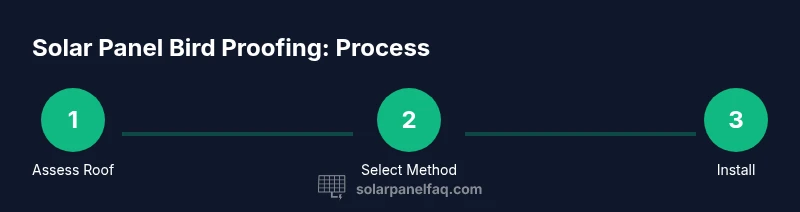
Walk the roof to identify roosting hotspots, vent openings, and cable penetrations. Take measurements and photos to guide barrier placement. Choose a primary barrier method for each area based on roof type and accessibility.
Tip: Document existing gaps with photos to reference during installation. - 2
Seal obvious gaps
Use silicone sealant to close any gaps between rails and panels and seal around penetrations. Ensure surfaces are dry before applying. This reduces entry points before adding barriers.
Tip: Apply sealant in dry weather and allow to cure as per manufacturer guidance. - 3
Select barrier methods per zone
Decide where spikes, mesh, or nets are most effective. Edge spikes work well on perimeters; nets cover larger gaps; mesh protects vents. Avoid methods that shade panels.
Tip: Prefer non-corrosive materials and avoid sharp threadings near electrical components. - 4
Install edge barriers
Attach spikes or edge barriers along panel edges with stainless steel hardware. Keep edges smooth to prevent injury and ensure no loose pieces can dislodge.
Tip: Work from the top down and secure with supportive clamps or ties. - 5
Apply mesh or netting
Mount fine-mesh along identified zones, ensuring it does not block venting or shade cells. Secure edges with cable ties or clips and trim excess material.
Tip: Test tension to prevent sagging that could trap debris. - 6
Install vent covers and patches
Cover openings with mesh or vent inserts, ensuring airtight fit that still permits airflow. Seal all edges to prevent nest material ingress.
Tip: Check that cover materials are rated for outdoor UV exposure. - 7
Inspect and test
Verify barrier integrity after installation and perform a light wind test to ensure no gaps form. Look for loose ties, flaps, or displaced pieces.
Tip: Keep a maintenance log of findings and adjustments. - 8
Schedule maintenance
Set reminders for seasonal inspection, nest removal, and barrier tightening. Update barriers if bird activity changes or vegetation grows.
Tip: Record seasonality and local bird patterns to optimize future improvements.
Frequently Asked Questions
Will bird-proofing affect my solar panel warranty?
Most manufacturers require barrier installation to be performed according to their guidelines. When you follow approved methods and maintain documentation, bird-proofing is typically compatible with warranties. Always check your specific warranty terms before making changes.
Bird-proofing can be compatible with warranties if you follow the manufacturer guidelines and keep good records of maintenance.
Is netting safer than spikes for sensitive installations?
Netting can be effective for larger areas but may require more careful installation to avoid shading. Spikes are simple and quick for edges but must be installed to avoid injuring wildlife. The best choice often depends on roof type and bird activity.
Netting works for bigger areas but can shade panels if not installed carefully; spikes are simple for edges but ensure humane, properly installed use.
Can I install bird-proofing myself on a pitched roof?
DIY installation is possible for some rooftops, but safety is critical. If you are not comfortable with heights or roof penetrations, hire a trained installer to prevent accidents and ensure proper barrier placement.
You can do it yourself if you’re confident with height work and careful about safety; otherwise, hire a pro.
How often should I inspect the bird-proofing setup?
Inspect the barriers at least twice a year and after severe weather. Look for loose components, wear, or shifts that could reduce effectiveness and address issues promptly.
Check barriers twice a year and after storms to keep protection reliable.
What if I have a flat roof?
Flat roofs may benefit from edge-netting and perimeter barriers. Ensure barriers don’t slide or sag with wind; anchor nets securely and avoid obstructing drainage.
Flat roofs can use nets along the edges; make sure they’re anchored and don’t block drainage.
Will bird-proofing protect against all species?
Bird-proofing reduces access for many species but cannot guarantee deterrence of every individual. Combine barriers with habitat management and ongoing maintenance to maximize effectiveness.
Deterrence helps with many birds, but ongoing maintenance and habitat management improve overall protection.
Watch Video
Top Takeaways
- Plan before purchasing barriers.
- Choose roof-friendly methods to avoid shading.
- Integrate bird-proofing with regular maintenance.
- Document work for warranty compliance.
- When in doubt, hire a pro for complex roofs.