How to Fix Solar Panel on Garden Lights
Learn to diagnose and repair a solar panel on garden lights with a practical, step-by-step approach—cleaning, wiring checks, battery troubleshooting, and safe reassembly.


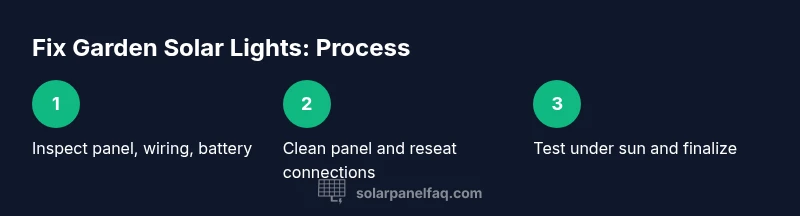
To fix a solar panel on garden lights, start by testing the light's performance in full sun, then inspect the panel, wiring, and battery. Clean the panel surface, check the tilt and orientation, reseat connections, and replace worn components as needed. Follow safe lockout practices and consult the manufacturer warranty.
Diagnosing Common Causes
Garden lights rely on clean solar panels, healthy batteries, and solid wiring to perform reliably. According to Solar Panel FAQ, dirt and grime on the panel surface, shade from nearby plants or structures, aging batteries, or loose connections are the most common culprits behind dim or non-functioning lights. Start with a quick daylight test: place the fixture in direct sun for several minutes and observe whether the LED comes on. If there is no glow, proceed to inspect the subsystems—panel surface, wiring harness, and battery. Typical symptoms include no light at all, a very dim glow, or flickering. Document what you observe so you can compare after each fix.
Cleaning and Surface Care
A clean panel is the first line of defense against poor performance. Gently wipe the solar cell with a soft microfiber cloth and a mild cleaner. Avoid abrasive cleaners that can scratch the coating or degrade the panel. Remove debris from the frame and the junction box. After cleaning, rinse with a damp cloth and dry completely before re-testing in bright sun. Regular cleaning, especially after pollen season or winter dust, can boost efficiency. Solar Panel FAQ's analysis shows that even light grime can reduce voltage output by noticeable margins, especially on flat-top garden lights.
Checking Wiring and Connectors
Inspect all visible wiring for signs of wear, cracking, or loose terminals. Disconnect the battery if accessible, then reseat connectors carefully, ensuring a firm, crimped connection. Use a multimeter to verify continuity from the panel to the controller and from the controller to the lamp. If corrosion is present on contacts, clean with contact cleaner or a small amount of isopropyl alcohol, and re-tighten screws. Poor connections and frayed insulation are frequent causes of intermittent operation.
Battery and Power Management
Most garden lights use rechargeable batteries that degrade over time. Test the battery voltage with a multimeter when the circuit is open; compare the reading to the panel's voltage under light. If the battery voltage is consistently low or the light only glows briefly, consider replacing the battery with a compatible rechargeable type. Keep in mind temperature can affect battery performance; in very cold weather, charging efficiency drops. When replacing, dispose of old batteries responsibly and follow local recycling guidelines.
Replacing Components: Panels, Batteries, Mounting
If cleaning and wiring checks do not restore performance, you may need to replace a failing component. Start with the battery, then the solar panel if it no longer produces sufficient voltage under sun. When selecting replacements, match the original specifications (voltage, current, and size) to avoid compatibility issues with the controller. If the mounting bracket is damaged or shading cannot be removed, replace or adjust mounting to ensure optimal sunlight exposure throughout the day. Keep receipts for warranty considerations.
Reassembly and Testing
Reassemble the fixture, ensuring all seals and gaskets are in place to protect against moisture. Reconnect power and place the light in direct sunlight. Allow 10–15 minutes for the panel to accumulate charge before evaluating performance. If the light still refuses to illuminate, re-check connections and consider testing another light of the same model to determine whether the issue is the fixture or the panel. Regular testing helps pinpoint intermittent faults early.
Preventive Maintenance for Garden Lights
Create a simple maintenance routine: clean the panel quarterly, check for shading or overgrowth, and verify mounting alignment twice a year. Protect cables from lawn equipment and take the lights indoors during heavy storms or freezing temperatures if possible. Store spare batteries and small tools in a dry place. Implementing routine care reduces surprise outages and extends the life of your solar lighting system.
Weather and Seasonal Considerations
In some climates, winter weather and extended cloud cover can reduce charging efficiency. Ensure the panel is angled correctly to capture sun during the season and avoid accumulating snow or ice on the panel by careful brushing when safe. If you notice recurring issues after seasonal changes, review mounting orientation and consider upgrading to a panel with higher efficiency or a battery with longer life.
Common Pitfalls and Safety Tips
Avoid harsh solvents on seals and avoid disassembly of sealed modules, which can void warranties and create shock hazards. Always disconnect power before inspecting wiring or batteries. Wear protective gloves when handling sharp edges or battery terminals, and work in a well-lit area. If you are unsure about electrical ratings, consult a professional or the manufacturer.
Tools & Materials
- Soft brush or microfiber cloth(To clean panel surface without scratching)
- Mild soap or isopropyl alcohol(For cleaning grime from panel and housing)
- Small screwdriver set (Phillips & flat-head)(For terminal screws and housing)
- Multimeter or voltmeter(To test panel voltage and battery voltage)
- Replacement rechargeable battery(Only if battery shows low voltage or poor hold charge)
- Replacement solar panel (optional)(Use only if panel is physically damaged)
- Electrical tape and sealant(For moisture sealing after reseating connections)
- Gloves(Protect hands during disassembly)
Steps
Estimated time: 60-90 minutes
- 1
Inspect exterior and subsystems
Examine the fixture housing, panel glass, and mounting for cracks, moisture, or loose hardware. Note any obvious damage and prepare to document symptoms for the next steps.
Tip: Take photos before disassembly to track changes. - 2
Clean the panel surface
Gently wipe the panel with a soft cloth and mild cleaner. Avoid aggressive scrubbing that could scratch the coating or penetrate seals. Allow the surface to dry completely before testing.
Tip: Do this in shade to prevent rapid heat changes. - 3
Check tilt, orientation, and shading
Ensure the panel faces south (in the northern hemisphere) and has an unobstructed view of the sky. Remove temporary shading sources like tall plants or decorative features.
Tip: Reposition for maximum sun exposure during peak hours. - 4
Test wiring and reseat connectors
Carefully disconnect and reconnect wiring at connectors and the battery, ensuring clean, tight contacts. Look for corrosion or damaged insulation and replace if needed.
Tip: Use the multimeter to confirm continuity after reseating. - 5
Test and replace the battery if needed
Measure the battery voltage with the switch open. If voltage is consistently low under sun, replace with a compatible rechargeable battery.
Tip: Dispose of old batteries according to local regulations. - 6
Reassemble and test under sun
Reinstall the panel and housing seals, then place the light in direct sun for 10–15 minutes. Observe whether the light reaches full brightness.
Tip: If not, review the earlier steps for missed issues.
Frequently Asked Questions
Why won't my garden solar lights turn on in daylight?
Common causes include dirty panels, degraded batteries, or loose wiring. Start with cleaning, test battery voltage, and verify connections.
Try cleaning the panel, then check the battery and wiring; if it still doesn't work, review the mounting angle.
How can I test a garden light's battery without removing it?
Use a multimeter to measure the battery voltage with the circuit open, then compare to the panel's output under light. Replace if the voltage remains low.
Use a multimeter to check the battery voltage with the circuit open, and replace the battery if it's consistently low.
Is it safe to open the solar panel housing?
Most garden solar lights have sealed panels; opening can void warranties and pose shock hazards. Perform external maintenance only.
Panels are usually sealed—don’t open them unless you’re following manufacturer instructions.
How often should I replace the battery in garden solar lights?
Batteries typically last 1-3 years depending on use and climate. Check voltage annually and replace when performance declines.
Expect 1-3 years for a battery, depending on conditions; test annually.
Can I upgrade to a larger panel for better performance?
Upgrades can cause compatibility issues with the controller. Stick to the original specifications or consult the manufacturer before changing parts.
Upgrading panel isn't simple—stick to the original specs or ask the manufacturer.
What maintenance helps extend life?
Regular cleaning, keeping debris away, and ensuring proper orientation help maximize life and performance.
Clean regularly and keep the panel oriented for sun exposure.
Watch Video
Top Takeaways
- Test in direct sun after each fix
- Clean dirt and debris regularly
- Match replacement parts to original specs
- Avoid opening sealed panels
- Maintain proper mounting to maximize sun exposure