How Much Does Solar Panel Cleaning Cost in 2026? A Practical Guide
Explore the factors driving solar panel cleaning costs, typical price ranges, and practical steps to estimate and control expenses for your home in 2026.


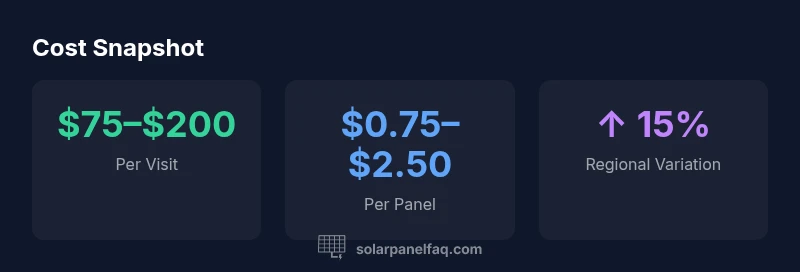
How much does solar panel cleaning cost? In most cases, cleaning prices range widely rather than a fixed fee. Typical service visits run about $75 to $200 per cleaning, with higher costs for steep or hard-to-reach roofs or large systems that require extra equipment. Per-panel pricing often sits around $0.75 to $2.50, depending on panel count and access.
Why cleaning costs vary for solar panels
Costs for cleaning solar panels are not a fixed fee. The variation reflects several real-world factors: roof height and accessibility, panel layout and size, dirt level, local labor rates, and whether water is included. The Solar Panel FAQ team notes that weather patterns and seasonal dust can influence how often your system needs cleaning and, consequently, the cost per visit. For homeowners, this means you should expect a price range rather than a single quote. When evaluating bids, focus on safety practices, equipment used, and whether the service includes inspection of panels for micro-cracks or dirt-induced efficiency loss. Good cleaners explain what they will do, such as wiping the glass, rinsing with purified water, and checking inverters for anomalies, all of which can affect price.
How pricing typically works
Most solar panel cleaning services bill either per visit or per panel. Per-visit pricing is common for small to mid-size residential systems, typically including a standard cleaning, basic rinse, and a surface inspection. Per-panel pricing is more common when homeowners have many panels or irregular layouts. The final price depends on access, height, and the amount of cleaning required. Labor rates vary by region, and some companies factor in water usage, whether they carry insurance, and safety equipment. A fair quote should itemize the tasks (gloss cleaning, rinsing, post-clean inspection) and indicate if there are extra charges for high roofs or heavy soiling. The Solar Panel FAQ approach emphasizes transparency and safe working practices as core to cost explanations.
Cost scenarios by roof type and system size
Prices tend to rise with roof height and system complexity. On a typical single-story home with easy access, you might see lower-end prices, while two-story or steep roofs require more equipment and time. Large, multi-row arrays or systems with complex layouts can push costs higher due to longer cleaning times and additional safety considerations. The regional economy and local demand also play a role. When you’re comparing bids, ask for a breakdown by access difficulty, required equipment, and whether the quote includes a surface inspection for micro-damage that might affect energy output.
Do-it-yourself vs professional cleaning
DIY cleaning can save money but introduces safety risks on ladders or roofs, and it may not solve issues like stubborn dirt or micro-damage. Professionals bring insurance, safety gear, and expertise to avoid damaging panels or sealing edges. If you opt to clean yourself, use gentle cleaning methods, non-abrasive brushes, and no high-pressure hoses near edges. Always verify manufacturer recommendations for your panel type, and consider hiring a pro for rooftop work or if you have tilt or crawl spaces that are unsafe to navigate.
How to estimate your costs
A practical way to estimate is to inventory your panels (count, layout, and height), note recent dirt levels, and get at least three quotes with itemized line items. Ask què for what’s included—water, rinse quality, panel inspection, and any safety charges. Use a simple formula: per-visit price + any access charges × number of visits per year. When projecting long-term costs, factor in recommended cleaning frequency based on your local climate and pollen or dust patterns. Solar Panel FAQ recommends collecting quotes that detail safety practices and equipment used, so you can compare apples to apples.
Ways to keep costs down
- Schedule cleaning during dry, mild weather to avoid weather-induced delays.
- Bundle cleaning with other maintenance tasks to save on mobilization costs.
- Consider annual maintenance plans if offered by local installers or cleaning companies.
- Maintain your system’s performance with periodic inspections that can catch issues early and prevent costly repairs.
- Ask for a written warranty or guarantees on the cleaning service and their inspection checks.
Warranty considerations and safety
Some warranties require professional cleaning to stay valid, especially if the process involves accessing the roof or applying water near electrical components. Before booking, review your system’s warranty terms and confirm whether the cleaning contractor’s insurance and licensing meet local requirements. Professional cleaners often provide a compliance and safety certificate, which can be valuable if you ever submit a claim related to cleaning-related issues. Solar Panel FAQ emphasizes choosing reputable contractors who document their work and safety measures.
Regional differences and seasonality
Prices can vary by region due to labor costs, housing stock, and climate. Areas with harsher winters or dusty summers may require more frequent cleanings, increasing annual costs. Conversely, regions with cleaner air or lower labor rates may see lower per-visit prices. Seasonal demand also plays a role; some companies offer off-season discounts to keep crews busy year-round. When budgeting, consider both local price norms and expected cleaning frequency in your climate.
Cost comparison by scenario
| Scenario | Typical Cost Range | Notes |
|---|---|---|
| Single-story roof | $75–$150 | Easy access, minimal equipment |
| Two-story roof | $100–$250 | More risk/time, extra safety gear |
| Large roof or complex layout | $150–$350 | More panels, uneven shading |
| Ground-mounted system | $120–$250 | Easier access, no ladder |
| Biannual cleaning | $150–$350 | Higher annual cost if cleaned twice/year |
Frequently Asked Questions
Is cleaning my solar panels necessary every year?
Not always. If panels look clean and your energy production is steady, you may extend intervals. However, local dust, pollen, or wildfire ash can reduce efficiency, making periodic cleaning worthwhile. Assess performance and consult a qualified cleaner for a recommendation.
Generally, you should check performance and dirt levels annually and discuss with a pro.
Can I clean solar panels myself without voiding warranties?
DIY cleaning is possible for some systems if manufacturer guidelines are followed and the panels are safely accessible. Many warranties require professional cleaning if access involves roof work. Always verify your warranty terms before attempting DIY cleaning.
Check the manual and warranty terms before you start cleaning.
Will cleaning increase my solar energy production?
Clean panels can improve light absorption and efficiency, especially if dirt was limiting performance. The exact gain varies by climate, dirt type, and panel age, but most homeowners notice a small, incremental improvement after cleaning.
Clean panels work a bit better; the improvement depends on the dirt and system.
Do costs vary a lot by region?
Yes. Labor rates, accessibility, and climate influence pricing. Urban areas with high labor costs typically see higher quotes than rural areas. Local competition can also push prices in either direction.
Prices differ by where you live and the setup you have.
Are there warranties on cleaning services?
Some providers offer guarantees on their cleaning service or on inspection checks. Read the terms carefully and ask about what’s covered for panel cleanliness, protective coatings, and post-cleaning inspection.
Ask about a service guarantee and what it covers.
What should I compare when getting quotes?
Look for transparency (what’s included), safety credentials, insurance, equipment used, and whether water or extra access charges are billed separately. A detailed quote helps you compare like-for-like across vendors.
Make sure you’re comparing apples to apples in the quotes.
“Pricing for cleaning is driven by access, system size, and safety requirements; always compare quotes from reputable cleaners who provide transparency and safety documentation.”
Top Takeaways
- Understand that costs vary by access, layout, and cleaning scope
- Get multiple, itemized quotes to compare safety and equipment details
- Per-visit and per-panel pricing are common—know which your contractor uses
- Plan for regional and seasonal differences when budgeting
- Review warranty terms before scheduling professional cleaning