How Much to Keep a Solar Panel Running: Maintenance Costs in 2026
Discover realistic maintenance cost ranges for residential solar panels, from routine cleaning to inverter checks. Learn how to budget for ongoing running costs in 2026 with practical steps and examples.


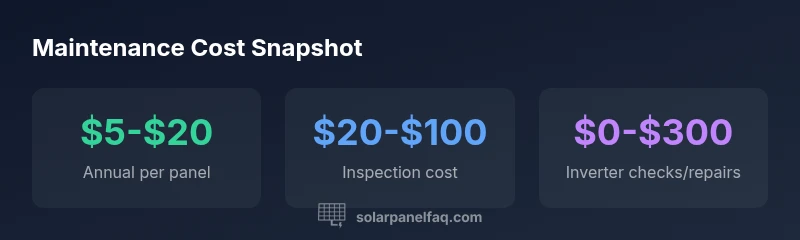
How much to keep a solar panel running depends on system size, local labor rates, and component reliability, but for most homes the ongoing maintenance costs are modest. Typical annual costs range from $5 to $20 per panel for basic cleaning and inspections, with occasional inverter or electrical checks that may run higher. Budget for 1–2 service visits per year, plus any warranty-covered parts.
Why the question matters: understanding ongoing costs
When homeowners wonder how much to keep a solar panel running, the focus is usually on routine maintenance rather than dramatic upgrades. The costs are modest but not negligible, especially as systems scale up or aging components approach warranty limits. According to Solar Panel FAQ, budgeting for ongoing care helps protect energy yield and system longevity without surprising spikes in out-of-pocket expenses. This section unpacks the key drivers behind those costs and how they translate into a practical annual plan for your home.
Routine maintenance tasks and their typical costs
The core maintenance activities for a residential solar array include cleaning, electrical checks, and inverter health monitoring. Cleaning removes dust, leaves, and pollen that can shade panels and reduce output. In many environments, a light rinse with a hose is enough, but heavily dusty or coastal sites may require more frequent attention. Electrical checks often focus on the inverter, junction boxes, and wiring connections—areas that degrade slowly over time but can impact performance if neglected. Typical costs align with a few dollars per panel for DIY cleaning, or a modest service fee for a technician's visit. Inverter checks are recommended periodically, as failures here can cause noticeable drops in energy production.
DIY vs. professional maintenance: what you should budget for
Many homeowners can handle basic cleaning and visual inspections themselves. DIY tasks save money, but more technical maintenance—such as inverter diagnostics, grounding checks, or wiring updates—usually requires a licensed technician. If you rely on a service plan or extended warranty, some of these inspections may be bundled, reducing out-of-pocket costs. When deciding between DIY and pro services, weigh your comfort level, local codes, and warranty terms. A proactive approach—documenting visits and keeping receipts—often helps maintain warranty eligibility and resale value.
How system size and environment affect maintenance costs
System size directly influences maintenance budgets because more panels mean more surface area to clean and more electrical components to inspect. Environment also matters: dusty deserts, coastal salt spray, or areas with heavy pollen can accelerate soiling and corrosion, driving up cleaning frequency and inspection needs. Conversely, well-protected installations with robust mounting hardware and high-quality inverters may incur lower annual costs. The takeaway is simple: expect a per-panel baseline, then adjust for local conditions and system complexity.
A practical method to estimate your own ongoing costs
Start with a per-panel baseline (for example, $5–$20 per panel per year for basic care). Add an annual professional inspection cost in the range of $20–$100. If your system includes an aging inverter or recent upgrades, budget a higher potential cost (up to $300) for rare repairs or replacements. Multiply by the number of panels and add a conservative contingency of 5–10% for unexpected visits or part failures. This method yields a realistic annual maintenance budget that scales with system size.
Maximizing value: warranties, service plans, and incentives
Warranties can shift maintenance risk from you to the manufacturer or installer. Some plans require regular maintenance to keep coverage, while others are flexible. Service plans may offer discounted labor rates, prioritized scheduling, and bundled inspections, which reduce annual outlays and simplify budgeting. Look for incentives that reward preventive care, such as extended inverter warranties or discounted replacement parts. Maintaining good records also helps you claim warranty benefits more efficiently and supports future resale value.
Practical tips to minimize costs while preserving performance
- Schedule cleaning during seasons with the least rainfall to maximize output gain from cleaning.
- Use a soft brush or microfiber cloth and avoid abrasive cleaners that could scratch glass.
- Keep an up-to-date maintenance log with dates, services performed, and part numbers.
- Verify warranty terms and required maintenance tasks so you don’t inadvertently void coverage.
- Consider a remote monitoring service to catch performance drops before they become costly repairs.
Data sources and methodology
This article synthesizes guidance from industry practice, installer recommendations, and the Solar Panel FAQ Analysis, 2026. All figures are presented as ranges to reflect regional variation in labor rates, panel models, and environmental conditions. Where possible, guidance aligns with standard industry maintenance intervals and warranty requirements to provide a practical budgeting framework for homeowners.
Estimated ongoing maintenance costs by component
| Cost Component | Typical Range per Panel | Notes |
|---|---|---|
| Routine cleaning | $2-$10 | Per visit; frequency depends on environment |
| Professional inspection | $20-$100 | Annual to biennial; check for corrosion and aging |
| Inverter check/repair | $0-$300 | Occasional service; replacements may be needed under warranty |
| Wiring/connection updates | $0-$150 | Low probability; depends on installation age and upgrades |
Frequently Asked Questions
How often should I clean solar panels?
For most homes, 1–2 cleanings per year suffice. Increase frequency in dusty, coastal, or pollen-heavy areas. Use a soft brush and plenty of water; avoid harsh cleaners.
Clean panels 1–2 times a year, more often if you live in dusty or coastal areas.
Does every panel require maintenance?
All components benefit from periodic checks. Inverters, wiring, and mounting hardware should be inspected on a schedule aligned with your warranty terms.
All parts should be checked periodically; focus on inverters and connections.
What factors drive maintenance costs?
System size, climate, panel quality, and warranty terms determine maintenance costs. Larger systems and harsher environments typically raise costs.
Cost varies with system size, climate, and warranties.
Can maintenance extend panel life?
Yes. Regular cleaning and timely inspections help sustain efficiency and prevent premature aging.
Regular maintenance can extend life and keep efficiency up.
Should I DIY maintenance or hire a pro?
DIY cleaning is feasible for simple tasks, but electrical checks and inverter work should be done by licensed technicians.
DIY for cleaning may be okay; for electrical checks, hire a pro.
Do warranties require ongoing maintenance?
Some warranties require regular maintenance to stay valid. Always read terms and keep records of service visits.
Warranties may require maintenance; keep records.
“"Proactive maintenance is a small investment that protects long-term performance and energy yield."”
Top Takeaways
- Budget for annual maintenance: plan $5-$20 per panel.
- Expect 1-2 service visits per year for most homes.
- Inverter health is critical; plan for rare but higher-cost repairs.
- Warranties and service plans can reduce out-of-pocket costs.
- Keep detailed maintenance records to preserve warranty eligibility.