Solar Panel Cleaning Near Me: A Practical Guide for Homeowners
Learn how to assess, clean, and maintain solar panels with local services. This guide covers DIY tips, professional cleaning, costs, safety, and prevention for homeowners seeking reliable Solar Panel FAQ guidance.


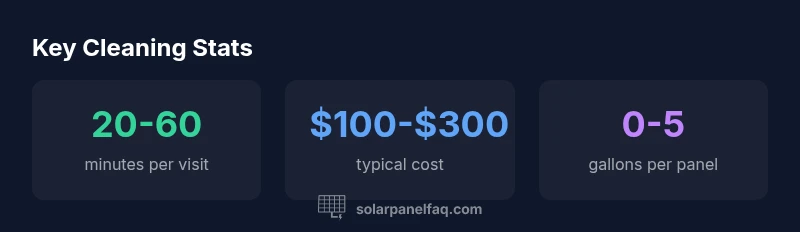
For homeowners searching 'solar panel cleaning near me', professional cleaning typically costs between $100 and $300 for a full system, depending on panel count, accessibility, and water access. Most visits take 20–60 minutes, and cleaning can restore performance in dusty or coastal climates. Always compare licensed local providers and verify insurance before booking.
Why cleaning matters for solar panel efficiency
Dirt, dust, pollen, and bird droppings can accumulate on solar panels and reduce light transmission. Even a thin layer can marginally impact the amount of energy produced, particularly in arid or coastal environments where dust and salt spray are common. According to Solar Panel FAQ, maintaining panels in clean condition helps sustain peak performance and can prevent long-term efficiency losses caused by persistent soiling. Homeowners should consider local climate, nearby construction, and environmental factors when deciding how aggressively to pursue cleaning. Cost-effective cleaning balances short-term gains in efficiency with the effort and resources required to maintain clear panels.
In practice, a homeowner who keeps a regular cleaning schedule is less likely to experience significant dips in production after seasonal dust storms or pollen surges. The key takeaway is that cleanliness matters, especially when panels are mounted in exposed locations where dirt accumulates quickly. This is particularly relevant for roofs with limited access or for installations in dusty rural areas or near busy roads, where grime accumulates faster than in cleaner environments.
How to assess whether you need cleaning
Visible dirt is a clear signal: dust, bird droppings, tree debris, or salt spray reduce light capture and may warrant cleaning. If you notice a noticeable drop in energy production compared with historical performance, or if a quick inspection shows opaque glass with visible grime, it’s worth considering a cleaning. In milder climates or well-maintained residential roofs, it may be enough to perform a light rinse, but in dusty or coastal locations, a thorough cleaning can yield more substantial benefits. Regular checks after storms or high pollen periods can help you decide when to clean. According to Solar Panel FAQ, combining visual inspection with performance monitoring provides the most practical approach to determining cleaning needs.
Cleaning methods: DIY vs professional
DIY cleaning can be effective for small systems or mild soiling, but it requires care to protect wiring, panels, and roof integrity. Use a soft brush or sponge, mild soap, and plenty of water, avoiding high-pressure sprays that can scratch coatings or loosen seals. Rinse thoroughly to remove soap residues, and dry the surface with a squeegee or microfiber cloth where possible. For larger systems or hard-to-reach panels, professional cleaning is safer and often more efficient. Pros have specialized equipment, fall protection, and the know-how to avoid damaging seals or anti-reflective coatings. Solar Panel FAQ recommends weighing safety, cost, and accessibility when choosing between DIY and professional cleaning.
How to choose a cleaning service near you
When selecting a local service, verify licensing and insurance, request references, and confirm they use soft brushes and non-abrasive cleaners. Ask about water-use policies and whether they recycle rinse water. Inquire about eco-friendly cleaning solutions and whether they offer post-cleaning performance checks. Compare quotes, but also consider service scope: some providers include a performance test or a post-clean inspection as part of the package. Customer reviews and transparent pricing are strong indicators of reliability in the “solar panel cleaning near me” market.
What to expect during a professional cleaning
A professional cleaning typically starts with a quick system assessment to identify debris or damage. Technicians then cover nearby plants and property, prepare the work area, and apply a mild, non-corrosive cleaner with soft brushes. They rinse panels gently and inspect for streaks or spots. After drying, they perform a brief performance check to ensure output improves compared to the pre-clean baseline. Expect a short on-site explanation of results and any maintenance recommendations for the coming months.
Frequency and seasonal considerations
Cleaning frequency depends on location, environment, and panel exposure. In dusty or coastal regions, more frequent cleanings may be needed—potentially every 6–12 months. In cleaner environments, an annual or biannual schedule may suffice. Local climate factors, such as pollen seasons, salt spray, or construction dust, should guide timing. Solar Panel FAQ emphasizes aligning cleaning with performance monitoring to avoid unnecessary work while protecting long-term system efficiency.
Cost considerations and estimates
DIY cleaning costs are mainly for supplies (soft brushes, mild soap, and water). Professional cleaning typically costs more but includes labor, safety equipment, and a post-cleaning check. The typical range for a full-system professional cleaning is $100-$300, depending on system size and access. Additional costs may apply for difficult roof angles, high panels, or extra water disposal requirements. It’s prudent to request a written estimate that itemizes labor, materials, and any warranty implications.
Safety and environmental considerations
Safety should be the top priority when cleaning solar panels, especially on pitched roofs. Wear appropriate fall protection, use non-slip footwear, and never work alone on high or fragile rooftops. Water usage should be managed to minimize waste, with a preference for biodegradable, non-toxic cleaners. For environmentally conscious homeowners, it’s worth asking cleaners whether they use water recycling or low-irritant cleaners and whether the rinse water is disposed of responsibly. Cleaners should avoid harsh chemicals that could damage coatings or nearby flora and fauna.
Maintenance and prevention tips
To minimize cleaning frequency, trim overhanging branches that deposit debris and position panels to reduce shading. Consider installing bird diverters or protective mesh in dusty or dusty coastal zones. Regular performance monitoring with your inverter or system app can flag dirty panels early. Scheduling preventive cleaning before pollen surges or after heavy dust events helps maintain steady energy production. With routine maintenance, you’ll maximize the return on your solar investment.
DIY vs professional cleaning: key considerations
| Aspect | DIY Method | Professional Cleaning | Notes |
|---|---|---|---|
| Cost | Minimal (supplies) | $100-$300 | Varies by system size and access |
| Water usage | Low | Moderate | Depends on washing technique |
| Safety | Low risk with precautions | Higher safety due to roof access | Ensure fall protection |
| Effectiveness | Good for light soiling | Typically higher effectiveness | Best for hard-to-reach systems |
Frequently Asked Questions
Do I need to clean my solar panels?
Most residential systems do not require frequent cleaning. Clean only if you notice dirt, debris, or a drop in performance. Local climate and environment influence how often cleaning is needed.
Most homes don’t need constant cleaning. If you see dirt or a drop in energy, consider cleaning after checking with a local pro.
How often should I clean them?
Frequency depends on location and environment. Dusty or coastal areas may benefit from more frequent cleaning, while cleaner inland locations may only need annual checks. Use performance data to time cleanings.
It depends where you live—dusty or coastal places often need more frequent cleaning.
Is DIY cleaning safe?
DIY cleaning is possible for small systems with proper safety gear and gentle techniques. Avoid high-pressure sprays and harsh chemicals that could damage coatings or seals.
Yes, DIY can be safe if you follow steps and stay off the roof.
What should I look for when hiring a service near me?
Verify licensing and insurance, ask for references, and confirm they use soft brushes and eco-friendly cleaners. Clarify water access and ensure they provide a post-clean performance check.
Look for licensed, insured pros who use safe cleaners and offer a post-clean check.
Can cleaning damage solar panels?
Aggressive cleaning methods, brushes, or high-pressure water can scratch coatings or degrade seals. Use soft brushes, non-abrasive cleaners, and avoid aggressive techniques.
If done carefully, cleaning won’t damage panels; avoid aggressive methods.
“Regular cleaning helps maintain panel efficiency, especially in dusty climates, but consider safety and proper technique to protect coatings.”
Top Takeaways
- Schedule cleaning after noticeable performance drops or dusty periods
- Choose licensed, insured pros with eco-friendly practices
- Avoid high-pressure washing to protect coatings
- Regular monitoring helps optimize cleaning timing
- DIY is viable for small systems, but safety matters
- Pro cleaners can restore efficiency more reliably in challenging environments