Cost for Solar Panel System in 2026: A Practical Guide
A comprehensive look at the cost for solar panel system, including price ranges, incentives, financing options, and a step-by-step method to estimate your installation price in 2026.


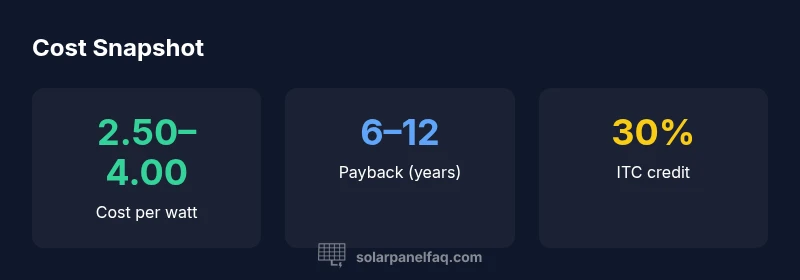
Cost for solar panel system is typically determined by system size, equipment quality, and regional labor costs. In 2026, expect installed prices in the United States to range from roughly $2.50 to $4.00 per watt before incentives, translating to about $10,000 to $24,000 for a common residential setup. This guide explains the main cost drivers and how to forecast your total investment.
Why cost for a solar panel system varies by location and roof type
Costs are not one-size-fits-all. The price you pay is strongly influenced by where you live, the type of roof you have, and the complexity of the installation. For example, a flat roof might require different mounting hardware than a pitched roof, while a home with multiple stories or a metal roof may trigger additional labor or equipment costs. Labor costs themselves differ by region due to local wage levels and permitting processes. In regions with high electrical rates, installers may design larger systems to maximize value, increasing upfront costs but shortening payback periods. According to Solar Panel FAQ, the geographic variation can shift total installed costs by several thousand dollars for the same system size. When budgeting, homeowners should also account for site-specific factors such as shade, roof orientation, and available roof space, which can all influence required equipment and, consequently, price.
What contributes to the price: hardware, inverter, mounting, and labor
The sticker price comprises multiple components. The panels themselves represent a large share of cost, with differences in efficiency and durability affecting price. Inverters convert DC to AC and vary by technology (string or microinverters), impacting both cost and performance. Mounting hardware, roof penetrations, and electrical components add to the price, as do permitting, inspections, and electrical upgrades that may be needed to meet local codes. Labor costs cover design, installation, and commissioning, and can vary widely by contractor and region. Additional items to consider are monitoring systems, warranty extensions, and potential roof repairs or reinforcing work needed to safely install the system. Solar Panel FAQ notes that while hardware costs have trended lower over time, labor and permitting often determine the final out-the-door price, especially for complex roofs or shaded sites.
Cost by system size and common configurations
Most residential systems fall in the 4–7 kW range, and price scales with size. Using typical installed costs of $2.50–$4.00 per watt, a 4 kW system can cost roughly $10,000–$16,000 before incentives, while a 6 kW setup might run about $15,000–$24,000. An 8 kW installation could reach $20,000–$32,000. These ranges are pre-incentive estimates; the federal ITC may reduce net costs by about 30% in 2026, depending on eligibility. For a more precise forecast, homeowners should obtain multiple quotes and verify that each quote accounts for roof access, system orientation, panel efficiency, and the type of inverter selected. Note that regional electricity prices influence the value proposition, as higher electricity costs shorten payback times.
Incentives, tax credits, and other incentives
In 2026, the federal investment tax credit (ITC) offers a substantial reduction in net cost, typically around 30% of the system price for eligible installations. Some states and utilities also provide rebates or performance-based incentives, which can further trim the upfront cost or improve the return on investment. Local net metering policies affect long-term savings by determining how much energy you can offset with your system. The combination of ITC, rebates, and favorable electricity rates is what often makes solar financially appealing, though eligibility and amounts vary by location. Solar Panel FAQ suggests that readers should confirm incentive eligibility early in the planning process to maximize the value of their system.
Estimating your cost: a practical worksheet
Start with a system size based on household energy use and available roof space. Multiply by your local installed price per watt to estimate pre-incentive cost, then apply the ITC percentage to estimate net cost. Add non-recurring fees such as permitting and electrical upgrades, plus any design or monitoring options you choose. Use shading analysis to refine panel count and inverter type, which can affect both price and energy yield. Finally, compare quotes from at least three installers and ask for a breakdown of hardware, labor, and soft costs to ensure apples-to-apples comparisons. Solar Panel FAQ recommends documenting assumptions and running a simple sensitivity analysis (e.g., what if the price per watt shifts by 10% or electricity rates rise by 5%).
Hidden costs and ongoing maintenance
While the upfront price dominates, homeowners should anticipate potential hidden costs. Permitting fees may vary by municipality; some jurisdictions require roof reinforcement for heavier panels. Electrical upgrades, monitoring equipment, and inverter replacements over the system's 25-year lifespan can add to lifetime costs. Routine maintenance is relatively low-cost, but shading changes from new trees or nearby construction can reduce energy production and affect payback. Warranty terms for panels, inverters, and mounting hardware also influence long-term value. Strategically, a longer warranty and higher-efficiency panels can reduce the risk of future replacement expenses but may raise upfront costs.
Regional considerations: climate, shading, and orientation
Site-specific factors matter as much as hardware. Regions with high sun exposure generally deliver more energy, improving the economics of a given system. Shading from trees, nearby buildings, or seasonal phenomena reduces output and can require more or higher-efficiency panels, increasing costs. Roof orientation and tilt influence energy yield; south-facing roofs in the northern hemisphere are typically ideal. Local permitting timelines and labor rates shape total cost as well. In all cases, it helps to engage a local installer who understands climate-specific performance and interconnection rules. The cost for solar panel system should be evaluated with attention to how climate and shading affect expected energy production and savings.
How to compare quotes and choose installers
Request a site assessment from at least three installers and ensure each quote includes: hardware specs (panel type, efficiency, wattage), inverter type, mounting method, anticipated production, warranties, and interconnection terms. Compare not only price but also equipment quality, expected energy yield, maintenance needs, and the reputation of the installer. Verify the interconnection process with your utility and confirm any required permits. Ask for a failure rate, service response time, and whether the installer offers monitoring or performance guarantees. The goal is to select a package that delivers the best balance of cost, reliability, and long-term value.
Long-term value, upgrades, and resale considerations
Solar can raise home value and provide predictable energy costs, but the financial picture depends on accurate assumptions about future electricity prices, incentives, and technology upgrades. If you anticipate a panel replacement or battery storage down the line, factor those costs into your long-term plan. Consider whether your local market favors newer, higher-efficiency panels or durable, cost-effective modules. When evaluating offers, emphasize durability, warranty coverage, and service terms as much as price. The right choice aligns upfront affordability with future energy resilience and potential resale advantages.
Cost ranges by system size, before and after ITC.
| System Size (kW) | Estimated Cost Range (before incentives) | Estimated Cost Range (after ITC) | Notes |
|---|---|---|---|
| 4 | 10,000–16,000 | 7,000–11,200 | Standard residential roof install (U.S. average) |
| 6 | 15,000–24,000 | 10,500–16,800 | Typical home upgrade size |
Frequently Asked Questions
What is the typical price range for a residential solar panel system?
Prices vary by size and location. Installed costs commonly fall in the $2.50–$4.00 per watt range before incentives, translating to roughly $10,000–$16,000 for smaller systems and up to $24,000 or more for larger setups in 2026. The exact price depends on roof type, hardware, and labor.
Prices vary by system size and where you live; expect roughly $2.50 to $4 per watt before incentives, with total installed costs often between ten and twenty-four thousand dollars depending on size.
Do incentives like the ITC apply to my system?
Yes. The federal ITC can reduce net costs by up to 30% in 2026 for eligible installations. State and local incentives vary, so check regional programs early in planning to maximize savings.
Yes. The ITC can cut net costs by up to 30%, and local incentives vary by location.
How long is the typical payback period?
Most homeowners see a payback period of about 6–12 years, depending on electricity rates, system size, and incentives. Higher energy prices and stronger incentives shorten the time to break even.
Typically six to twelve years to break even, depending on rates and incentives.
Should I finance or buy the system outright?
Financing options like loans, leases, or PPAs can lower upfront costs and improve cash flow, but may increase total cost over time. Compare total cost of ownership, warranties, and terms across options.
Consider financing if you need to reduce upfront costs; compare total costs and warranties.
Are there hidden costs to watch for?
Yes. Permit fees, roof reinforcement, electrical upgrades, monitoring equipment, and potential inverter replacements over the system life can add to overall cost.
Expect possible permit fees and potential electrical upgrades in addition to the upfront price.
How should I compare solar quotes?
Ask for a breakdown of hardware, labor, and soft costs; verify equipment specs (panels, inverters, warranties), expected production, and interconnection terms. Compare long-term value, not just price.
Get a detailed cost breakdown and compare equipment, warranties, and expected output.
“Understanding your roof orientation, shading, and local permitting rules is often more impactful than sticker price alone. The Solar Panel FAQ Team notes that real-world savings depend on local energy rates and incentives.”
Top Takeaways
- Define system size based on usage and roof space.
- Expect price per watt in the $2.50–$4.00 range (before incentives).
- Apply ITC to reduce net cost by up to 30% in 2026.
- Compare multiple quotes with a full cost breakdown.
- Account for regional incentives and local permitting fees.