Clean Solar Panels DIY: A Homeowner’s Guide
Learn how to clean solar panels safely at home with a practical DIY approach. Safety tips, tools, methods, and maintenance to maximize energy production in 2026.


You can safely clean solar panels yourself by following a step-by-step routine that protects the modules and your safety. This guide covers safety gear, best cleaning methods, recommended tools, and how to determine when professional service is wiser. Start with a dry wash, then use mild soap and plenty of rinse water on a cool, overcast day.
Why clean solar panels diy matters
Keeping your solar panels clean is essential to maximize energy production and protect your investment. For homeowners, the idea of a DIY clean can be appealing, but it must be approached with care. The phrase clean solar panels diy has become a common search as more households try to maintain performance without professional service. According to Solar Panel FAQ, regular, careful cleaning can help prevent gradual efficiency loss due to dust, pollen, or bird droppings. The Solar Panel FAQ team found that dirt buildup on sun-facing panels can reduce light capture and, over time, lower energy output if left unchecked. This makes a practical, safe, and well-planned cleaning routine a smart addition to routine maintenance. DIY cleaning is feasible when you respect surface sensitivity, avoid high-pressure routines, and choose the right weather window. In this guide we explain the why, the how, and the safety steps so you can stay efficient without risking damage to your system.
Safety first: assessing risk and timing
Safety is the first consideration when you tackle any home maintenance task on or around your roof. Before you reach for a brush, evaluate the roof slope, weather forecast, and whether you have a stable, non-slip footing. If you cannot reach the panels from the ground with a stable stance, postpone the cleaning or hire a professional. Conduct cleaning only when panels are cool to the touch; cleaning hot panels can cause thermal stress and cracking. Choose an overcast day or early morning after dew has dried to reduce slip risk and avoid rapid temperature changes. Remember to wear gloves, eye protection, and non-slip shoes, and keep electrical access clear from water. The Solar Panel FAQ analysis notes that many DIY cleanings succeed when homeowners plan ahead and use non-abrasive methods.
Tools and materials you’ll want on hand
Keeping the right tools on hand makes a DIY clean faster and safer. You will typically need a soft-bristle brush, a non-abrasive sponge, a bucket with clean water, a mild soap or specialized solar panel cleaner, a garden hose with a gentle spray nozzle, a squeegee for drying, and a sturdy ladder if you need to access panels from the ground. Optional items include a microfiber cloth for detailing, and a spray bottle for controlled soap application. Safety gear such as gloves, eye protection, and a fall-arrest plan if you’re on the roof should be considered essential rather than optional. With the right tools, a clean solar panels diy routine becomes straightforward and minimizes the risk of scratching the surface or loosening mounting hardware.
Tools & Materials
- soft-bristle brush(Non-abrasive brush with soft bristles; avoid metal or stiff brushes that can scratch glass.)
- non-abrasive sponge(For gentle cleaning around edges and corners.)
- bucket with clean water(Fresh water for rinsing; avoid dirty water that can re-deposit dirt.)
- mild soap or solar panel cleaner(Use a mild soap or a cleaner specifically formulated for panels.)
- garden hose with adjustable nozzle(Low-pressure setting; never use high-pressure washers on panels.)
- ladders or stable access system(Only if you must access panels from the ground or a roof edge.)
- squeegee or microfiber cloth(Used to dry the surface and prevent water spots.)
- safety gear (gloves, eye protection)(Protect hands and eyes from soap and slips; ensure proper footwear.)
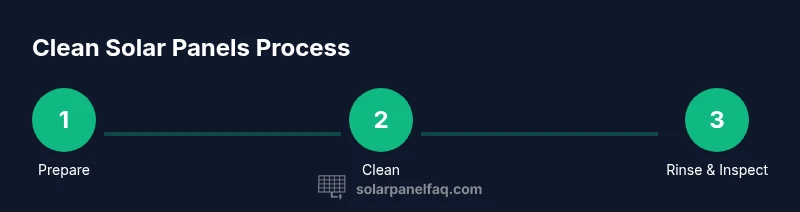
Steps
Estimated time: 60-90 minutes
- 1
Assess safety and prepare the workspace
Before touching any panel, assess the roof area and weather. Confirm you can work from ground level or use a stable ladder with a spotter. Clear the area of loose debris to prevent slips and ensure you have a stable, non-slip surface for work.
Tip: Always have a second person nearby when working on a roof or ladder. - 2
Gather materials and pre-mix cleaner
Collect all tools and mix your cleaning solution according to product instructions. If using mild soap, dilute it in a bucket of water so you can control suds and avoid residue.
Tip: Label the solution container and keep cleaners away from children. - 3
Inspect panels for damage or shading
Look for cracks, scratches, loose mounting hardware, or shaded areas due to new tree growth or neighboring structures. Address any obvious damage before cleaning, since moisture can worsen some defects.
Tip: If you notice cracked panes or loose mounts, stop and consult a professional. - 4
Clean with soft brush and mild solution
Dip the brush into the soapy water and gently scrub in a circular or linear motion from the center outward. Rinse frequently to prevent dirt from building up on the brush and to avoid redepositing grime.
Tip: Do not scrub aggressively; gentle contact preserves the protective coatings. - 5
Rinse thoroughly and dry
Rinse panels with a low-pressure stream until all soap is removed. If possible, dry the surface with a microfiber cloth or squeegee to reduce streaks and water spots.
Tip: Allow panels to air-dry if you don’t have a squeegee; avoid leaving soapy film.
Frequently Asked Questions
Is it safe to clean solar panels yourself, or should I hire a pro?
DIY cleaning can be safe when you follow proper safety guidelines and use non-abrasive tools. If you have a steep roof, fragile panels, or severe dirt, professional service may be wiser. Always assess risk before starting.
DIY cleaning can be safe if you follow guidelines; for steep roofs or damaged panels, hire a pro.
What weather conditions are best for cleaning solar panels?
Clean during cool, overcast conditions or in early morning after dew has dried. Avoid cleaning in direct sun, heat, or windy conditions to reduce streaks and prevent slips.
Clean on cool, overcast days; avoid sun and wind.
Can I use household cleaners on solar panels?
Avoid ammonia-based or abrasive household cleaners. Use mild soap or a product designed for solar panels to prevent coating damage and electrical risks.
Use mild soap or solar panel cleaner, not strong household cleaners.
Should I use a power washer or high-pressure water?
No. High-pressure water can crack panels and damage seals. Use a garden hose on a low-pressure setting and gentle brushing.
Do not use high-pressure water on panels.
What if my panels are on a steep roof or near edges?
If you cannot work from ground level safely, don’t attempt DIY cleaning. Consider hiring a professional with proper safety equipment.
If you can’t work safely from ground level, hire a pro.
How often should I clean solar panels?
Frequency depends on location and environmental conditions. In dusty or pollen-heavy areas, cleaning every 6-12 months may be helpful; otherwise, annual checks are common.
Clean as needed based on dirt buildup and performance checks.
Watch Video
Top Takeaways
- Inspect your system before cleaning to avoid masking damage
- Use mild soap and soft tools to avoid scratches
- Avoid high-pressure sprays and hot panels
- Clean on cool days to minimize thermal stress
- Document your cleaning and note any changes in performance